Tuesday, April 17, 2012
Requiescat In Pace

Barney McKenna, the banjo and mandolin player for the Dubliners since the group was formed 50 years ago, died April 5 at the age of 72. Cieran Burke, Luke Kelly, Ronnie Drew, and now Barney are no longer with us. That leaves only John Sheahan of the original Dubliners. There is a great session in Heaven, we hope. Requiescat in pace.
Labels: Being Irish
Saturday, March 17, 2012
Saint Patrick's Day Fun, Part 3: The Music
You will notice that this year, it is not all the Clancy Brothers and Tommy Makem, though I love them dearly, God rest their souls.
Had to replace some embedded clips from years past that had been taken down.
Makem and Clancy, The Rambles Of Spring
The Orthodox Celts, The Star Of the County Down
Ronnie Drew and the Dubliners, Dublin In the Rare Auld Times
Mary Black, Óró 'sé do bheatha 'bhaile
Johnny McEvoy, The Spanish Lady
John McDermott, The Minstrel Boy
The Dropkick Murphys, The Wild Rover
Cherish The Ladies, The Ballad of the Fox Hunter
Danny Doyle, Whiskey On A Sunday
Foster & Allen, Nancy Myles
The Clancy Brothers and Tommy Makem, Portlairge
The Rankin Family, Mo Run Geal, Dileas
The Dubliners, Seven Drunken Nights
The Dublin City Rambers, Molly Malone
Celtic Woman, The Spanish Lady
Paddy Reilly, Carrickfergus
Tommy Makem and the Makem and Spain Brothers, Paddy Kelly's Brew
The Wolfe Tones, Serjeant William Bailey
The Clancy Brothers and Tommy Makem
The Clancy Brothers And Tommy Makem, Isn't It Grand, Boys?
The Corrs & The Cheiftains, A Shindig Medley
The Blarney Lads, The Irish Rover and the Rakes Of Mallow
Davey Arthur & The Fureys, It's A Long Way From Clare To Here
Sean Dunphy, Delaney's Donkey
Luke Kelly & The Dubliners, The Monto
Jim McCann, Grace
And You Have To Have Danny Boy
Liam Clancy, The Patriot Game
The Irish Rovers, The Unicorn
Makem & Clancy, The Town Of Ballybay
The High Kings, The Rocky Road to Dublin
The Chieftains, Lillibulero/The White Cockade
Robbie O'Connell, Kilkelly, Ireland
The Clancy Brothers & Tommy Makem, Johnny McEldoo
The Dubliners, The Dublin Fusiliers
The Clancy Brothers And Tommy Makem, The Juice Of the Barley
Ronnie Drew & The Dubliners, The Parting Glass
Had to replace some embedded clips from years past that had been taken down.
Makem and Clancy, The Rambles Of Spring
The Orthodox Celts, The Star Of the County Down
Ronnie Drew and the Dubliners, Dublin In the Rare Auld Times
Mary Black, Óró 'sé do bheatha 'bhaile
Johnny McEvoy, The Spanish Lady
John McDermott, The Minstrel Boy
The Dropkick Murphys, The Wild Rover
Cherish The Ladies, The Ballad of the Fox Hunter
Danny Doyle, Whiskey On A Sunday
Foster & Allen, Nancy Myles
The Clancy Brothers and Tommy Makem, Portlairge
The Rankin Family, Mo Run Geal, Dileas
The Dubliners, Seven Drunken Nights
The Dublin City Rambers, Molly Malone
Celtic Woman, The Spanish Lady
Paddy Reilly, Carrickfergus
Tommy Makem and the Makem and Spain Brothers, Paddy Kelly's Brew
The Wolfe Tones, Serjeant William Bailey
The Clancy Brothers and Tommy Makem
The Clancy Brothers And Tommy Makem, Isn't It Grand, Boys?
The Corrs & The Cheiftains, A Shindig Medley
The Blarney Lads, The Irish Rover and the Rakes Of Mallow
Davey Arthur & The Fureys, It's A Long Way From Clare To Here
Sean Dunphy, Delaney's Donkey
Luke Kelly & The Dubliners, The Monto
Jim McCann, Grace
And You Have To Have Danny Boy
Liam Clancy, The Patriot Game
The Irish Rovers, The Unicorn
Makem & Clancy, The Town Of Ballybay
The High Kings, The Rocky Road to Dublin
The Chieftains, Lillibulero/The White Cockade
Robbie O'Connell, Kilkelly, Ireland
The Clancy Brothers & Tommy Makem, Johnny McEldoo
The Dubliners, The Dublin Fusiliers
The Clancy Brothers And Tommy Makem, The Juice Of the Barley
Ronnie Drew & The Dubliners, The Parting Glass
Labels: Being Irish
Saint Patrick's Day Fun, Part 2: Skellig Michael

I have often used an allusion in a sort of intellectual shorthand, and it recently occurred to me that a sizable chunk of even my well-informed audience may not get it.
I sometimes speak (justifiably) of the decline of traditional morality in rather apocalyptic terms, adding that there is no safe place, no "Skellig Michael" to which the civilized may repair to wait out the latest triumph of barbarism (gay marriage, overwhelming immigration, political correctness, safety Nazis, high taxes, Islamicization of Europe, environmental weirdness, vegetarianism, what have you).
Well, the reference to Skellig Michael comes from my varied reading. Four books in particular have shaped this little intellectual shortcut. Kenneth Clark in Civilization wrote that:
"Looking back from the great civilizations of twelfth-century France or seventeenth-century Rome, it is hard to believe that for quite a long time-almost a hundred years-Western Christianity survived by clinging to places like Skellig Michael, a pinnacle of rock eighteen miles from the Irish coast, rising seven hundred feet out of the sea."
Clark's theme was picked up and amplified by Thomas Cahill in his recent bestseller How the Irish Saved Civilization. Cahill's book is about the very phenomenon that Clark mentioned in his first chapter, the survival of Western Civilization.
You see, at the time of the barbarian takeover of the declining Roman Empire, civilization was in quite a plight. Learning declined markedly. Even high culture declined precipitously. In the looting of the pelf of the empire, many of the works of classical culture were lost. The Germanic warlords who came to replace other Roman officials in actual charge out in the provinces were often illiterate. They did nothing to encourage literacy or to preserve the Graeco-Roman literary deposit. While the Church preserved some of Graeco-Roman culture on the continent, she and her agents could not hold all together.
A great deal was preserved in the island hermitage/monasteries of the Irish, who had absorbed Roman culture through the work of St. Patrick and his successors. Skellig Michael, a particularly uninviting location in the Northern Atlantic, was one of those places where the traditions of Graeco-Roman culture and writings were preserved by the Irish monks until Europe had calmed down enough to allow for this learning to be re-exported to it.
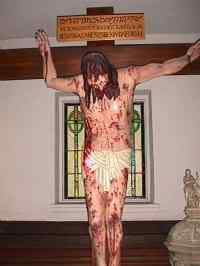
Irish monasticism was not the safe, comfortable sort of Saint Benedict and those who follow him. It was the white martyrdom of the desert fathers, harsh, almost brutally ascetic in ways Saint Benedict rejected so that monasticism could be followed by many, rather than just the elite ascetics. It sought out desert places, wastes, inaccessible islands, deep forests. And there it enacted sometimes harsh penances, like the Cross Vigil, in which a monk held out his hands in the posture of the Lord on the cross for days or weeks at a time. Sometimes, these monks would make the Cross Vigil waist-deep in freezing water.
Their greatest enemy was not the lack of women or material goods. Indeed, they considered themselves as athletes in training for Heaven. Such deprivations were just routine. No. The real enemy was depression, acedia, or the noonday devil "the destruction that wasteth at noonday," in the words of the Psalmist, the feeling, which uncannily comes in the middle of the day, that you have made no progress, that you are wasting your time, indeed your life. I have, for the first time in my life, come to know this scourge myself in the last decade. A formidable enemy indeed, one that I am not sure I have conquered. Indeed, it seems to return, in one guise or another, every few days.
But they also kept libraries and scriptoria, and spent some of their time studying such literary works as their limited involvement with the greater civilization of the continent before its collapse afforded them.
Once Europe had recovered somewhat from the initial shock of the fall of classical civilization and the breakdown of government of the Western Empire, Irish monks, venturing forth from fastnesses like Skellig Michael roamed about France, Germany, and Italy, bringing with them copies of the books from their monasteries, books in which much of Plato and Aristotle, Cicero and Ovid were preserved, some works that Europe had not seen in a hundred years and more. These Irish monks gained great influence in the Merovingian, and later in the Carolingian courts.
The period in which Ireland, in the form of its monks, "saved civilization" was roughly from the death of St. Patrick to the time of Charlemagne. Then, in rapid succession, new waves of barbarian invaders, Vikings, mercilessly plundered the Irish monasteries, attacking even remote Skellig Michael in 823, only a few years after the death of Charlemagne. Duns Scotus was the last great figure in this Irish Renaissance.
Skellig Michael itself has been described by the local (Newburyport) Irish-American author James Charles Roy in his superb book The Road Wet, The Wind Close: Celtic Ireland. He explored the place for a couple of bleak days. It is indeed from his description a desolate spot. It is indeed hard to imagine that here, a large part of western civilization's written heritage was preserved.
"Skellig Michael now stands before us....Even from afar it looks menacing, unfriendly, barren, seemingly a perfect cone rising from the sea. jet-black in colour and everywhere jagged, sharp. There doesn't seem to be a smooth place anywhere."
Nevertheless, Roy is probably correct in calling it the "very essence of Celtic Ireland."
Today, ithe island's inhabitants are three lighthouse keepers who rotate every few months to lessent he chances of going mad, puffins, rabbits, and various seabirds. The island has two peaks. The higher one has a Way of the Cross, after a local fashion. In the vale between the two peaks, under a windswept spit known as "The Saddle of Christ," is the monastery. The monastery was built of dry-laid stone, and consists of 6 clochans, or dwelling huts, circular and beehive shaped. There are two stone oratories.

The monastery was probably built around 650 A.D. It was almost literally carved out of the rock of the island. It is not certain when the Way of the Cross was developed. It consists of "The Needle's Eye," a narrow vertical shaft in the rock about 20 feet high which must be climbed, "The Stone of Pain," a smooth rock 14 feet high which must be scrambled up, and "The Spindle":
"...a long narrow fragment of rock, projecting from the summit of this frightful place, over a raging sea (700 feet below-GTF); and this is walked to by a narrow path only two feet in breadth, and several steps in length. Here the devotees, women as well as men, get astride of this rock, and so edge forward, until they arrive at a stone cross...and here, having repeated a Pater Noster. Returning from thence concludes the penace."
The cross on "The Spindle" was usually kissed by the pilgrim, which required getting very far out onto the ledge.
In Slouching Towards Gomorrah, Judge Robert Bork, perhaps the most prescient observer of our culture of the present age, sees a new barbarian invasion. This invasion that threatens western culture today is almost entirely from within.
The new barbarism takes the form of a decline of standards, a coarsening of public life and discourse, and decline in educational achievement, and standards. It is vile rap music, played very loudly. It is political correctness destroying the study of history and forcing history through the unnatural prism of womyn's studies, African-American studies, gay and lesbian studies, etc. It is immigration run amok, so that a tidal wave of people unable or unwilling to conform themselves and their families to the American Way (the English language and the Anglo-Saxon culture, Christianity and democratic pluralism combined with free enterprise) It is drugs and the culture of dependency on government transfer payments. It is a loss of objective truth and morality and a rise of moral relativism. It is the abortion culture, the gay rights culture, the equality-at-any-price-to-civilization culture that dominates the fields of law, journalism, academia, increasingly the helping professions, and government service. It is ever-more invasive government intruding into areas of personal behavior that were never regulated before, while allowing mayhem to rage in other areas.
Bork sees this barbarism as all-engulfing, its reach being co-equal with the spread of television, popular music, liberal social attitudes, and the nanny state. Looking back to how western civilization in 450-850 was able to survive the barbarian onrush by clinging to rocky outcroppings like Skellig Michael, Bork sees little possibility of survival now.
There are gated communities, conservative publications, Latin Mass parishes, TV-less families, and homeschooling. But nowhere can a traditionalist parent spank without fear of the DSS worker showing up on your doorstep with a warrant and two cops to take your children away if you dare "abuse" them by spanking. The barbarians will not let us withdraw to a safe place, a Skellig Michael. Their reach is all-encompassing. It is everywhere the writ of a modern western government runs. No one was able to stop the British legal system from jailing that farmer who shot two burglars breaking into his home for the third time.
So that, my friends, is what I mean when I say that there will be no Skellig Michaels this time. There are no safe enclaves where traditional life can flourish in the midst of the liberal take-over. Civilization as we know it faces extinction.
Labels: Being Irish
Saint Patrick's Day Fun, Part 1: The Food
Here we are, at that day on which we are entitled (by annually issued indult of the Archdiocese of Boston) to a relaxation of Lenten austerity in order to honor Ireland's patron, Saint Patrick. It has now been almost a month since I tasted meat of any kind.
Corned beef is Jewish, not Irish. Irish immigrants here in the US picked it up from their Jewish neighbors, and it has, in the last 30 years, made an appearance in Ireland. But it isn't Irish in origin. Smoked shoulder, however, is, as the Irish are great pig farmers.

Here are some more foods you can have:
Limerick Ham
Limerick is that very depressing gray place depicted in Angela's Ashes. It is just across the Shannon from where my family is from, Ennis in County Clare. To the Irish, ham is a cured leg of pork. Traditionally, Limerick Ham is smoked over juniper branches. Whole hams should be steeped in cold water overnight before cooking but this is not necessary with smaller joints. The ham in this recipe is not really baked but rather finished off in the oven after having been marinated in cider.
3-5 lb ham pre-cooked
cider to cover
1/2 cup brown sugar
1 tsp mustard
20 whole cloves
Cover the ham with fresh apple cider (from the produce department; frozen at this time of year, not the clear apple juice sometimes called "cider" from the juice aisle) and cover with plastic wrap in the refrigerator for 2 days. Take out the ham and stud with whole cloves. Mix the sugar and mustard and rub well into the surface of the ham. Bake in a pre-heated oven for a further 10 minutes to the 1 lb at 400°F.
Adapted from the Appletree Press' A Little Irish Cookbook.
Chicken and Leek Pie
10-12 inch pie pastry
11/2 lb of seasoned boneless chicken breasts
4 1 inch-thick Slices ham steak
4 large leeks, cleaned/chopped
1 large onion, chopped
Salt
freshly ground black pepper (or 4-pepper blend w/ allspice)
1/2 tsp ground mace or nutmeg
3 cups cream of chicken soup
In a deep 1 - 1 1/2 quart dish, place layers of the chicken, the ham, leeks and onion, adding the mace, nutmeg and seasoning, then repeating the layers until the dish is full. Add the stock, then dampen the edges of the dish before rolling out the pastry to the required size. Place the pastry over the pie and press the edges down well. Crimp them with a fork. Make a small hole in the center. Roll out the scraps of pastry and form a leaf or rosette for the top. Place this very lightly over the small hole. Brush the pastry with milk, and bake at moderate heat, 350F, for 25-30 minutes. Cover the pastry with damp greaseproof paper when partially cooked if the top seems to be getting too brown. Gently heat the cream. When pie is cooked, remove from oven. Carefully lift off the rosette and pour the cream in through the hole. Put back the rosette and serve. (This pie forms a delicious soft jelly when cold.)
Baked Stuffed Herring
4 TBSP Breadcrumbs (heaping)
1 TBSP Parsley, chopped
Small egg, beaten
Juice and rind of lemon
1 pinch Nutmeg
Salt and pepper
8 Herrings, cleaned
2 cups Hard cider
Bayleaf, well crumbled
Fresh ground pepper
First make the stuffing by mixing the breadcrumbs, parsley, beaten egg, lemon juice and peel, and salt and pepper. Stuff each of the fish with the mixture. Lay fish in an ovenproof dish, close together; add the cider, crumbled bayleaf and salt and pepper. Cover with foil and bake at 350F for about 35 minutes.
From Traditional Irish Recipes.
Tom Fitzpatrick's Champ
8 large russets (I like Yukon Gold)
2 cups heavy cream
1/2 pound butter
fresh or dried chives to taste
fried or dried onions to taste
salt to taste
pepper to taste
1/4 pound butter
1 pound Irish back bacon
Cut a strip 1/2 inch wide along the circumference of the spuds. This gives them better flavor, and allows for easier peeling once they have been boiled. Then boil them in their jackets.
Fry up the Irish back bacon. Irish back bacon is more like cured pork than our smoked breakfast bacon. Once the back bacon is done, dry it off with paper towels, and cut off and remove the fat and dice up the choice pieces.
Peel the spuds, and place them in a large bowl and mash them with the cream, the 1/2 pound of butter (or more, if you like) chives, onions, salt and pepper. Mix them up and bring the spuds to a consistency you like. I prefer firm, smooth, and very creamy. Add in the back bacon and stir.
To serve, mound up the champ on each plate, and hollow out a crater at the top. Here, put in the additional butter sliced up so so that it melts. As you eat forkfuls of champ, dip them in the crater of butter. Sinfully rich and delicious!
Black Pudding With Vegetable Casserole
2 Shannon Traditional Black Puddings, skinned and sliced
2 potatoes, peeled and diced
2 carrots, pared and sliced
1 large leek, sliced
2 onions, peeled and sliced
1/4 small white cabbage, shredded
1 can red kidney beans, drained and rinsed
Optional: 1 chicken buillon cube
Salt & pepper to taste
2 tablespoonfuls of oil
Put the prepared onions, carrots, potatoes and leek into a large non-stick skillet with about 4 cups of boiling water. Add stock cube if desired. Cover and cook until the vegetables are almost tender, for 25 to 30 minutes. Add the cabbage and the kidney beans and cook for 5 minutes more. Saute the slices of black pudding in oil until they are crisp on the outside. Gently stir into vegetables and simmer for 10 minutes. Add the seasoning and serve hot with bread or rolls.
Serves 4 to 6
Irish Soda Bread, Fitzpatrick Family Version
2 C. flour
1 t. baking soda
1/2 t. salt
1/2 t. nutmeg
1 1/2 T. sugar
6 T. butter
2/3 C. raisins, brown or golden or mixed
2 t. caraway seeds
1 C. buttermilk
Preheat oven to 375°F.
In a large bowl sift together the flour, baking soda, salt, nutmeg, and sugar. Using a pastry blender or fingertips, work the shortening into the flour until the consistency is the same as that of small peas. Stir in the raisins and caraway and mix to distribute evenly.
Gradually stir in the buttermilk, 1/4 cup at a time, using only enough to allow the dough to come together. Knead the dough for 1 - 2 minutes.
Shape the dough into a round loaf and place on a greased baking sheet. Cut an X on the top and over the sides of the loaf. Bake for 45 minutes or until the bread sounds hollow when tapped.
Cool on a rack.
Great heated with butter melting over the top.
Lemon Curd
4 tablespoons unsalted butter
1/2 cup sugar
1/2 cup fresh lemon juice
4 egg yolks
1 tablespoon grated lemon peel
In saucepan, combine all ingredients except lemon peel. Stirring
with wooden spoon, cook over lowest heat, being careful not to
let mixture boil or yolks curdle. Cook until mixture coats back
of a spoon. Pour into small bowl and stir in lemon peel. Allow
to cool.
Makes 1/2 cup. Great on hot soda bread!
Irish Cream
1 cup whisky (Jameson's)
1 can condensed milk
3 eggs
1 tablespoon Hershey's chocolate syrup
1 tablespoon vanilla
Blend and refrigerate
Irish Whisky Cake
8 ounces Raisins
Grated rind of 1 lemon
150 milliliters Irish Whisky
6 ounces Softened butter
3 Eggs
6 ounces Soft brown sugar
6 ounces Plain flour
1 pinch Salt
1 pinch Ground cloves
1 teaspoon Baking powder
Juice of 1 lemon
8 ounces Confectioners' sugar
Warm water as needed
Put the raisins and grated lemon rind into a bowl with the whiskey, and leave overnight to soak. Grease a 7-inch cake pan, and line the bottom with parchment; preheat oven to 350F. Cream the butter and sugar until light and fluffy. Separate the eggs and sift the flour, salt, cloves and baking powder into a bowl. Beat the yolks into the butter and sugar one by one, including a spoonful of flour and beating well after each addition. Gradually add the whiskey and raisin mixture, alternating with the remaining flour. Do not overbeat at this stage. Finally, whisk the egg whites until stiff and fold them into the mixture with a metal spoon. Turn into the prepared pan and bake in the preheated oven for about 1 1/2 hours, or until well risen and springy to the touch ~- or test with a skewer: when it comes out clean, the cake's ready. Turn out and cool on a wire rack.
Meanwhile, make the icing by mixing the lemon juice with the sieved confectioners' sugar and just enough water to make a pouring consistency. Put a dinner plate under the cake rack to catch the drips, and pour the icing over the cake a tablespoonful at a time, letting it dribble naturally down the sides. Don't worry if a lot of it ends up on the plate underneath -- just scoop it up and put it on top again. When the icing has set, it can be decorated with crystallized lemon slices if you like.
Walnut Mince Tart
1 (9-inch) unbaked pastry shell
1/2 cup sugar
2 tablespoons flour
1/8 teaspoon salt
2 eggs, lightly beaten
2 tablespoons melted butter
1 cup chopped walnuts
1 (27-ounce) jar mincemeat
Refrigerate unused half for up to 3 days or freeze, double-wrapped, for up to a month.
Preheat the oven to 400° F. In a large bowl, combine the sugar, flour, and salt. Add the eggs and mix well. Add the melted butter, walnuts, and mincemeat. Spoon into the pastry shell. Bake for 15 minutes; reduce oven temperature to 325° F, and bake for 50 minutes longer, or until the filling is slightly puffed and firm. Remove from the oven and let cool on a rack for 15
minutes.
Serve warm or at room temperature with whipped cream or vanilla ice cream. Serves 6 to 8.
Corned beef is Jewish, not Irish. Irish immigrants here in the US picked it up from their Jewish neighbors, and it has, in the last 30 years, made an appearance in Ireland. But it isn't Irish in origin. Smoked shoulder, however, is, as the Irish are great pig farmers.

Here are some more foods you can have:
Limerick Ham
Limerick is that very depressing gray place depicted in Angela's Ashes. It is just across the Shannon from where my family is from, Ennis in County Clare. To the Irish, ham is a cured leg of pork. Traditionally, Limerick Ham is smoked over juniper branches. Whole hams should be steeped in cold water overnight before cooking but this is not necessary with smaller joints. The ham in this recipe is not really baked but rather finished off in the oven after having been marinated in cider.
3-5 lb ham pre-cooked
cider to cover
1/2 cup brown sugar
1 tsp mustard
20 whole cloves
Cover the ham with fresh apple cider (from the produce department; frozen at this time of year, not the clear apple juice sometimes called "cider" from the juice aisle) and cover with plastic wrap in the refrigerator for 2 days. Take out the ham and stud with whole cloves. Mix the sugar and mustard and rub well into the surface of the ham. Bake in a pre-heated oven for a further 10 minutes to the 1 lb at 400°F.
Adapted from the Appletree Press' A Little Irish Cookbook.
Chicken and Leek Pie
10-12 inch pie pastry
11/2 lb of seasoned boneless chicken breasts
4 1 inch-thick Slices ham steak
4 large leeks, cleaned/chopped
1 large onion, chopped
Salt
freshly ground black pepper (or 4-pepper blend w/ allspice)
1/2 tsp ground mace or nutmeg
3 cups cream of chicken soup
In a deep 1 - 1 1/2 quart dish, place layers of the chicken, the ham, leeks and onion, adding the mace, nutmeg and seasoning, then repeating the layers until the dish is full. Add the stock, then dampen the edges of the dish before rolling out the pastry to the required size. Place the pastry over the pie and press the edges down well. Crimp them with a fork. Make a small hole in the center. Roll out the scraps of pastry and form a leaf or rosette for the top. Place this very lightly over the small hole. Brush the pastry with milk, and bake at moderate heat, 350F, for 25-30 minutes. Cover the pastry with damp greaseproof paper when partially cooked if the top seems to be getting too brown. Gently heat the cream. When pie is cooked, remove from oven. Carefully lift off the rosette and pour the cream in through the hole. Put back the rosette and serve. (This pie forms a delicious soft jelly when cold.)
Baked Stuffed Herring
4 TBSP Breadcrumbs (heaping)
1 TBSP Parsley, chopped
Small egg, beaten
Juice and rind of lemon
1 pinch Nutmeg
Salt and pepper
8 Herrings, cleaned
2 cups Hard cider
Bayleaf, well crumbled
Fresh ground pepper
First make the stuffing by mixing the breadcrumbs, parsley, beaten egg, lemon juice and peel, and salt and pepper. Stuff each of the fish with the mixture. Lay fish in an ovenproof dish, close together; add the cider, crumbled bayleaf and salt and pepper. Cover with foil and bake at 350F for about 35 minutes.
From Traditional Irish Recipes.
Tom Fitzpatrick's Champ
8 large russets (I like Yukon Gold)
2 cups heavy cream
1/2 pound butter
fresh or dried chives to taste
fried or dried onions to taste
salt to taste
pepper to taste
1/4 pound butter
1 pound Irish back bacon
Cut a strip 1/2 inch wide along the circumference of the spuds. This gives them better flavor, and allows for easier peeling once they have been boiled. Then boil them in their jackets.
Fry up the Irish back bacon. Irish back bacon is more like cured pork than our smoked breakfast bacon. Once the back bacon is done, dry it off with paper towels, and cut off and remove the fat and dice up the choice pieces.
Peel the spuds, and place them in a large bowl and mash them with the cream, the 1/2 pound of butter (or more, if you like) chives, onions, salt and pepper. Mix them up and bring the spuds to a consistency you like. I prefer firm, smooth, and very creamy. Add in the back bacon and stir.
To serve, mound up the champ on each plate, and hollow out a crater at the top. Here, put in the additional butter sliced up so so that it melts. As you eat forkfuls of champ, dip them in the crater of butter. Sinfully rich and delicious!
Black Pudding With Vegetable Casserole
2 Shannon Traditional Black Puddings, skinned and sliced
2 potatoes, peeled and diced
2 carrots, pared and sliced
1 large leek, sliced
2 onions, peeled and sliced
1/4 small white cabbage, shredded
1 can red kidney beans, drained and rinsed
Optional: 1 chicken buillon cube
Salt & pepper to taste
2 tablespoonfuls of oil
Put the prepared onions, carrots, potatoes and leek into a large non-stick skillet with about 4 cups of boiling water. Add stock cube if desired. Cover and cook until the vegetables are almost tender, for 25 to 30 minutes. Add the cabbage and the kidney beans and cook for 5 minutes more. Saute the slices of black pudding in oil until they are crisp on the outside. Gently stir into vegetables and simmer for 10 minutes. Add the seasoning and serve hot with bread or rolls.
Serves 4 to 6
Irish Soda Bread, Fitzpatrick Family Version
2 C. flour
1 t. baking soda
1/2 t. salt
1/2 t. nutmeg
1 1/2 T. sugar
6 T. butter
2/3 C. raisins, brown or golden or mixed
2 t. caraway seeds
1 C. buttermilk
Preheat oven to 375°F.
In a large bowl sift together the flour, baking soda, salt, nutmeg, and sugar. Using a pastry blender or fingertips, work the shortening into the flour until the consistency is the same as that of small peas. Stir in the raisins and caraway and mix to distribute evenly.
Gradually stir in the buttermilk, 1/4 cup at a time, using only enough to allow the dough to come together. Knead the dough for 1 - 2 minutes.
Shape the dough into a round loaf and place on a greased baking sheet. Cut an X on the top and over the sides of the loaf. Bake for 45 minutes or until the bread sounds hollow when tapped.
Cool on a rack.
Great heated with butter melting over the top.
Lemon Curd
4 tablespoons unsalted butter
1/2 cup sugar
1/2 cup fresh lemon juice
4 egg yolks
1 tablespoon grated lemon peel
In saucepan, combine all ingredients except lemon peel. Stirring
with wooden spoon, cook over lowest heat, being careful not to
let mixture boil or yolks curdle. Cook until mixture coats back
of a spoon. Pour into small bowl and stir in lemon peel. Allow
to cool.
Makes 1/2 cup. Great on hot soda bread!
Irish Cream
1 cup whisky (Jameson's)
1 can condensed milk
3 eggs
1 tablespoon Hershey's chocolate syrup
1 tablespoon vanilla
Blend and refrigerate
Irish Whisky Cake
8 ounces Raisins
Grated rind of 1 lemon
150 milliliters Irish Whisky
6 ounces Softened butter
3 Eggs
6 ounces Soft brown sugar
6 ounces Plain flour
1 pinch Salt
1 pinch Ground cloves
1 teaspoon Baking powder
Juice of 1 lemon
8 ounces Confectioners' sugar
Warm water as needed
Put the raisins and grated lemon rind into a bowl with the whiskey, and leave overnight to soak. Grease a 7-inch cake pan, and line the bottom with parchment; preheat oven to 350F. Cream the butter and sugar until light and fluffy. Separate the eggs and sift the flour, salt, cloves and baking powder into a bowl. Beat the yolks into the butter and sugar one by one, including a spoonful of flour and beating well after each addition. Gradually add the whiskey and raisin mixture, alternating with the remaining flour. Do not overbeat at this stage. Finally, whisk the egg whites until stiff and fold them into the mixture with a metal spoon. Turn into the prepared pan and bake in the preheated oven for about 1 1/2 hours, or until well risen and springy to the touch ~- or test with a skewer: when it comes out clean, the cake's ready. Turn out and cool on a wire rack.
Meanwhile, make the icing by mixing the lemon juice with the sieved confectioners' sugar and just enough water to make a pouring consistency. Put a dinner plate under the cake rack to catch the drips, and pour the icing over the cake a tablespoonful at a time, letting it dribble naturally down the sides. Don't worry if a lot of it ends up on the plate underneath -- just scoop it up and put it on top again. When the icing has set, it can be decorated with crystallized lemon slices if you like.
Walnut Mince Tart
1 (9-inch) unbaked pastry shell
1/2 cup sugar
2 tablespoons flour
1/8 teaspoon salt
2 eggs, lightly beaten
2 tablespoons melted butter
1 cup chopped walnuts
1 (27-ounce) jar mincemeat
Refrigerate unused half for up to 3 days or freeze, double-wrapped, for up to a month.
Preheat the oven to 400° F. In a large bowl, combine the sugar, flour, and salt. Add the eggs and mix well. Add the melted butter, walnuts, and mincemeat. Spoon into the pastry shell. Bake for 15 minutes; reduce oven temperature to 325° F, and bake for 50 minutes longer, or until the filling is slightly puffed and firm. Remove from the oven and let cool on a rack for 15
minutes.
Serve warm or at room temperature with whipped cream or vanilla ice cream. Serves 6 to 8.
Labels: Being Irish
Saint Patrick's Day
Our Patron and Ghostly Father
The Book of Kells
Irish High Crosses
Our Lady of Knock
How To Make a Saint Patrick's Cross Button
How To Make a Saint Brigid's Cross
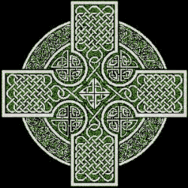
You can print up this Celtic Cross and make an appropriate St. Patrick's Day button out of it.



And I'll conclude with my favorite version of St. Patrick's Lorica (Breastplate):
I arise today
Through a mighty strength, the invocation of the Trinity,
Through the belief in the threeness,
Through confession of the oneness
Of the Creator of Creation.
I arise today
Through the strength of Christ's birth with his baptism,
Through the strength of his crucifixion with his burial,
Through the strength of his resurrection with his ascension,
Through the strength of his descent for the judgment of Doom.
I arise today
Through the strength of the love Cherubim,
In obedience of angels,
In the service of archangels,
In hope of resurrection to meet with reward,
In prayers of patriarchs,
In predictions of prophets,
In preaching of apostles,
In faith of confessors,
In innocence of holy virgins,
In deeds of righteous men.
I arise today
Through the strength of heaven, (God the Father)
Light of sun, (God the Son)
Radiance of moon, (Our Blessed Lady)
Splendor of fire, (God the Holy Ghost)
Speed of lightning, (Saint Michael)
Swiftness of wind, (Saint Gabriel)
Depth of sea, (Saint John the Baptist)
Stability of earth, (Saint Joseph)
Firmness of rock. (Saint Peter)
I arise today
Through God's strength to pilot me:
God's might to uphold me,
God's wisdom to guide me,
God's eye to look before me,
God's ear to hear me,
God's word to speak for me,
God's hand to guard me,
God's way to lie before me,
God's shield to protect me,
God's host to save me
From snares of devils,
From temptations of vices,
From everyone who shall wish me ill,
Afar and anear,
Alone and in multitude.
I summon today all these powers between me and all evils,
Against every cruel merciless power that may oppose my body and soul,
Against incantations of false prophets,
Against black laws of pagandom,
Against false laws of heretics,
Against craft of idolatry,
Against spells of witches and smiths and wizards,
Against every knowledge that corrupts man's body and soul.
Christ to shield me today
Against poison, against burning,
Against drowning, against wounding,
So that there may come to me abundance of reward.
Christ with me, Christ before me, Christ behind me,
Christ in me, Christ beneath me, Christ above me,
Christ on my right, Christ on my left,
Christ when I lie down, Christ when I sit down, Christ when I arise.
Christ in the heart and mind of every one who thinks of me,
Christ in the mouth of everyone who speaks of me or to me,
Christ in every eye that sees me or my works,
Christ in every ear that hears me or hears of me.
I arise today
Through a mighty strength, the invocation of the Trinity,
Through belief in the threeness,
Through confession of the oneness,
Of the Creator of Creation.
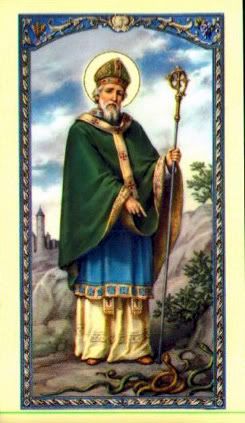

The Book of Kells
Irish High Crosses
Our Lady of Knock
How To Make a Saint Patrick's Cross Button
How To Make a Saint Brigid's Cross
You can print up this Celtic Cross and make an appropriate St. Patrick's Day button out of it.
And I'll conclude with my favorite version of St. Patrick's Lorica (Breastplate):
I arise today
Through a mighty strength, the invocation of the Trinity,
Through the belief in the threeness,
Through confession of the oneness
Of the Creator of Creation.
I arise today
Through the strength of Christ's birth with his baptism,
Through the strength of his crucifixion with his burial,
Through the strength of his resurrection with his ascension,
Through the strength of his descent for the judgment of Doom.
I arise today
Through the strength of the love Cherubim,
In obedience of angels,
In the service of archangels,
In hope of resurrection to meet with reward,
In prayers of patriarchs,
In predictions of prophets,
In preaching of apostles,
In faith of confessors,
In innocence of holy virgins,
In deeds of righteous men.
I arise today
Through the strength of heaven, (God the Father)
Light of sun, (God the Son)
Radiance of moon, (Our Blessed Lady)
Splendor of fire, (God the Holy Ghost)
Speed of lightning, (Saint Michael)
Swiftness of wind, (Saint Gabriel)
Depth of sea, (Saint John the Baptist)
Stability of earth, (Saint Joseph)
Firmness of rock. (Saint Peter)
I arise today
Through God's strength to pilot me:
God's might to uphold me,
God's wisdom to guide me,
God's eye to look before me,
God's ear to hear me,
God's word to speak for me,
God's hand to guard me,
God's way to lie before me,
God's shield to protect me,
God's host to save me
From snares of devils,
From temptations of vices,
From everyone who shall wish me ill,
Afar and anear,
Alone and in multitude.
I summon today all these powers between me and all evils,
Against every cruel merciless power that may oppose my body and soul,
Against incantations of false prophets,
Against black laws of pagandom,
Against false laws of heretics,
Against craft of idolatry,
Against spells of witches and smiths and wizards,
Against every knowledge that corrupts man's body and soul.
Christ to shield me today
Against poison, against burning,
Against drowning, against wounding,
So that there may come to me abundance of reward.
Christ with me, Christ before me, Christ behind me,
Christ in me, Christ beneath me, Christ above me,
Christ on my right, Christ on my left,
Christ when I lie down, Christ when I sit down, Christ when I arise.
Christ in the heart and mind of every one who thinks of me,
Christ in the mouth of everyone who speaks of me or to me,
Christ in every eye that sees me or my works,
Christ in every ear that hears me or hears of me.
I arise today
Through a mighty strength, the invocation of the Trinity,
Through belief in the threeness,
Through confession of the oneness,
Of the Creator of Creation.
Labels: Being Irish, Our Saintly Brethern
Monday, December 26, 2011
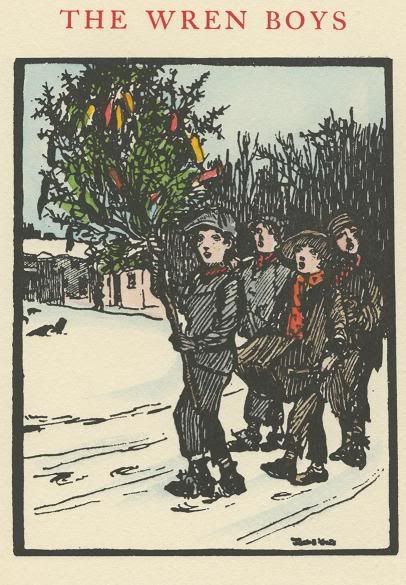
Hunting the Wren
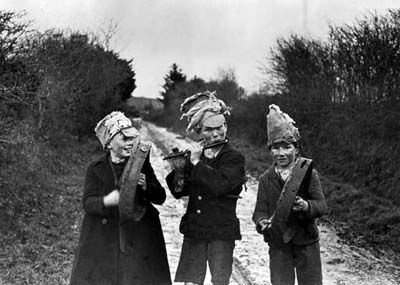
Liam Clancy in an early solo version
And just so that your Irish Christmas needs don't go unfulfilled, here are the Clancy Brothers singing Jingle Bells In Gaelic:
The Chieftains, The Bells Of Dublin
The Clancy Brothers, Curoo, Curoo
THIS JUST IN:
The West Clare Wren Boys. West Clare: I wonder if the assembly includes any Fitzpatricks from Lahinch, or Shanahans from Letterkelly
Labels: Being Irish, Christmas
Monday, August 22, 2011
In Béal na mBláth In the Year '22
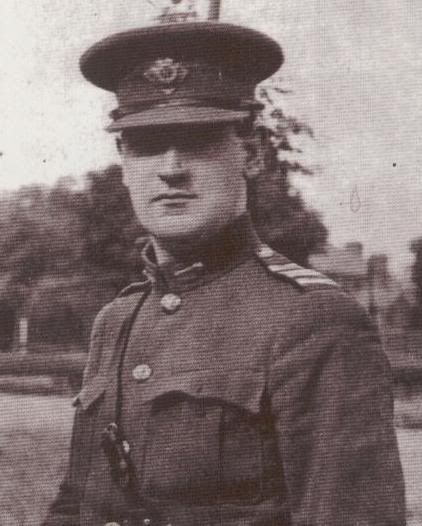
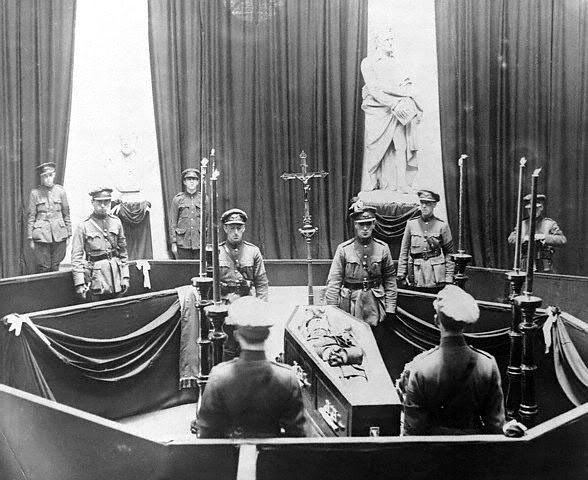
Eighty-nine years ago today, Michael Collins, driving force of Irish independence and first Commander-in-Chief of the Irish Army was murdered in an ambush by the IRA. Collins had been instrumental in negotiating the treaty by which Britain recognized Irish independence within the Commonwealth and in urging Irish voters to accept the treaty. But the IRA and de Valera, demanding a complete break no matter what the realities, would not be satisfied with the results of the election, and began a civil war.
Collins, a native of Cork, was driving along rural areas in an inspection tour to gauge sentiment and to do some secret negotiation with the IRA. In fact, he was travelling under a guarantee of safe conduct from the IRA. In Bael na m Blath ("the Mouth of Flowers"), the small convoy was ambushed. Collins took cover behind his car. The attack lost steam, and Collins' guard began to take the initiative. Just then, Collins stood up to either order his men to go up into the hills after the attackers, or call on the partisans to surrender. He was shot through the head. Ireland was doomed to 50 years of corruption and stagnation under de Valera and his successors.
The story has a personal side for me. My grandfather (who was from Lahinch, Co. Clare) had taken the British civil service exam with Collins and the two became friends. Granddad Fitzpatrick was a golf pro, but worked for the Royal Postal Service in Co. Clare as his day job. Collins took a job with the postal service in London. They went their separate ways during the Great War, with Collins agitating and becoming a leader in the Easter Rebellion. My grandfather joined his brothers in enlisting in the Connaught Rangers and fighting on the Western Front (and become a gas casualty at the 2nd Battle of Ypres). Collins negotiated the treaty that led to the recognition of the Irish Free State, and became a prime mover in its government, first Finance Minister, then Commander-in-Chief of the Army. My grandparents, from what I can gather, approved of the treaty (being from Clare and safely in the West, and not under any romantic delusions about "all or nothing"). After the treaty was approved, Collins sent my grandfather a signed photo clipped out of the newspaper of himself in his new uniform as Commander-in-Chief. Collins was murdered within ten days. Ten days after that, my grandfather and grandmother decamped for a new life in America, escaping an Ireland torn by civil war.
Sean Dunphy, Michael Collins
Johnny McEvoy, Ballad Of Michael Collins
Funeral Of Michael Collins
Labels: Being Irish
Sunday, August 21, 2011
Our Blessed Lady Of Knock
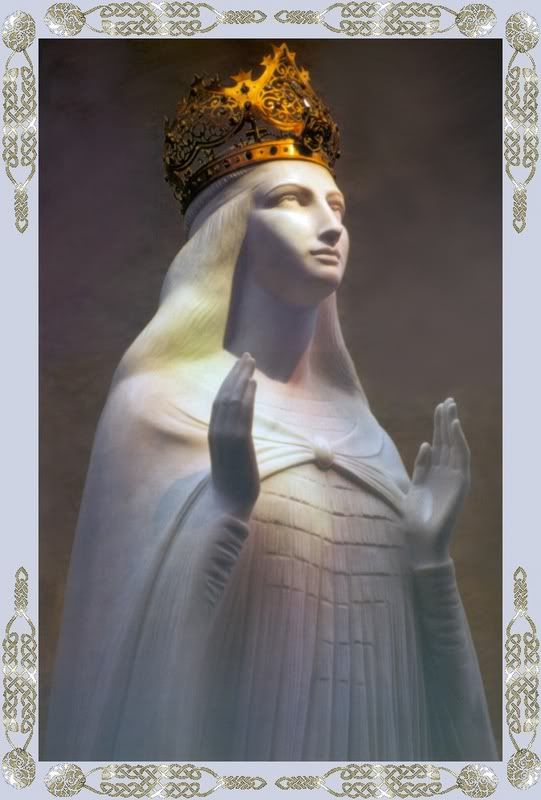
If today were not a Sunday, it would be liturgically opbserved as the feast of Our Lady of Knock, one of the better-documented Marian apparitions of modern times.
In Knock, County Mayo, on August 21st, 1879, The Blessed Mother, St. Joseph, and St. John the Evangelist appeared at the south gable of the parish church to 15 people over a period of 2 hours. Two ecclesiastical commissions have looked into the Knock apparition, and have endorsed it as authentic.
In 1979, Pope John Paul II said Mass in Knock. Knock has become, after Lourdes and Fatima, the most popular Marian pilgrimage site.
This is Knock's official website.
Lady of Knock
by Dana (Rosemary Scallon)
There were people of all ages
Gathered ‘round the gable wall
Poor and humble men and women,
Little children that thou called.
We are gathered here before thee,
And our hearts are just the same
Filled with joy at such a vision,
As we praise Thy name.
Refrain:
Golden Rose, Queen of Ireland,
All my cares and troubles cease
As we kneel with love before thee,
Lady of Knock, my Queen of Peace
Though thy message was unspoken,
Still the truth in silence lies
As we gaze upon thy vision,
And the truth I try to find.
Here I stand with John the teacher,
And with Joseph at your side
And I see the Lamb of God,
On the Altar glorified.
Refrain
And the Lamb will conquer
And the woman clothed in the sun
Will shine Her light on everyone.
And the lamb will conquer
And the woman clothed in the sun,
Will shine Her light on everyone.
Daniel O'Donnell sings Lady Of Knock
Here is The Wolfe Tones' tribute to the priest who made Knock an international pilgrimage site, Monsignor Horan:
Refrain:

Labels: Being Irish, Our Blessed Lady
Thursday, March 17, 2011
Saint Patrick's Day Fun, Part 3: The Music
You will notice that this year, it is not all the Clancy Brothers and Tommy Makem, though I love them dearly, God rest their souls.
Makem and Clancy, The Rambles Of Spring
The Orthodox Celts, The Star Of the County Down
Ronnie Drew and the Dubliners, Dublin In the Rare Auld Times
Mary Black, Óró 'sé do bheatha 'bhaile
Johnny McEvoy, The Spanish Lady
The Dropkick Murphys, The Wild Rover
Cherish The Ladies, The Ballad of the Fox Hunter
Danny Doyle, Whiskey On A Sunday
Foster & Allen, Nancy Myles
The Rankin Family, Mo Run Geal, Dileas
The Dubliners, Seven Drunken Nights
The Dublin City Rambers, Molly Malone
Paddy Reilly, Carrickfergus
The Wolfe Tones, Serjeant William Bailey
The Makem Brothers and Brian Sullivan, Fare Thee Weel Enniskillen
The Clancy Brothers And Tommy Makem, Isn't It Grand, Boys?
The Corrs & The Cheiftains, A Shindig Medley
Davey Arthur & The Fureys, It's A Long Way From Clare To Here
Sean Dunphy, Delaney's Donkey
Luke Kelly & The Dubliners, The Monto
Jim McCann, Grace
Liam Clancy, The Patriot Game
The Irish Rovers, The Unicorn
Makem & Clancy, The Town Of Ballybay
The Chieftains, Lillibulero/The White Cockade
Robbie O'Connell, Kilkelly, Ireland
The Clancy Brothers & Tommy Makem, Johnny McEldoo
The Clancy Brothers And Tommy Makem, The Juice Of the Barley
Ronnie Drew & The Dubliners, The Parting Glass
Makem and Clancy, The Rambles Of Spring
The Orthodox Celts, The Star Of the County Down
Ronnie Drew and the Dubliners, Dublin In the Rare Auld Times
Mary Black, Óró 'sé do bheatha 'bhaile
Johnny McEvoy, The Spanish Lady
The Dropkick Murphys, The Wild Rover
Cherish The Ladies, The Ballad of the Fox Hunter
Danny Doyle, Whiskey On A Sunday
Foster & Allen, Nancy Myles
The Rankin Family, Mo Run Geal, Dileas
The Dubliners, Seven Drunken Nights
The Dublin City Rambers, Molly Malone
Paddy Reilly, Carrickfergus
The Wolfe Tones, Serjeant William Bailey
The Makem Brothers and Brian Sullivan, Fare Thee Weel Enniskillen
The Clancy Brothers And Tommy Makem, Isn't It Grand, Boys?
The Corrs & The Cheiftains, A Shindig Medley
Davey Arthur & The Fureys, It's A Long Way From Clare To Here
Sean Dunphy, Delaney's Donkey
Luke Kelly & The Dubliners, The Monto
Jim McCann, Grace
Liam Clancy, The Patriot Game
The Irish Rovers, The Unicorn
Makem & Clancy, The Town Of Ballybay
The Chieftains, Lillibulero/The White Cockade
Robbie O'Connell, Kilkelly, Ireland
The Clancy Brothers & Tommy Makem, Johnny McEldoo
The Clancy Brothers And Tommy Makem, The Juice Of the Barley
Ronnie Drew & The Dubliners, The Parting Glass
Labels: Being Irish
Saint Patrick's Day Fun, Part 2: Skellig Michael
I have often used an allusion in a sort of intellectual shorthand, and it recently occurred to me that a sizable chunk of even my well-informed audience may not get it.
I sometimes speak (justifiably) of the decline of traditional morality in rather apocalyptic terms, adding that there is no safe place, no "Skellig Michael" to which the civilized may repair to wait out the latest triumph of barbarism (gay marriage, overwhelming immigration, political correctness, safety Nazis, high taxes, Islamicization of Europe, environmental weirdness, vegetarianism, what have you).
Well, the reference to Skellig Michael comes from my varied reading. Four books in particular have shaped this little intellectual shortcut. Kenneth Clark in Civilization wrote that:
"Looking back from the great civilizations of twelfth-century France or seventeenth-century Rome, it is hard to believe that for quite a long time-almost a hundred years-Western Christianity survived by clinging to places like Skellig Michael, a pinnacle of rock eighteen miles from the Irish coast, rising seven hundred feet out of the sea."
Clark's theme was picked up and amplified by Thomas Cahill in his recent bestseller How the Irish Saved Civilization. Cahill's book is about the very phenomenon that Clark mentioned in his first chapter, the survival of Western Civilization.
You see, at the time of the barbarian takeover of the declining Roman Empire, civilization was in quite a plight. Learning declined markedly. Even high culture declined precipitously. In the looting of the pelf of the empire, many of the works of classical culture were lost. The Germanic warlords who came to replace other Roman officials in actual charge out in the provinces were often illiterate. They did nothing to encourage literacy or to preserve the Graeco-Roman literary deposit. While the Church preserved some of Graeco-Roman culture on the continent, she and her agents could not hold all together.
A great deal was preserved in the island hermitage/monasteries of the Irish, who had absorbed Roman culture through the work of St. Patrick and his successors. Skellig Michael, a particularly uninviting location in the Northern Atlantic, was one of those places where the traditions of Graeco-Roman culture and writings were preserved by the Irish monks until Europe had calmed down enough to allow for this learning to be re-exported to it.
Irish monasticism was not the safe, comfortable sort of Saint Benedict and those who follow him. It was the white martyrdom of the desert fathers, harsh, almost brutally ascetic in ways Saint Benedict rejected so that monasticism could be followed by many, rather than just the elite ascetics. It sought out desert places, wastes, inaccessible islands, deep forests. And there it enacted sometimes harsh penances, like the Cross Vigil, in which a monk held out his hands in the posture of the Lord on the cross for days or weeks at a time. Sometimes, these monks would make the Cross Vigil waist-deep in freezing water.
Their greatest enemy was not the lack of women or material goods. Indeed, they considered themselves as athletes in training for Heaven. Such deprivations were just routine. No. The real enemy was depression, acedia, or the noonday devil "the destruction that wasteth at noonday," in the words of the Psalmist, the feeling, which uncannily comes in the middle of the day, that you have made no progress, that you are wasting your time, indeed your life. I have, for the first tie in my life, come to know this scourge myself in the last 6 months. A formidable enemy indeed, one that I am not sure I have conquered. Indeed, it seems to return, in one guise or another, every few days.
But they also kept libraries and scriptoria, and spent some of their time studying such literary works as their limited involvement with the greater civilization of the continent before its collapse afforded them.
Once Europe had recovered somewhat from the initial shock of the fall of classical civilization and the breakdown of government of the Western Empire, Irish monks, venturing forth from fastnesses like Skellig Michael roamed about France, Germany, and Italy, bringing with them copies of the books from their monasteries, books in which much of Plato and Aristotle, Cicero and Ovid were preserved, some works that Europe had not seen in a hundred years and more. These Irish monks gained great influence in the Merovingian, and later in the Carolingian courts.
The period in which Ireland, in the form of its monks, "saved civilization" was roughly from the death of St. Patrick to the time of Charlemagne. Then, in rapid succession, new waves of barbarian invaders, Vikings, mercilessly plundered the Irish monasteries, attacking even remote Skellig Michael in 823, only a few years after the death of Charlemagne. Duns Scotus was the last great figure in this Irish Renaissance.
Skellig Michael itself has been described by the local (Newburyport) Irish-American author James Charles Roy in his superb book The Road Wet, The Wind Close: Celtic Ireland. He explored the place for a couple of bleak days. It is indeed from his description a desolate spot. It is indeed hard to imagine that here, a large part of western civilization's written heritage was preserved.
"Skellig Michael now stands before us....Even from afar it looks menacing, unfriendly, barren, seemingly a perfect cone rising from the sea. jet-black in colour and everywhere jagged, sharp. There doesn't seem to be a smooth place anywhere."
Nevertheless, Roy is probably correct in calling it the "very essence of Celtic Ireland."
Today, ithe island's inhabitants are three lighthouse keepers who rotate every few months to lessent he chances of going mad, puffins, rabbits, and various seabirds. The island has two peaks. The higher one has a Way of the Cross, after a local fashion. In the vale between the two peaks, under a windswept spit known as "The Saddle of Christ," is the monastery. The monastery was built of dry-laid stone, and consists of 6 clochans, or dwelling huts, circular and beehive shaped. There are two stone oratories.
The monastery was probably built around 650 A.D. It was almost literally carved out of the rock of the island. It is not certain when the Way of the Cross was developed. It consists of "The Needle's Eye," a narrow vertical shaft in the rock about 20 feet high which must be climbed, "The Stone of Pain," a smooth rock 14 feet high which must be scrambled up, and "The Spindle":
"...a long narrow fragment of rock, projecting from the summit of this frightful place, over a raging sea (700 feet below-GTF); and this is walked to by a narrow path only two feet in breadth, and several steps in length. Here the devotees, women as well as men, get astride of this rock, and so edge forward, until they arrive at a stone cross...and here, having repeated a Pater Noster. Returning from thence concludes the penace."
The cross on "The Spindle" was usually kissed by the pilgrim, which required getting very far out onto the ledge.
In Slouching Towards Gomorrah, Judge Robert Bork, perhaps the most prescient observer of our culture of the present age, sees a new barbarian invasion. This invasion that threatens western culture today is almost entirely from within.
The new barbarism takes the form of a decline of standards, a coarsening of public life and discourse, and decline in educational achievement, and standards. It is vile rap music, played very loudly. It is political correctness destroying the study of history and forcing history through the unnatural prism of womyn's studies, African-American studies, gay and lesbian studies, etc. It is immigration run amok, so that a tidal wave of people unable or unwilling to conform themselves and their families to the American Way (the English language and the Anglo-Saxon culture, Christianity and democratic pluralism combined with free enterprise) It is drugs and the culture of dependency on government transfer payments. It is a loss of objective truth and morality and a rise of moral relativism. It is the abortion culture, the gay rights culture, the equality-at-any-price-to-civilization culture that dominates the fields of law, journalism, academia, increasingly the helping professions, and government service. It is ever-more invasive government intruding into areas of personal behavior that were never regulated before, while allowing mayhem to rage in other areas.
Bork sees this barbarism as all-engulfing, its reach being co-equal with the spread of television, popular music, liberal social attitudes, and the nanny state. Looking back to how western civilization in 450-850 was able to survive the barbarian onrush by clinging to rocky outcroppings like Skellig Michael, Bork sees little possibility of survival now.
There are gated communities, conservative publications, Latin Mass parishes, TV-less families, and homeschooling. But nowhere can a traditionalist parent spank without fear of the DSS worker showing up on your doorstep with a warrant and two cops to take your children away if you dare "abuse" them by spanking. The barbarians will not let us withdraw to a safe place, a Skellig Michael. Their reach is all-encompassing. It is everywhere the writ of a modern western government runs. No one was able to stop the British legal system from jailing that farmer who shot two burglars breaking into his home for the third time.
So that, my friends, is what I mean when I say that there will be no Skellig Michaels this time. There are no safe enclaves where traditional life can flourish in the midst of the liberal take-over. Civilization as we know it faces extinction.
Labels: Being Irish
Saint Patrick's Day Fun, Part 1: The Food
Here we are, at that day on which we are entitled (by annually issued indult of the Archdiocese of Boston) to a relaxation of Lenten austerity in order to honor Ireland's patron, Saint Patrick. It has now been almost a month since I tasted meat of any kind.
Corned beef is Jewish, not Irish. Irish immigrants here in the US picked it up from their Jewish neighbors, and it has, in the last 30 years, made an appearance in Ireland. But it isn't Irish in origin. Smoked shoulder, however, is, as the Irish are great pig farmers.
Here are some more foods you can have:
Limerick Ham
Limerick is that very depressing gray place depicted in Angela's Ashes. It is just across the Shannon from where my family is from, Ennis in County Clare. To the Irish, ham is a cured leg of pork. Traditionally, Limerick Ham is smoked over juniper branches. Whole hams should be steeped in cold water overnight before cooking but this is not necessary with smaller joints. The ham in this recipe is not really baked but rather finished off in the oven after having been marinated in cider.
3-5 lb ham pre-cooked
cider to cover
1/2 cup brown sugar
1 tsp mustard
20 whole cloves
Cover the ham with fresh apple cider (from the produce department; frozen at this time of year, not the clear apple juice sometimes called "cider" from the juice aisle) and cover with plastic wrap in the refrigerator for 2 days. Take out the ham and stud with whole cloves. Mix the sugar and mustard and rub well into the surface of the ham. Bake in a pre-heated oven for a further 10 minutes to the 1 lb at 400°F.
Adapted from the Appletree Press' A Little Irish Cookbook.
Chicken and Leek Pie
10-12 inch pie pastry
11/2 lb of seasoned boneless chicken breasts
4 1 inch-thick Slices ham steak
4 large leeks, cleaned/chopped
1 large onion, chopped
Salt
freshly ground black pepper (or 4-pepper blend w/ allspice)
1/2 tsp ground mace or nutmeg
3 cups cream of chicken soup
In a deep 1 - 1 1/2 quart dish, place layers of the chicken, the ham, leeks and onion, adding the mace, nutmeg and seasoning, then repeating the layers until the dish is full. Add the stock, then dampen the edges of the dish before rolling out the pastry to the required size. Place the pastry over the pie and press the edges down well. Crimp them with a fork. Make a small hole in the center. Roll out the scraps of pastry and form a leaf or rosette for the top. Place this very lightly over the small hole. Brush the pastry with milk, and bake at moderate heat, 350F, for 25-30 minutes. Cover the pastry with damp greaseproof paper when partially cooked if the top seems to be getting too brown. Gently heat the cream. When pie is cooked, remove from oven. Carefully lift off the rosette and pour the cream in through the hole. Put back the rosette and serve. (This pie forms a delicious soft jelly when cold.)
Baked Stuffed Herring
4 TBSP Breadcrumbs (heaping)
1 TBSP Parsley, chopped
Small egg, beaten
Juice and rind of lemon
1 pinch Nutmeg
Salt and pepper
8 Herrings, cleaned
2 cups Hard cider
Bayleaf, well crumbled
Fresh ground pepper
First make the stuffing by mixing the breadcrumbs, parsley, beaten egg, lemon juice and peel, and salt and pepper. Stuff each of the fish with the mixture. Lay fish in an ovenproof dish, close together; add the cider, crumbled bayleaf and salt and pepper. Cover with foil and bake at 350F for about 35 minutes.
From Traditional Irish Recipes.
Tom Fitzpatrick's Champ
8 large russets (I like Yukon Gold)
2 cups heavy cream
1/2 pound butter
fresh or dried chives to taste
fried or dried onions to taste
salt to taste
pepper to taste
1/4 pound butter
1 pound Irish back bacon
Cut a strip 1/2 inch wide along the circumference of the spuds. This gives them better flavor, and allows for easier peeling once they have been boiled. Then boil them in their jackets.
Fry up the Irish back bacon. Irish back bacon is more like cured pork than our smoked breakfast bacon. Once the back bacon is done, dry it off with paper towels, and cut off and remove the fat and dice up the choice pieces.
Peel the spuds, and place them in a large bowl and mash them with the cream, the 1/2 pound of butter (or more, if you like) chives, onions, salt and pepper. Mix them up and bring the spuds to a consistency you like. I prefer firm, smooth, and very creamy. Add in the back bacon and stir.
To serve, mound up the champ on each plate, and hollow out a crater at the top. Here, put in the additional butter sliced up so so that it melts. As you eat forkfuls of champ, dip them in the crater of butter. Sinfully rich and delicious!
Black Pudding With Vegetable Casserole
2 Shannon Traditional Black Puddings, skinned and sliced
2 potatoes, peeled and diced
2 carrots, pared and sliced
1 large leek, sliced
2 onions, peeled and sliced
1/4 small white cabbage, shredded
1 can red kidney beans, drained and rinsed
Optional: 1 chicken buillon cube
Salt & pepper to taste
2 tablespoonfuls of oil
Put the prepared onions, carrots, potatoes and leek into a large non-stick skillet with about 4 cups of boiling water. Add stock cube if desired. Cover and cook until the vegetables are almost tender, for 25 to 30 minutes. Add the cabbage and the kidney beans and cook for 5 minutes more. Saute the slices of black pudding in oil until they are crisp on the outside. Gently stir into vegetables and simmer for 10 minutes. Add the seasoning and serve hot with bread or rolls.
Serves 4 to 6
Irish Soda Bread, Fitzpatrick Family Version
2 C. flour
1 t. baking soda
1/2 t. salt
1/2 t. nutmeg
1 1/2 T. sugar
6 T. butter
2/3 C. raisins, brown or golden or mixed
2 t. caraway seeds
1 C. buttermilk
Preheat oven to 375°F.
In a large bowl sift together the flour, baking soda, salt, nutmeg, and sugar. Using a pastry blender or fingertips, work the shortening into the flour until the consistency is the same as that of small peas. Stir in the raisins and caraway and mix to distribute evenly.
Gradually stir in the buttermilk, 1/4 cup at a time, using only enough to allow the dough to come together. Knead the dough for 1 - 2 minutes.
Shape the dough into a round loaf and place on a greased baking sheet. Cut an X on the top and over the sides of the loaf. Bake for 45 minutes or until the bread sounds hollow when tapped.
Cool on a rack.
Great heated with butter melting over the top.
Lemon Curd
4 tablespoons unsalted butter
1/2 cup sugar
1/2 cup fresh lemon juice
4 egg yolks
1 tablespoon grated lemon peel
In saucepan, combine all ingredients except lemon peel. Stirring
with wooden spoon, cook over lowest heat, being careful not to
let mixture boil or yolks curdle. Cook until mixture coats back
of a spoon. Pour into small bowl and stir in lemon peel. Allow
to cool.
Makes 1/2 cup. Great on hot soda bread!
Irish Cream
1 cup whisky (Jameson's)
1 can condensed milk
3 eggs
1 tablespoon Hershey's chocolate syrup
1 tablespoon vanilla
Blend and refrigerate
Irish Whisky Cake
8 ounces Raisins
Grated rind of 1 lemon
150 milliliters Irish Whisky
6 ounces Softened butter
3 Eggs
6 ounces Soft brown sugar
6 ounces Plain flour
1 pinch Salt
1 pinch Ground cloves
1 teaspoon Baking powder
Juice of 1 lemon
8 ounces Confectioners' sugar
Warm water as needed
Put the raisins and grated lemon rind into a bowl with the whiskey, and leave overnight to soak. Grease a 7-inch cake pan, and line the bottom with parchment; preheat oven to 350F. Cream the butter and sugar until light and fluffy. Separate the eggs and sift the flour, salt, cloves and baking powder into a bowl. Beat the yolks into the butter and sugar one by one, including a spoonful of flour and beating well after each addition. Gradually add the whiskey and raisin mixture, alternating with the remaining flour. Do not overbeat at this stage. Finally, whisk the egg whites until stiff and fold them into the mixture with a metal spoon. Turn into the prepared pan and bake in the preheated oven for about 1 1/2 hours, or until well risen and springy to the touch ~- or test with a skewer: when it comes out clean, the cake's ready. Turn out and cool on a wire rack.
Meanwhile, make the icing by mixing the lemon juice with the sieved confectioners' sugar and just enough water to make a pouring consistency. Put a dinner plate under the cake rack to catch the drips, and pour the icing over the cake a tablespoonful at a time, letting it dribble naturally down the sides. Don't worry if a lot of it ends up on the plate underneath -- just scoop it up and put it on top again. When the icing has set, it can be decorated with crystallized lemon slices if you like.
Walnut Mince Tart
1 (9-inch) unbaked pastry shell
1/2 cup sugar
2 tablespoons flour
1/8 teaspoon salt
2 eggs, lightly beaten
2 tablespoons melted butter
1 cup chopped walnuts
1 (27-ounce) jar mincemeat
Refrigerate unused half for up to 3 days or freeze, double-wrapped, for up to a month.
Preheat the oven to 400° F. In a large bowl, combine the sugar, flour, and salt. Add the eggs and mix well. Add the melted butter, walnuts, and mincemeat. Spoon into the pastry shell. Bake for 15 minutes; reduce oven temperature to 325° F, and bake for 50 minutes longer, or until the filling is slightly puffed and firm. Remove from the oven and let cool on a rack for 15
minutes.
Serve warm or at room temperature with whipped cream or vanilla ice cream. Serves 6 to 8.
Corned beef is Jewish, not Irish. Irish immigrants here in the US picked it up from their Jewish neighbors, and it has, in the last 30 years, made an appearance in Ireland. But it isn't Irish in origin. Smoked shoulder, however, is, as the Irish are great pig farmers.
Here are some more foods you can have:
Limerick Ham
Limerick is that very depressing gray place depicted in Angela's Ashes. It is just across the Shannon from where my family is from, Ennis in County Clare. To the Irish, ham is a cured leg of pork. Traditionally, Limerick Ham is smoked over juniper branches. Whole hams should be steeped in cold water overnight before cooking but this is not necessary with smaller joints. The ham in this recipe is not really baked but rather finished off in the oven after having been marinated in cider.
3-5 lb ham pre-cooked
cider to cover
1/2 cup brown sugar
1 tsp mustard
20 whole cloves
Cover the ham with fresh apple cider (from the produce department; frozen at this time of year, not the clear apple juice sometimes called "cider" from the juice aisle) and cover with plastic wrap in the refrigerator for 2 days. Take out the ham and stud with whole cloves. Mix the sugar and mustard and rub well into the surface of the ham. Bake in a pre-heated oven for a further 10 minutes to the 1 lb at 400°F.
Adapted from the Appletree Press' A Little Irish Cookbook.
Chicken and Leek Pie
10-12 inch pie pastry
11/2 lb of seasoned boneless chicken breasts
4 1 inch-thick Slices ham steak
4 large leeks, cleaned/chopped
1 large onion, chopped
Salt
freshly ground black pepper (or 4-pepper blend w/ allspice)
1/2 tsp ground mace or nutmeg
3 cups cream of chicken soup
In a deep 1 - 1 1/2 quart dish, place layers of the chicken, the ham, leeks and onion, adding the mace, nutmeg and seasoning, then repeating the layers until the dish is full. Add the stock, then dampen the edges of the dish before rolling out the pastry to the required size. Place the pastry over the pie and press the edges down well. Crimp them with a fork. Make a small hole in the center. Roll out the scraps of pastry and form a leaf or rosette for the top. Place this very lightly over the small hole. Brush the pastry with milk, and bake at moderate heat, 350F, for 25-30 minutes. Cover the pastry with damp greaseproof paper when partially cooked if the top seems to be getting too brown. Gently heat the cream. When pie is cooked, remove from oven. Carefully lift off the rosette and pour the cream in through the hole. Put back the rosette and serve. (This pie forms a delicious soft jelly when cold.)
Baked Stuffed Herring
4 TBSP Breadcrumbs (heaping)
1 TBSP Parsley, chopped
Small egg, beaten
Juice and rind of lemon
1 pinch Nutmeg
Salt and pepper
8 Herrings, cleaned
2 cups Hard cider
Bayleaf, well crumbled
Fresh ground pepper
First make the stuffing by mixing the breadcrumbs, parsley, beaten egg, lemon juice and peel, and salt and pepper. Stuff each of the fish with the mixture. Lay fish in an ovenproof dish, close together; add the cider, crumbled bayleaf and salt and pepper. Cover with foil and bake at 350F for about 35 minutes.
From Traditional Irish Recipes.
Tom Fitzpatrick's Champ
8 large russets (I like Yukon Gold)
2 cups heavy cream
1/2 pound butter
fresh or dried chives to taste
fried or dried onions to taste
salt to taste
pepper to taste
1/4 pound butter
1 pound Irish back bacon
Cut a strip 1/2 inch wide along the circumference of the spuds. This gives them better flavor, and allows for easier peeling once they have been boiled. Then boil them in their jackets.
Fry up the Irish back bacon. Irish back bacon is more like cured pork than our smoked breakfast bacon. Once the back bacon is done, dry it off with paper towels, and cut off and remove the fat and dice up the choice pieces.
Peel the spuds, and place them in a large bowl and mash them with the cream, the 1/2 pound of butter (or more, if you like) chives, onions, salt and pepper. Mix them up and bring the spuds to a consistency you like. I prefer firm, smooth, and very creamy. Add in the back bacon and stir.
To serve, mound up the champ on each plate, and hollow out a crater at the top. Here, put in the additional butter sliced up so so that it melts. As you eat forkfuls of champ, dip them in the crater of butter. Sinfully rich and delicious!
Black Pudding With Vegetable Casserole
2 Shannon Traditional Black Puddings, skinned and sliced
2 potatoes, peeled and diced
2 carrots, pared and sliced
1 large leek, sliced
2 onions, peeled and sliced
1/4 small white cabbage, shredded
1 can red kidney beans, drained and rinsed
Optional: 1 chicken buillon cube
Salt & pepper to taste
2 tablespoonfuls of oil
Put the prepared onions, carrots, potatoes and leek into a large non-stick skillet with about 4 cups of boiling water. Add stock cube if desired. Cover and cook until the vegetables are almost tender, for 25 to 30 minutes. Add the cabbage and the kidney beans and cook for 5 minutes more. Saute the slices of black pudding in oil until they are crisp on the outside. Gently stir into vegetables and simmer for 10 minutes. Add the seasoning and serve hot with bread or rolls.
Serves 4 to 6
Irish Soda Bread, Fitzpatrick Family Version
2 C. flour
1 t. baking soda
1/2 t. salt
1/2 t. nutmeg
1 1/2 T. sugar
6 T. butter
2/3 C. raisins, brown or golden or mixed
2 t. caraway seeds
1 C. buttermilk
Preheat oven to 375°F.
In a large bowl sift together the flour, baking soda, salt, nutmeg, and sugar. Using a pastry blender or fingertips, work the shortening into the flour until the consistency is the same as that of small peas. Stir in the raisins and caraway and mix to distribute evenly.
Gradually stir in the buttermilk, 1/4 cup at a time, using only enough to allow the dough to come together. Knead the dough for 1 - 2 minutes.
Shape the dough into a round loaf and place on a greased baking sheet. Cut an X on the top and over the sides of the loaf. Bake for 45 minutes or until the bread sounds hollow when tapped.
Cool on a rack.
Great heated with butter melting over the top.
Lemon Curd
4 tablespoons unsalted butter
1/2 cup sugar
1/2 cup fresh lemon juice
4 egg yolks
1 tablespoon grated lemon peel
In saucepan, combine all ingredients except lemon peel. Stirring
with wooden spoon, cook over lowest heat, being careful not to
let mixture boil or yolks curdle. Cook until mixture coats back
of a spoon. Pour into small bowl and stir in lemon peel. Allow
to cool.
Makes 1/2 cup. Great on hot soda bread!
Irish Cream
1 cup whisky (Jameson's)
1 can condensed milk
3 eggs
1 tablespoon Hershey's chocolate syrup
1 tablespoon vanilla
Blend and refrigerate
Irish Whisky Cake
8 ounces Raisins
Grated rind of 1 lemon
150 milliliters Irish Whisky
6 ounces Softened butter
3 Eggs
6 ounces Soft brown sugar
6 ounces Plain flour
1 pinch Salt
1 pinch Ground cloves
1 teaspoon Baking powder
Juice of 1 lemon
8 ounces Confectioners' sugar
Warm water as needed
Put the raisins and grated lemon rind into a bowl with the whiskey, and leave overnight to soak. Grease a 7-inch cake pan, and line the bottom with parchment; preheat oven to 350F. Cream the butter and sugar until light and fluffy. Separate the eggs and sift the flour, salt, cloves and baking powder into a bowl. Beat the yolks into the butter and sugar one by one, including a spoonful of flour and beating well after each addition. Gradually add the whiskey and raisin mixture, alternating with the remaining flour. Do not overbeat at this stage. Finally, whisk the egg whites until stiff and fold them into the mixture with a metal spoon. Turn into the prepared pan and bake in the preheated oven for about 1 1/2 hours, or until well risen and springy to the touch ~- or test with a skewer: when it comes out clean, the cake's ready. Turn out and cool on a wire rack.
Meanwhile, make the icing by mixing the lemon juice with the sieved confectioners' sugar and just enough water to make a pouring consistency. Put a dinner plate under the cake rack to catch the drips, and pour the icing over the cake a tablespoonful at a time, letting it dribble naturally down the sides. Don't worry if a lot of it ends up on the plate underneath -- just scoop it up and put it on top again. When the icing has set, it can be decorated with crystallized lemon slices if you like.
Walnut Mince Tart
1 (9-inch) unbaked pastry shell
1/2 cup sugar
2 tablespoons flour
1/8 teaspoon salt
2 eggs, lightly beaten
2 tablespoons melted butter
1 cup chopped walnuts
1 (27-ounce) jar mincemeat
Refrigerate unused half for up to 3 days or freeze, double-wrapped, for up to a month.
Preheat the oven to 400° F. In a large bowl, combine the sugar, flour, and salt. Add the eggs and mix well. Add the melted butter, walnuts, and mincemeat. Spoon into the pastry shell. Bake for 15 minutes; reduce oven temperature to 325° F, and bake for 50 minutes longer, or until the filling is slightly puffed and firm. Remove from the oven and let cool on a rack for 15
minutes.
Serve warm or at room temperature with whipped cream or vanilla ice cream. Serves 6 to 8.
Labels: Being Irish
Sunday, August 22, 2010
In Béal na mBláth In the Year '22
Eighty-eight years ago today, Michael Collins, driving force of Irish independence and first Commander-in-Chief of the Irish Army was murdered in an ambush by the IRA. Collins had been instrumental in negotiating the treaty by which Britain recognized Irish independence within the Commonwealth and in urging Irish voters to accept the treaty. But the IRA and de Valera, demanding a complete break no matter what the realities, would not be satisfied with the results of the election, and began a civil war.
Collins, a native of Cork, was driving along rural areas in an inspection tour to gauge sentiment and to do some secret negotiation with the IRA. In fact, he was travelling under a guarantee of safe conduct from the IRA. In Bael na m Blath ("the Mouth of Flowers"), the small convoy was ambushed. Collins took cover behind his car. The attack lost steam, and Collins' guard began to take the initiative. Just then, Collins stood up to either order his men to go up into the hills after the attackers, or call on the partisans to surrender. He was shot through the head. Ireland was doomed to 50 years of corruption and stagnation under de Valera and his successors.
The story has a personal side for me. My grandfather (who was from Lahinch, Co. Clare) had taken the British civil service exam with Collins and the two became friends. Granddad Fitzpatrick was a golf pro, but worked for the Royal Postal Service in Co. Clare as his day job. Collins took a job with the postal service in London. They went their separate ways during the Great War, with Collins agitating and becoming a leader in the Easter Rebellion. My grandfather joined his brothers in enlisting in the Connaught Rangers and fighting on the Western Front (and become a gas casualty at the 2nd Battle of Ypres). Collins negotiated the treaty that led to the recognition of the Irish Free State, and became a prime mover in its government, first Finance Minister, then Commander-in-Chief of the Army. My grandparents, from what I can gather, approved of the treaty (being from Clare and safely in the West, and not under any romantic delusions about "all or nothing"). After the treaty was approved, Collins sent my grandfather a signed photo clipped out of the newspaper of himself in his new uniform as Commander-in-Chief. Collins was murdered within ten days. Ten days after that, my grandfather and grandmother decamped for a new life in America, escaping an Ireland torn by civil war.
Sean Dunphy, Michael Collins
Johnny McEvoy, Ballad Of Michael Collins
Funeral Of Michael Collins
Labels: Being Irish
Saturday, December 05, 2009
Requiescat In Pace
And then, there were none. Irish traditional music pioneer Liam Clancy, the last survivor of The Clancy Brothers and Tommy Makem, died yesterday in a Cork hospital of pulmonary fibrosis at the age of 74.
I'll leave it to others to summarize his career.
What a sense of loss! I grew up listening to the group every week on Boston's Saturday Irish music programs on WROL (950 AM). The Clancy Brothers and Tommy Makem, The Clancy Brothers With Robbie O'Connell, Makem and Clancy, and Liam Clancy solo always made up a big chunk of the playlist on that station.
The men in the Aran Island sweaters are all gone now.
Gosh. This is one of those passings that make you feel old.
God rest you, Liam. And Tommy. And Paddy. And Bobby. And Tommy.
Requiescat in pace.
Red Is The Rose (Makem & Clancy)
I'll Tell Me Ma (the Clancy Brothers and Tommy Makem)
The Patriot Game (Liam Clancy)
Isn't It Grand, Boys? (The Clancy Brothers and Tommy Makem Reunion Tour)
Mary Mack (Makem & Clancy)
Portlairge (the Clancy Brothers And Tommy Makem)
Robert Emmet's Speech From the Dock (The Clancy Brothers And Tommy
Makem)
The Rambles Of Spring (Makem & Clancy)
The Band Played Waltzing Matilda (Makem & Clancy)
Oro Se Do Bheatha Bhaile (Clancy Brothers & Tommy Makem)
Whatever you Say, Say Nothing (Makem & Clancy)
Reilly's Daughter (the Clancy Brothers and Tommy Makem)
Roddy McCorley (The Clancy Brothers and Tommy Makem)
The Parting Glass (Makem & Clancy)
I'll leave it to others to summarize his career.
What a sense of loss! I grew up listening to the group every week on Boston's Saturday Irish music programs on WROL (950 AM). The Clancy Brothers and Tommy Makem, The Clancy Brothers With Robbie O'Connell, Makem and Clancy, and Liam Clancy solo always made up a big chunk of the playlist on that station.
The men in the Aran Island sweaters are all gone now.
Gosh. This is one of those passings that make you feel old.
God rest you, Liam. And Tommy. And Paddy. And Bobby. And Tommy.
Requiescat in pace.
Red Is The Rose (Makem & Clancy)
I'll Tell Me Ma (the Clancy Brothers and Tommy Makem)
The Patriot Game (Liam Clancy)
Isn't It Grand, Boys? (The Clancy Brothers and Tommy Makem Reunion Tour)
Mary Mack (Makem & Clancy)
Portlairge (the Clancy Brothers And Tommy Makem)
Robert Emmet's Speech From the Dock (The Clancy Brothers And Tommy
Makem)
The Rambles Of Spring (Makem & Clancy)
The Band Played Waltzing Matilda (Makem & Clancy)
Oro Se Do Bheatha Bhaile (Clancy Brothers & Tommy Makem)
Whatever you Say, Say Nothing (Makem & Clancy)
Reilly's Daughter (the Clancy Brothers and Tommy Makem)
Roddy McCorley (The Clancy Brothers and Tommy Makem)
The Parting Glass (Makem & Clancy)
Labels: Being Irish