Wednesday, June 01, 2011
Rogation Wednesday
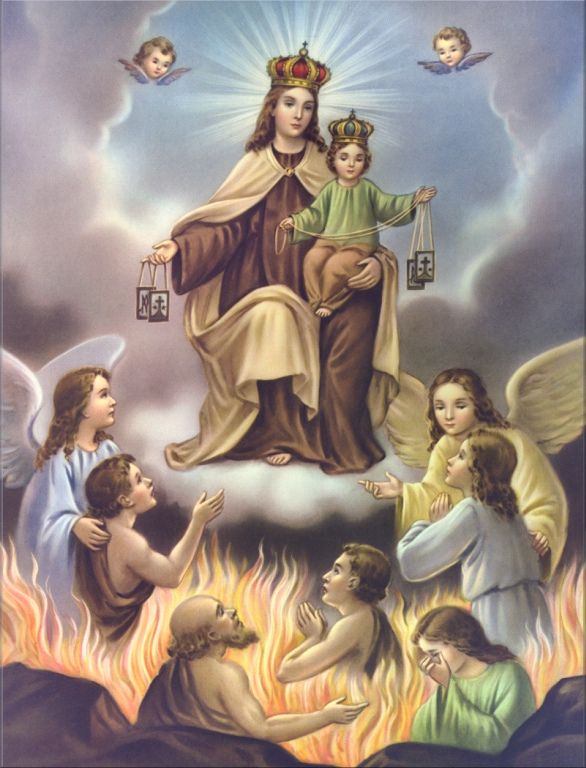
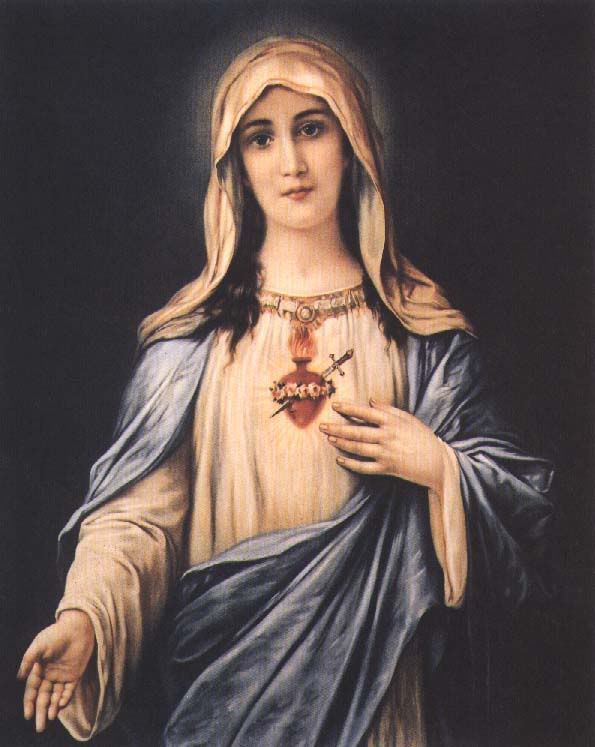
One of the glories of Catholicism is its ability to incorporate so many varying interests in aspects of our Catholic Faith under the same general rubric. Some Catholics are devoted to the Rosary, others to the Sacred Heart. Some especially revere Our Lady of Mount Carmel, others Our Sorrowful Mother. Some love the devotion of the Five Sacred Wounds, while others cling just as doggedly to the devotion of the Fifteen Os of Saint Bridget. Some are clients of this saint, some of that.
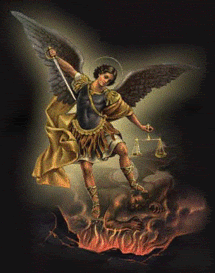
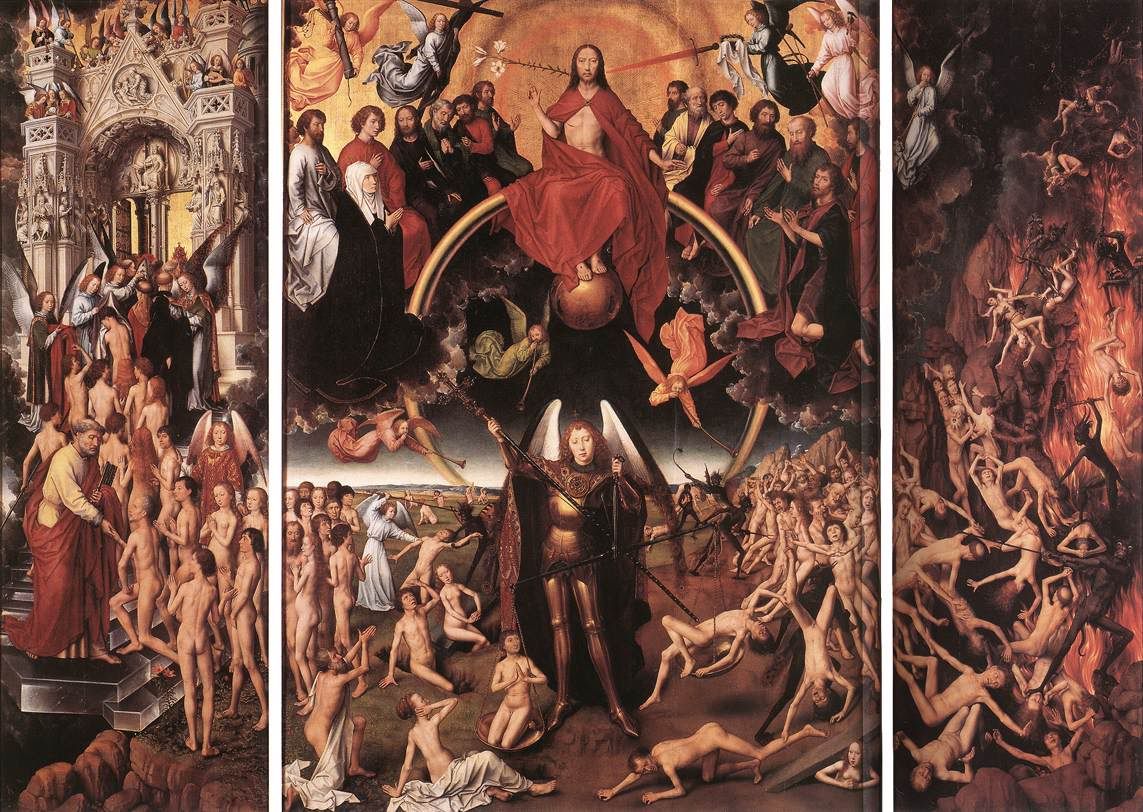
The Church's manner of accommodating so many varying interests has been to foster guilds devoted to these aspects of Catholic piety. The creation of a group of people devoted to a particular aspect of the Faith allows like-minded folks to interact, but at the same time keeps them within the bounds of our Mother the Church. The Church, in the modern parlance, is a "Big Tent." So long as you adhere to the Magesterium in matters of faith and morals, and live within the Church and its teachings, no one is going to make a fuss if you prefer to pray to St. Michael as the escort of souls, or to St. Joseph as the patron of a happy death, or to the general patronage of Our Blessed Lady, when you pray for a happy and holy death.
Guilds for a particular devotion have a long history, and were present in England before the protestant rebellion. They thrived in the 19th century, and were still going strong before the post-Vatican II tidal wave nearly wrecked everything. I believe, though I don't have any evidence to support this at the moment, that they are making a quiet comeback today. Where the Church is healthy, you will still find active St. Vincent de Paul Societies, and busy Holy Name Societies. The Spanish Penitents i profiled during Holy Week are modern devotional guilds.
As I said, the devotional guilds were a part of Catholic life well before the 1500s. And of course, as the parish community processed on important feast days, like the Rogation Days, the guilds took part. The processed together as a group (and one can imagine that the parish priest had to diplomatically allot the guilds' respective places in the procession).
Each group had some sort of banner. Often these banners were ephemeral, like the felt things one sees in churches today. But sometimes they were crafted symbols of the guild.
I have only found one image of surviving guild banners for procession. They are from France, and probably do not predate the French Revolution.
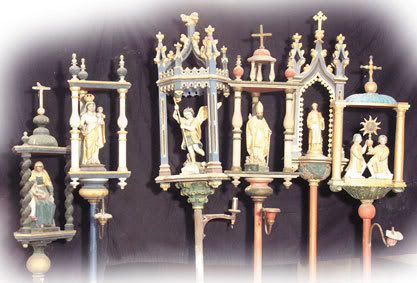
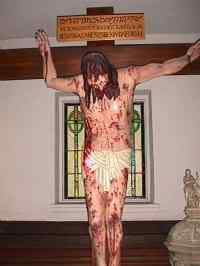
But one can see a Catholic community dividing itself into its "little platoons" and processing behind the Crucifix and the parish priest in small groups as they perambulate the parish, asking blessing on the crops, praying the Litany of the Saints, and beating the bounds of the parish.
The Church's manner of accommodating so many varying interests has been to foster guilds devoted to these aspects of Catholic piety. The creation of a group of people devoted to a particular aspect of the Faith allows like-minded folks to interact, but at the same time keeps them within the bounds of our Mother the Church. The Church, in the modern parlance, is a "Big Tent." So long as you adhere to the Magesterium in matters of faith and morals, and live within the Church and its teachings, no one is going to make a fuss if you prefer to pray to St. Michael as the escort of souls, or to St. Joseph as the patron of a happy death, or to the general patronage of Our Blessed Lady, when you pray for a happy and holy death.
Guilds for a particular devotion have a long history, and were present in England before the protestant rebellion. They thrived in the 19th century, and were still going strong before the post-Vatican II tidal wave nearly wrecked everything. I believe, though I don't have any evidence to support this at the moment, that they are making a quiet comeback today. Where the Church is healthy, you will still find active St. Vincent de Paul Societies, and busy Holy Name Societies. The Spanish Penitents i profiled during Holy Week are modern devotional guilds.
As I said, the devotional guilds were a part of Catholic life well before the 1500s. And of course, as the parish community processed on important feast days, like the Rogation Days, the guilds took part. The processed together as a group (and one can imagine that the parish priest had to diplomatically allot the guilds' respective places in the procession).
Each group had some sort of banner. Often these banners were ephemeral, like the felt things one sees in churches today. But sometimes they were crafted symbols of the guild.
I have only found one image of surviving guild banners for procession. They are from France, and probably do not predate the French Revolution.
But one can see a Catholic community dividing itself into its "little platoons" and processing behind the Crucifix and the parish priest in small groups as they perambulate the parish, asking blessing on the crops, praying the Litany of the Saints, and beating the bounds of the parish.
Labels: Rogation Days
Tuesday, May 31, 2011
Rogation Tuesday
Since Rogationtide processions went on during all three days before Ascension Thursday, and there is a practical limit to how many times the congregation can chant the Litanies, and participate in the various prayers offered for newly-planted crops, something else needed to be added to occupy those in the procession. And that is the beating of the bounds.
As time went by, with parish and property lines often marked by natural features like a protuberant stone, those boundary lines often became blurred and shifted, either through natural events (a stream drying up or shifting) or human action (moving a stone to move the property line). A parish might want to exclude a home from its territory if the inhabitants were poor and shiftless and likely to become a charge on the charity of the parish. Or it might want to include more affluent homes on the edge of the boundary.
So, over time, means were devised to create a living memory of just where the boundary line was, regardless of the natural features mentioned in any grants or deeds. What was devised was this. During one or more of the Rogation Processions, the young boys of the parish were brought along and enjoined to memorize the exact line of the boundary. The boys would be beaten with narrow sticks to ensure their proper memorization, and to chastise them if their memory was faulty. Thus, the "Beating of the Bounds."
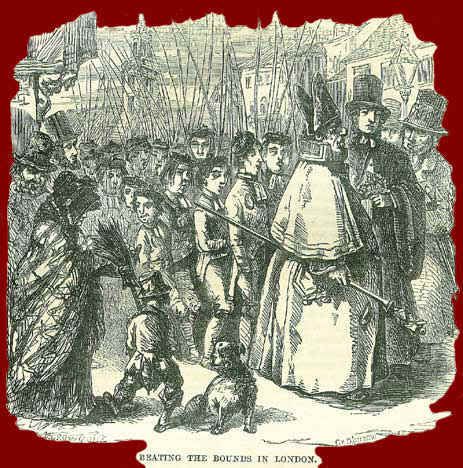
Today, when a "Beating of the Bounds" occurs, it tends to be in England, and to be a High Church Anglican thing. They have the old territorial parishes and the parish churches, since the protestant rebellion. English Catholics today, having less official status and being more scattered, take little interest in such local displays. Also today, it appears that New Age pagans like to attach themselves to Beating of the Bounds processions during Rogationtide, since it is a seasonal fancy-dress occasion. And they are joined by morris dancers, town criers, handbell guilds, and so on.
But the origins of the procession and the beating of the bounds are firmly Catholic. Perhaps someday, the vehicle of the Rogation Procession will be reunited to the Catholic practice that gave rise to it.
As time went by, with parish and property lines often marked by natural features like a protuberant stone, those boundary lines often became blurred and shifted, either through natural events (a stream drying up or shifting) or human action (moving a stone to move the property line). A parish might want to exclude a home from its territory if the inhabitants were poor and shiftless and likely to become a charge on the charity of the parish. Or it might want to include more affluent homes on the edge of the boundary.
So, over time, means were devised to create a living memory of just where the boundary line was, regardless of the natural features mentioned in any grants or deeds. What was devised was this. During one or more of the Rogation Processions, the young boys of the parish were brought along and enjoined to memorize the exact line of the boundary. The boys would be beaten with narrow sticks to ensure their proper memorization, and to chastise them if their memory was faulty. Thus, the "Beating of the Bounds."
Today, when a "Beating of the Bounds" occurs, it tends to be in England, and to be a High Church Anglican thing. They have the old territorial parishes and the parish churches, since the protestant rebellion. English Catholics today, having less official status and being more scattered, take little interest in such local displays. Also today, it appears that New Age pagans like to attach themselves to Beating of the Bounds processions during Rogationtide, since it is a seasonal fancy-dress occasion. And they are joined by morris dancers, town criers, handbell guilds, and so on.
But the origins of the procession and the beating of the bounds are firmly Catholic. Perhaps someday, the vehicle of the Rogation Procession will be reunited to the Catholic practice that gave rise to it.
Labels: Rogation Days
Monday, May 30, 2011
Rogation Monday
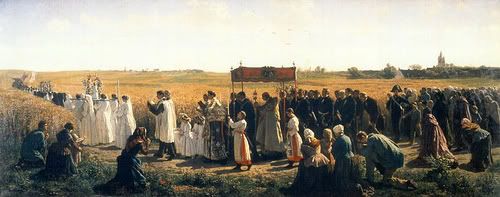
Today, tomorrow, and Wednesday are the Rogation or "Gang" Days.
From a University of Chicago site:
The Rogation Days are three (or four) days focused on agriculture and nature, where we pray for a good harvest, fruitful crops, good weather, and protection from flood, tornado, earthquake, and other natural disasters. Traditionally the Church offers these requests on the Monday, Tuesday, and Wednesday before the Feast of the Ascension, although some churches also add the Sunday before Ascension, before Rogation Monday. (The Catholic Church marks April 25 as the Major Rogation, and the days before Ascension as the Minor Rogation.)
Rogation comes from the Latin rogatio and French rogare, meaning "to ask." Fifth-century France was beset with a number of natural disasters, including floods, failing harvests, and an earthquake on Ascension (which always falls on a Thursday). In response to these calamities Mamertus, Bishop of Vienne, called for three days of prayer, fasting, and repentance, and this quickly became the custom for the three days preceding Ascension.
The observance of Rogation Days spread throughout Europe (In England, the days are also known as Gang-Days, Gang-Week, or Cross-Week.) Many churches led a procession around the town or parish boundaries on one of the Rogation Days, chanting a litany to the saints and offering prayers for a good year. This practice became known as "beating the bounds." George Herbert recommends this practice in A Country Parson (see chapter 25).
Many churches in farming communities continue to observe a traditional Rogation.Other churches are adapting the Rogation services to a technology-based society.
more about Rogation Days here, here, here, and here.
Labels: Rogation Days
Wednesday, May 20, 2009
Rogation Wednesday
One of the glories of Catholicism is its ability to incorporate so many varying interests in aspects of our Catholic Faith under the same general rubric. Some Catholics are devoted to the Rosary, others to the Sacred Heart. Some especially revere Our Lady of Mount Carmel, others Our Sorrowful Mother. Some love the devotion of the Five Sacred Wounds, while others cling just as doggedly to the devotion of the Fifteen Os of Saint Bridget. Some are clients of this saint, some of that.
The Church's manner of accommodating so many varying interests has been to foster guilds devoted to these aspects of Catholic piety. The creation of a group of people devoted to a particular aspect of the Faith allows like-minded folks to interact, but at the same time keeps them within the bounds of our Mother the Church. The Church, in the modern parlance, is a "Big Tent." So long as you adhere to the Magesterium in matters of faith and morals, and live within the Church and its teachings, no one is going to make a fuss if you prefer to pray to St. Michael as the escort of souls, or to St. Joseph as the patron of a happy death, or to the general patronage of Our Blessed Lady, when you pray for a happy and holy death.
Guilds for a particular devotion have a long history, and were present in England before the protestant rebellion. They thrived in the 19th century, and were still going strong before the post-Vatican II tidal wave nearly wrecked everything. I believe, though I don't have any evidence to support this at the moment, that they are making a quiet comeback today. Where the Church is healthy, you will still find active St. Vincent de Paul Societies, and busy Holy Name Societies. The Spanish Penitents i profiled during Holy Week are modern devotional guilds.
As I said, the devotional guilds were a part of Catholic life well before the 1500s. And of course, as the parish community processed on important feast days, like the Rogation Days, the guilds took part. The processed together as a group (and one can imagine that the parish priest had to diplomatically allot the guilds' respective places in the procession).
Each group had some sort of banner. Often these banners were ephemeral, like the felt things one sees in churches today. But sometimes they were crafted symbols of the guild.
I have only found one image of surviving guild banners for procession. They are from France, and probably do not predate the French Revolution.
But one can see a Catholic community dividing itself into its "little platoons" and processing behind the Crucifix and the parish priest in small groups as they perambulate the parish, asking blessing on the crops, praying the Litany of the Saints, and beating the bounds of the parish.
The Church's manner of accommodating so many varying interests has been to foster guilds devoted to these aspects of Catholic piety. The creation of a group of people devoted to a particular aspect of the Faith allows like-minded folks to interact, but at the same time keeps them within the bounds of our Mother the Church. The Church, in the modern parlance, is a "Big Tent." So long as you adhere to the Magesterium in matters of faith and morals, and live within the Church and its teachings, no one is going to make a fuss if you prefer to pray to St. Michael as the escort of souls, or to St. Joseph as the patron of a happy death, or to the general patronage of Our Blessed Lady, when you pray for a happy and holy death.
Guilds for a particular devotion have a long history, and were present in England before the protestant rebellion. They thrived in the 19th century, and were still going strong before the post-Vatican II tidal wave nearly wrecked everything. I believe, though I don't have any evidence to support this at the moment, that they are making a quiet comeback today. Where the Church is healthy, you will still find active St. Vincent de Paul Societies, and busy Holy Name Societies. The Spanish Penitents i profiled during Holy Week are modern devotional guilds.
As I said, the devotional guilds were a part of Catholic life well before the 1500s. And of course, as the parish community processed on important feast days, like the Rogation Days, the guilds took part. The processed together as a group (and one can imagine that the parish priest had to diplomatically allot the guilds' respective places in the procession).
Each group had some sort of banner. Often these banners were ephemeral, like the felt things one sees in churches today. But sometimes they were crafted symbols of the guild.
I have only found one image of surviving guild banners for procession. They are from France, and probably do not predate the French Revolution.
But one can see a Catholic community dividing itself into its "little platoons" and processing behind the Crucifix and the parish priest in small groups as they perambulate the parish, asking blessing on the crops, praying the Litany of the Saints, and beating the bounds of the parish.
Labels: Rogation Days
Tuesday, May 19, 2009
Rogation Tuesday
Since Rogationtide processions went on during all three days before Ascension Thursday, and there is a practical limit to how many times the congregation can chant the Litanies, and participate in the various prayers offered for newly-planted crops, something else needed to be added to occupy those in the procession. And that is the beating of the bounds.
As time went by, with parish and property lines often marked by natural features like a protuberant stone, those boundary lines often became blurred and shifted, either through natural events (a stream drying up or shifting) or human action (moving a stone to move the property line). A parish might want to exclude a home from its territory if the inhabitants were poor and shiftless and likely to become a charge on the charity of the parish. Or it might want to include more affluent homes on the edge of the boundary.
So, over time, means were devised to create a living memory of just where the boundary line was, regardless of the natural features mentioned in any grants or deeds. What was devised was this. During one or more of the Rogation Processions, the young boys of the parish were brought along and enjoined to memorize the exact line of the boundary. The boys would be beaten with narrow sticks to ensure their proper memorization, and to chastise them if their memory was faulty. Thus, the "Beating of the Bounds."
Today, when a "Beating of the Bounds" occurs, it tends to be in England, and to be a High Church Anglican thing. They have the old territorial parishes and the parish churches, since the protestant rebellion. English Catholics today, having less official status and being more scattered, take little interest in such local displays. Also today, it appears that New Age pagans like to attach themselves to Beating of the Bounds processions during Rogationtide, since it is a seasonal fancy-dress occasion. And they are joined by morris dancers, town criers, handbell guilds, and so on.
But the origins of the procession and the beating of the bounds are firmly Catholic. Perhaps someday, the vehicle of the Rogation Procession will be reunited to the Catholic practice that gave rise to it.
As time went by, with parish and property lines often marked by natural features like a protuberant stone, those boundary lines often became blurred and shifted, either through natural events (a stream drying up or shifting) or human action (moving a stone to move the property line). A parish might want to exclude a home from its territory if the inhabitants were poor and shiftless and likely to become a charge on the charity of the parish. Or it might want to include more affluent homes on the edge of the boundary.
So, over time, means were devised to create a living memory of just where the boundary line was, regardless of the natural features mentioned in any grants or deeds. What was devised was this. During one or more of the Rogation Processions, the young boys of the parish were brought along and enjoined to memorize the exact line of the boundary. The boys would be beaten with narrow sticks to ensure their proper memorization, and to chastise them if their memory was faulty. Thus, the "Beating of the Bounds."
Today, when a "Beating of the Bounds" occurs, it tends to be in England, and to be a High Church Anglican thing. They have the old territorial parishes and the parish churches, since the protestant rebellion. English Catholics today, having less official status and being more scattered, take little interest in such local displays. Also today, it appears that New Age pagans like to attach themselves to Beating of the Bounds processions during Rogationtide, since it is a seasonal fancy-dress occasion. And they are joined by morris dancers, town criers, handbell guilds, and so on.
But the origins of the procession and the beating of the bounds are firmly Catholic. Perhaps someday, the vehicle of the Rogation Procession will be reunited to the Catholic practice that gave rise to it.
Labels: Rogation Days
Monday, May 18, 2009
Rogation Monday
Today, tomorrow, and Wednesday are the Rogation or "Gang" Days.
From a University of Chicago site:
The Rogation Days are three (or four) days focused on agriculture and nature, where we pray for a good harvest, fruitful crops, good weather, and protection from flood, tornado, earthquake, and other natural disasters. Traditionally the Church offers these requests on the Monday, Tuesday, and Wednesday before the Feast of the Ascension, although some churches also add the Sunday before Ascension, before Rogation Monday. (The Catholic Church marks April 25 as the Major Rogation, and the days before Ascension as the Minor Rogation.)
Rogation comes from the Latin rogatio and French rogare, meaning "to ask." Fifth-century France was beset with a number of natural disasters, including floods, failing harvests, and an earthquake on Ascension (which always falls on a Thursday). In response to these calamities Mamertus, Bishop of Vienne, called for three days of prayer, fasting, and repentance, and this quickly became the custom for the three days preceding Ascension.
The observance of Rogation Days spread throughout Europe (In England, the days are also known as Gang-Days, Gang-Week, or Cross-Week.) Many churches led a procession around the town or parish boundaries on one of the Rogation Days, chanting a litany to the saints and offering prayers for a good year. This practice became known as "beating the bounds." George Herbert recommends this practice in A Country Parson (see chapter 25).
Many churches in farming communities continue to observe a traditional Rogation.Other churches are adapting the Rogation services to a technology-based society.
more about Rogation Days here, here, here, and here.
Labels: Rogation Days