Sunday, November 20, 2011
Stir-Up Sunday
This Sunday, the last of the liturgical year, gets its name from the Collect for today's Mass, which begins, "Stir up, O Lord...". It has nothing to do with cooking.
I will point you to Father Zuhlsdorf for an excellent explanation of the Last Sunday After Pentecost.
I would just add that the Gospel for today, with its discussion of the end of time, and the Last Trumpet, plus the repetition in the various prayers of the first line from the De Profundis (the 129/130th Psalm, one of the Penitential Psalms which is featured most prominently in the Office of the Dead and in the Requiem Mass), "Out of the depths, I cry unto Thee, O Lord...", reminds us that November is the month to pray with special vigor and earnestness for the dead. Next week we begin a new liturgical yeaar, and the season of Advent, switch to purple vestmests and altar cloths, and substitute the Alma Redemptor Mater, for the very familiar Salve Regina as the end of the day Marian hymn. But in the time we have before then, even with the distraction of Thanksgiving, we can still focus on praying for the Poor Souls in Purgatory.
However, since this is about the time you want to make up the mincemeat, plum pudding, and Twelfth Cake so that it will be properly aged and mellowed and inebriated by the Christmas holy days, Stir Up Sunday has taken on the identity as the day you stir up and cook these delicacies.
Let us start with the Mincemeat:

Mincemeat pie is, of course, traditionally associated with Christmas.
But in New England, where the celebration of Christmas was relatively restrained for the first 150 or so years of our history, it was adopted as a Thanksgiving food. Thanksgiving tables in Massachusetts from 1740-1870 often boasted a mince pie. Just goes to show you that you can't keep a good mince pie down (or a bad one, but that is a different matter).
Today, when you go out picking apples in September or early October, one of the things you can do with the bushels that come home is to make mincemeat, and thus you can begin making ready for both Thanksgiving and Christmas.
You can either freeze the mincemeat in ziploc bags, or bake into pies, and freeze the pies until needed. I prefer the former method. In either case, it is a good thing to beat the holiday rush by getting your mincemeat ready now. If you double-bag the mincemeat, it should keep in the fridge for many months. At Thanksgiving and Christmas, nothing says "home" like a warm mincemeat pie.
This pie was actually outlawed in New England during the earliest period of Massachusetts history, as it is a symbol of Christmas, the celebration of which was also against the law. The pie has been variously known as Neat's Pie, Shrid Pie, Christmas Pie, Mutton Pie, and of course, Mince Pie (which was more or less common by the end of the 18th century). As a staple of English and Irish cuisine, it dates back to medieval times at least.
Little Jack Horner's Christmas Pie, was, of course, mincemeat. The plumb he pulled out with his thumb was in fact the deed to a plundered parcel of Church property, the deed to which, along with many others, was inserted into a huge Christmas Pie to be delivered, by Horner, to Henry VIII. Somehow, the property found its way into the possession of Horner, rather than Henry.
This would be a good time to try to correct a modern misconception. Raisins were known by various regional words in England and Ireland. In parts of England, they are called "figs." In other parts, they are called "plumbs" or "plums." In no case were either what we know as figs or plums ever included in traditional mincemeat, or plum pudding, or fruitcake.
All those recipes you see for plum pudding that call for plums?
Rip them out of your cookbook. Burn the pages, lest others fall into this heresy.
The same with "Figgy Pudding" recipes with figs. All you want are raisins and currants. Got it? Figgy Pudding does not have figs. Plum Pudding does not have plums. They are, in fact, the same thing, and both have raisins.
I am a firm believer that the better the quality of the ingredients you use, the better the finished product will taste. That is why I use sirloin tips rather than suet or stew beef, and fresh orchard cider from Brooksby Farm in peabody, and apples picked that weekend by hand, and by me.
This recipe will make many pies.
If there is a lot of liquid, drain it off and freeze it separately, as it can be served by itself either hot or cold as plum porridge. I suspect that the extra liquid from making mince pie was how that soup got started. Eat the plum porridge in small amounts, as even I would say it is very, very rich.
10 cups chopped apples, preferably freshly picked
4 cups diced sirloin tip meat fried or broiled (I pan fry)
2 cups of beef stock (your own, or canned)
2 cups of fresh sweet apple cider
8 cups of sugar
1 cup of molasses
3 tablespoons of cinnamon
2 teaspoons of ground cloves
4 lemons, rind and juice
3 tablespoons of salt
3 pounds of seedless raisins
1 pound of currants
1/2 pound of citron
1/4 pound candied or fresh orange rind
1/4 pound candied or fresh lemon rind
1 cup brandy (don't use "cooking brandy")
1 cup Captain Morgan's Spiced Rum
at pie-making time
orange flower water, to taste
French brandy, to taste
Captain Morgan's, to taste
freshly ground nutmeg
cinnamon-sugar to taste
(No, your teeth will not fall out, at least not right away.)
Chop the apples and beef finely. Pan fry the sirloin tips until medium rare, then dice or shred them into tiny bits. Place the apples and beef into a very large pot with all the remaining measured ingredients.
Simmer slowly for up to three hours, stirring every few minutes.
The aroma is incredible, and will make the house smell like the holidays in no time.
After a few hours, take the mincemeat off the heat, and allow it to cool.
Once the mincemeat has cooled, drain the excess liquid for plum porridge, and freeze it in a separate container (that won't leak in your freezer).
Put the mincemeat into gallon Ziplocs, and freeze.
There should be enough mincemeat for 6-8 9-inch mince pies (or lots of small mincemeat pies).
But the mince pie is so rich, you might want to serve it in tart or individual serving-size pie pans.
When it's time for making the pies, thaw the mincemeat in the refrigerator for a day or two.
Make two short crusts for each pie. Line the pie pan with crust. Add the mincemeat. Pour on some orange flower water, Captain Morgan's, and brandy, dot the pie with some small pats of butter, and a grating of fresh nutmeg to taste.
I use fairly liberal doses of all in my mince pies.
Put on the top layer of crust, and seal the edges, leaving ventilation slits in the top crust.
Bake for 10 minutes at 450 degrees (you may want a drip tray under the pie in the oven), and then for 30 minutes at 350 degrees, but watch the crust carefully. Use of one of those shields that protect the edges is recommended.
When the pie is fresh out of the oven, sprinkle the top with a generous portion of cinnamon-sugar.
Once baked, the pies keep in the fridge for a week.
They taste terrific warm or cold. Vanilla ice cream is great on top. Eggnog Ice Cream would not be too much.
You expect to put on some weight during the holidays. Live a little!
Fruit Cake/Christmas Cake/Twelfth Cake

The recipe that follows is a modified version of Martha Washington's recipe for what she called "Great Cake," or her cake for great occasions. Her recipe calls for taking forty eggs, separating them, and beating the whites to a froth with a bundle of sticks. Well, eggs were smaller then. And the bundle of sticks has long given way to the electric mixer. Thank Heavens!
If you want to try it, read the recipe through first, so that you will be sure to have everything you need.
1 pound raisins
11 oz. currants
1 cup candied orange peel
1 cup candied lemon peel
1 cup citron
1 cup of candied red cherries
1 cup of candied green cherries
good brandy (warning: this is not a recipe for those recovering from a drinking problem)
Put all the fruit into a large bowl, and cover it with the brandy. Cover the bowl, and let the fruit soak in the brandy for a couple of days.
41/2 cups of all purpose flour
1 teaspoon mace
1 teaspoon nutmeg
1 tablespoon cinnamon
1 teaspoon ginger
1 teaspoon ground cloves
4 sticks of butter softened
2 1/2 cups sugar
10 eggs, separated
2 teaspoons lemon juice
1/3 cup of cream sherry
the remainder of the bottle of cream sherry (I use Savory & James: inexpensive but tastes nice)
Once the fruit has soaked for at least 36 hours (sometimes, I let it soak for 5-6 days on the counter), sift together the flour and spices, and set it aside.
Work the butter until it is creamy, then add one cup of sugar a little at a time. Beat it until it is smooth.
Beat the egg yolks until they are thick and light. Then add 1 cup of sugar to the yolks. Add the lemon juice to the yolks after the sugar is added. Combine the yolk mixture with the butter-sugar mixture. Add the rest of the sugar.
Add the flour/spices and 1/3 cup sherry both little-by-little and alternating with each other.
Once all the flour/spices and the 1/3 cup of sherry have been added to the egg yolk/butter/sugar mixture, drain the fruit (I've never tried to drink the brandy, but I don't suppose it would do much harm), and add it also.
Now beat the egg whites until they are stiff. Fold the egg whites into the batter.
Grease and flour a 10-inch tube pan (don't forget to grease the tube itself). Pour the batter into the pan. Put a pan of hot water on the bottom rack of the oven, and pre-heat to 350 degrees. Bake at 350 degrees for 20 minutes. Then reduce heat to 325 degrees and bake for another hour and forty minutes. The cake is done when a knife inserted in it comes out clean.
Turn the cake out gently, and let it cool on a rack. Soak lots of cheese cloth in the rest of the sherry. Wrap the cake in the sherry-soaked cheese cloth, then put it in an airtight Rubbermaid (or other airtight plastic cake container) for three weeks.
Each week, check the cheese cloth to see if it is still moist. If it has dried out, soak it in more cream sherry, and re-apply. The longer the cake cures, the better. Just this past summer, I found in the pantry a Christmas cake made two years ago, and happily sliced it up. It was delicious. All the sugar, spice, and booze in the mix makes it almost as everlasting as the Twinkie, except it improves with age, unlike the Hostess Twinkie.
Martha Washington's Plum Pudding

2 1/2 lb raisins
3/4 c brandy
2 ts cinnamon
1/2 ts cloves
1 ts allspice
2 ts mace
1 1/2 ts nutmeg
1 lb beef suet, minced
1/2 c grated orange peel
1/4 c grated lemon peel
1 lb citron
2 c flour
7 eggs, beaten
2 c sugar
Instructions
According to her time-honored recipe, you take three days to prepare this great concoction.
First, the raisins are cooked until soft. Leave the fruit in
its cooking water and add brandy and spices. let mixture steep for 2
days in cool place.
When the day comes of baking, drain off liquid. Add beef suet, grated
orange and lemon peel and citron, combining further with flour, eggs
and sugar. Press into a butter bread-loaf pan, cover tightly, and
steam for 6 hours. You will have the famous pudding.
Ok.
Mincemeat. Check.
Fruitcake. Check.
Plum Pudding. Check.
Eggnog? It's too early to worry about the eggnog. Wait for Christmas week for that.
I will point you to Father Zuhlsdorf for an excellent explanation of the Last Sunday After Pentecost.
I would just add that the Gospel for today, with its discussion of the end of time, and the Last Trumpet, plus the repetition in the various prayers of the first line from the De Profundis (the 129/130th Psalm, one of the Penitential Psalms which is featured most prominently in the Office of the Dead and in the Requiem Mass), "Out of the depths, I cry unto Thee, O Lord...", reminds us that November is the month to pray with special vigor and earnestness for the dead. Next week we begin a new liturgical yeaar, and the season of Advent, switch to purple vestmests and altar cloths, and substitute the Alma Redemptor Mater, for the very familiar Salve Regina as the end of the day Marian hymn. But in the time we have before then, even with the distraction of Thanksgiving, we can still focus on praying for the Poor Souls in Purgatory.
However, since this is about the time you want to make up the mincemeat, plum pudding, and Twelfth Cake so that it will be properly aged and mellowed and inebriated by the Christmas holy days, Stir Up Sunday has taken on the identity as the day you stir up and cook these delicacies.
Let us start with the Mincemeat:

Mincemeat pie is, of course, traditionally associated with Christmas.
But in New England, where the celebration of Christmas was relatively restrained for the first 150 or so years of our history, it was adopted as a Thanksgiving food. Thanksgiving tables in Massachusetts from 1740-1870 often boasted a mince pie. Just goes to show you that you can't keep a good mince pie down (or a bad one, but that is a different matter).
Today, when you go out picking apples in September or early October, one of the things you can do with the bushels that come home is to make mincemeat, and thus you can begin making ready for both Thanksgiving and Christmas.
You can either freeze the mincemeat in ziploc bags, or bake into pies, and freeze the pies until needed. I prefer the former method. In either case, it is a good thing to beat the holiday rush by getting your mincemeat ready now. If you double-bag the mincemeat, it should keep in the fridge for many months. At Thanksgiving and Christmas, nothing says "home" like a warm mincemeat pie.
This pie was actually outlawed in New England during the earliest period of Massachusetts history, as it is a symbol of Christmas, the celebration of which was also against the law. The pie has been variously known as Neat's Pie, Shrid Pie, Christmas Pie, Mutton Pie, and of course, Mince Pie (which was more or less common by the end of the 18th century). As a staple of English and Irish cuisine, it dates back to medieval times at least.
Little Jack Horner's Christmas Pie, was, of course, mincemeat. The plumb he pulled out with his thumb was in fact the deed to a plundered parcel of Church property, the deed to which, along with many others, was inserted into a huge Christmas Pie to be delivered, by Horner, to Henry VIII. Somehow, the property found its way into the possession of Horner, rather than Henry.
This would be a good time to try to correct a modern misconception. Raisins were known by various regional words in England and Ireland. In parts of England, they are called "figs." In other parts, they are called "plumbs" or "plums." In no case were either what we know as figs or plums ever included in traditional mincemeat, or plum pudding, or fruitcake.
All those recipes you see for plum pudding that call for plums?
Rip them out of your cookbook. Burn the pages, lest others fall into this heresy.
The same with "Figgy Pudding" recipes with figs. All you want are raisins and currants. Got it? Figgy Pudding does not have figs. Plum Pudding does not have plums. They are, in fact, the same thing, and both have raisins.
I am a firm believer that the better the quality of the ingredients you use, the better the finished product will taste. That is why I use sirloin tips rather than suet or stew beef, and fresh orchard cider from Brooksby Farm in peabody, and apples picked that weekend by hand, and by me.
This recipe will make many pies.
If there is a lot of liquid, drain it off and freeze it separately, as it can be served by itself either hot or cold as plum porridge. I suspect that the extra liquid from making mince pie was how that soup got started. Eat the plum porridge in small amounts, as even I would say it is very, very rich.
10 cups chopped apples, preferably freshly picked
4 cups diced sirloin tip meat fried or broiled (I pan fry)
2 cups of beef stock (your own, or canned)
2 cups of fresh sweet apple cider
8 cups of sugar
1 cup of molasses
3 tablespoons of cinnamon
2 teaspoons of ground cloves
4 lemons, rind and juice
3 tablespoons of salt
3 pounds of seedless raisins
1 pound of currants
1/2 pound of citron
1/4 pound candied or fresh orange rind
1/4 pound candied or fresh lemon rind
1 cup brandy (don't use "cooking brandy")
1 cup Captain Morgan's Spiced Rum
at pie-making time
orange flower water, to taste
French brandy, to taste
Captain Morgan's, to taste
freshly ground nutmeg
cinnamon-sugar to taste
(No, your teeth will not fall out, at least not right away.)
Chop the apples and beef finely. Pan fry the sirloin tips until medium rare, then dice or shred them into tiny bits. Place the apples and beef into a very large pot with all the remaining measured ingredients.
Simmer slowly for up to three hours, stirring every few minutes.
The aroma is incredible, and will make the house smell like the holidays in no time.
After a few hours, take the mincemeat off the heat, and allow it to cool.
Once the mincemeat has cooled, drain the excess liquid for plum porridge, and freeze it in a separate container (that won't leak in your freezer).
Put the mincemeat into gallon Ziplocs, and freeze.
There should be enough mincemeat for 6-8 9-inch mince pies (or lots of small mincemeat pies).
But the mince pie is so rich, you might want to serve it in tart or individual serving-size pie pans.
When it's time for making the pies, thaw the mincemeat in the refrigerator for a day or two.
Make two short crusts for each pie. Line the pie pan with crust. Add the mincemeat. Pour on some orange flower water, Captain Morgan's, and brandy, dot the pie with some small pats of butter, and a grating of fresh nutmeg to taste.
I use fairly liberal doses of all in my mince pies.
Put on the top layer of crust, and seal the edges, leaving ventilation slits in the top crust.
Bake for 10 minutes at 450 degrees (you may want a drip tray under the pie in the oven), and then for 30 minutes at 350 degrees, but watch the crust carefully. Use of one of those shields that protect the edges is recommended.
When the pie is fresh out of the oven, sprinkle the top with a generous portion of cinnamon-sugar.
Once baked, the pies keep in the fridge for a week.
They taste terrific warm or cold. Vanilla ice cream is great on top. Eggnog Ice Cream would not be too much.
You expect to put on some weight during the holidays. Live a little!
Fruit Cake/Christmas Cake/Twelfth Cake

The recipe that follows is a modified version of Martha Washington's recipe for what she called "Great Cake," or her cake for great occasions. Her recipe calls for taking forty eggs, separating them, and beating the whites to a froth with a bundle of sticks. Well, eggs were smaller then. And the bundle of sticks has long given way to the electric mixer. Thank Heavens!
If you want to try it, read the recipe through first, so that you will be sure to have everything you need.
1 pound raisins
11 oz. currants
1 cup candied orange peel
1 cup candied lemon peel
1 cup citron
1 cup of candied red cherries
1 cup of candied green cherries
good brandy (warning: this is not a recipe for those recovering from a drinking problem)
Put all the fruit into a large bowl, and cover it with the brandy. Cover the bowl, and let the fruit soak in the brandy for a couple of days.
41/2 cups of all purpose flour
1 teaspoon mace
1 teaspoon nutmeg
1 tablespoon cinnamon
1 teaspoon ginger
1 teaspoon ground cloves
4 sticks of butter softened
2 1/2 cups sugar
10 eggs, separated
2 teaspoons lemon juice
1/3 cup of cream sherry
the remainder of the bottle of cream sherry (I use Savory & James: inexpensive but tastes nice)
Once the fruit has soaked for at least 36 hours (sometimes, I let it soak for 5-6 days on the counter), sift together the flour and spices, and set it aside.
Work the butter until it is creamy, then add one cup of sugar a little at a time. Beat it until it is smooth.
Beat the egg yolks until they are thick and light. Then add 1 cup of sugar to the yolks. Add the lemon juice to the yolks after the sugar is added. Combine the yolk mixture with the butter-sugar mixture. Add the rest of the sugar.
Add the flour/spices and 1/3 cup sherry both little-by-little and alternating with each other.
Once all the flour/spices and the 1/3 cup of sherry have been added to the egg yolk/butter/sugar mixture, drain the fruit (I've never tried to drink the brandy, but I don't suppose it would do much harm), and add it also.
Now beat the egg whites until they are stiff. Fold the egg whites into the batter.
Grease and flour a 10-inch tube pan (don't forget to grease the tube itself). Pour the batter into the pan. Put a pan of hot water on the bottom rack of the oven, and pre-heat to 350 degrees. Bake at 350 degrees for 20 minutes. Then reduce heat to 325 degrees and bake for another hour and forty minutes. The cake is done when a knife inserted in it comes out clean.
Turn the cake out gently, and let it cool on a rack. Soak lots of cheese cloth in the rest of the sherry. Wrap the cake in the sherry-soaked cheese cloth, then put it in an airtight Rubbermaid (or other airtight plastic cake container) for three weeks.
Each week, check the cheese cloth to see if it is still moist. If it has dried out, soak it in more cream sherry, and re-apply. The longer the cake cures, the better. Just this past summer, I found in the pantry a Christmas cake made two years ago, and happily sliced it up. It was delicious. All the sugar, spice, and booze in the mix makes it almost as everlasting as the Twinkie, except it improves with age, unlike the Hostess Twinkie.
Martha Washington's Plum Pudding

2 1/2 lb raisins
3/4 c brandy
2 ts cinnamon
1/2 ts cloves
1 ts allspice
2 ts mace
1 1/2 ts nutmeg
1 lb beef suet, minced
1/2 c grated orange peel
1/4 c grated lemon peel
1 lb citron
2 c flour
7 eggs, beaten
2 c sugar
Instructions
According to her time-honored recipe, you take three days to prepare this great concoction.
First, the raisins are cooked until soft. Leave the fruit in
its cooking water and add brandy and spices. let mixture steep for 2
days in cool place.
When the day comes of baking, drain off liquid. Add beef suet, grated
orange and lemon peel and citron, combining further with flour, eggs
and sugar. Press into a butter bread-loaf pan, cover tightly, and
steam for 6 hours. You will have the famous pudding.
Ok.
Mincemeat. Check.
Fruitcake. Check.
Plum Pudding. Check.
Eggnog? It's too early to worry about the eggnog. Wait for Christmas week for that.
Labels: Annual Cycles, Food
Wednesday, December 22, 2010
Traditional Irish Sherry Trifle

12 oz Sponge Cake or 10 ladyfingers
3 oz Raspberry Gelatin
1 cup Dry Sherry
1 cup Heavy Cream , whipped
1 cup Strawberries or cherries
1/2 cup Almond , Blanched
4 oz Custard Powder
2 tablespoons Sugar granulated
3 cups Milk
1. Place sponge cake in glass serving dish.
2. Add 1 cup of boiling water to dissolve gelatin and then add 1 1/2 cups cold water. Pour this liquid over mixture.
3. Combine custard powder and sugar in small bowl; mix with little milk.
4. Put remainder of milk in saucepan and bring to a boil. Add gradually the pudding mixture to milk and bring to a full boil, stirring constantly.
5. Pour mixture over sponge cake; chill.
6. Shortly before serving, pile whipped cream on pudding.
7. Arrange cherries (or strawberries) and blanched almonds on top of whipped cream.
Eggnog Recipe

I said I'd hold this recipe for Christmas Week.
Eggnog
12 eggs separated
2 C sugar
2 C Captain Morgan Spiced Rum
6 C whipping cream
1/2 t salt
1 T vanilla extract
1 T cinnamon
1 T nutmeg
freshly grated nutmeg
Beat the egg yolks until thick. Reserve the egg whites. Slowly add the rum, maybe a 1/4 cup at a time. Mix in the cream, vanilla, cinnamon, and nutmeg. Chill several hours. When ready to serve, whip the egg whites with the salt until they stand in stiff peaks. Fold in the egg yolk mixture. Top each serving with a generous grating of fresh nutmeg.
A must for late on Christmas Eve while the house is darkened, except for candlelight, the fireplace, and the tree and Christmas music is playing. Also good on Saint Stephen's Day, and still good on New Year's Eve, but make a fresh batch after that.
Adapted from An Old Fashioned Christmas by Karen Cure.
Tuesday, December 21, 2010
Imbibing At Christmas
I'm pretty abstemious in my personal habits. A bottle of 18 year old single malt scotch can last me 2 years. But there are a few occasions when I will moderately indulge, and the Twelve Days of Christmas are one of them.
I have an eggnog recipe coming at you in the next couple of days, and it is very easy to make, but today I want to post some other choices.

Smoking Bishop Punch
6 Clementines
1/2 C sugar
30 cloves
8 C moderately sweet red wine
1 bottle ruby port
Bake the oranges in a medium oven for about 20 minutes. Stick cloves into the oranges and then put them into a large bowl. Pour the wine over them and add the sugar. Cover and leave in a warm place for 24 hours. Squeeze the juice from the oranges and mix it with the wine. Add the port and heat the mixture in a pan. Do not boil. Serve hot.
Charles Dickens' descendant Cedric Dickens says that you should have at least one bald-headed gent in the crowd you serve this to. When the top of his head becomes read, you know the punch is a success. I have tried this and it works! Great for a tree-trimming party, or any Christmas occasion.
Adapted from Cedric Dickens, Dining With Dickens.

Wassail
4 C (2 pints) Guinness
4 C fresh apple cider
2 C sugar
4 cinnamon sticks
20 cloves
1 C apple sauce
In a saucepan combine the cider, sugar, and spices. Stirring until the sugar dissolves, heat over medium heat. Strain out the whole spices, and return to saucepan. Add the apple sauce, and simmer for about 20-30 minutes stirring very frequently. Then add the Guinness, and heat thoroughly, but do not boil.
For Christmas Day and anytime you are having friends over between Christmas and Twelfth Night. "Wassail" means "Be well," in Old Anglo Saxon. Traditonally, this beverage was passed around in a large ceremonial cup or bowl from which each guest drank. It is sometimes called "Lamb's Wool" because of the apple sauce. Sometimes it is made with baked apples, but I have found the apple sauce easier. Of course, those who could not afford their own Wassail went about from house to house, sometimes with an empty bowl, offering songs and bits of impromptu plays in exchange for a drink. This is one of theose luck visits I talk about so much from Halloween until Twelfth Night, a New Year's custom.
Artery-Clogging Hot Chocolate
6 ounces dark chocolate
2 teaspoon butter
1/2 teaspoon vanilla
2 cup heavy cream
Combine in double boiler the chocolate, butter, and vanilla. Stir until melted and smooth. Add the cream very slowly and do not boil. Serve over a handful of mini marshmallows and garnish with a bit of nutmeg.
Try adding some liquers in small amounts, Cointreau, Amaretto, Grand Marnier, Drambuie, Chambord, and Kirsch all work.

Spiced Punch
4 C water
1 C sugar
20 cloves
3 cinnamon sticks
32 oz. fresh apple cider
24 0z. purple grape juice (Welch's concentrate is OK)
1 C lemon juice
Bring the water, sugar, and spices to a boil stirring constantly until the sugar dissolves. Cover and simmer on low heat for 30 minutes. Refrigerate. At serving time, combine apple cider, grape juice, and lemon juice with the strained spiced syrup.
You can serve this punch hot or cold. No alchohol, so this works for the kids and those avoiding intoxicating beverages.
From the 1979 and 1980 Boston Globe Holiday Cooking and Cheer supplements.
A good host will also have on hand fresh apple cider, and dairy eggnog.


I have an eggnog recipe coming at you in the next couple of days, and it is very easy to make, but today I want to post some other choices.

Smoking Bishop Punch
6 Clementines
1/2 C sugar
30 cloves
8 C moderately sweet red wine
1 bottle ruby port
Bake the oranges in a medium oven for about 20 minutes. Stick cloves into the oranges and then put them into a large bowl. Pour the wine over them and add the sugar. Cover and leave in a warm place for 24 hours. Squeeze the juice from the oranges and mix it with the wine. Add the port and heat the mixture in a pan. Do not boil. Serve hot.
Charles Dickens' descendant Cedric Dickens says that you should have at least one bald-headed gent in the crowd you serve this to. When the top of his head becomes read, you know the punch is a success. I have tried this and it works! Great for a tree-trimming party, or any Christmas occasion.
Adapted from Cedric Dickens, Dining With Dickens.

Wassail
4 C (2 pints) Guinness
4 C fresh apple cider
2 C sugar
4 cinnamon sticks
20 cloves
1 C apple sauce
In a saucepan combine the cider, sugar, and spices. Stirring until the sugar dissolves, heat over medium heat. Strain out the whole spices, and return to saucepan. Add the apple sauce, and simmer for about 20-30 minutes stirring very frequently. Then add the Guinness, and heat thoroughly, but do not boil.
For Christmas Day and anytime you are having friends over between Christmas and Twelfth Night. "Wassail" means "Be well," in Old Anglo Saxon. Traditonally, this beverage was passed around in a large ceremonial cup or bowl from which each guest drank. It is sometimes called "Lamb's Wool" because of the apple sauce. Sometimes it is made with baked apples, but I have found the apple sauce easier. Of course, those who could not afford their own Wassail went about from house to house, sometimes with an empty bowl, offering songs and bits of impromptu plays in exchange for a drink. This is one of theose luck visits I talk about so much from Halloween until Twelfth Night, a New Year's custom.
Artery-Clogging Hot Chocolate
6 ounces dark chocolate
2 teaspoon butter
1/2 teaspoon vanilla
2 cup heavy cream
Combine in double boiler the chocolate, butter, and vanilla. Stir until melted and smooth. Add the cream very slowly and do not boil. Serve over a handful of mini marshmallows and garnish with a bit of nutmeg.
Try adding some liquers in small amounts, Cointreau, Amaretto, Grand Marnier, Drambuie, Chambord, and Kirsch all work.

Spiced Punch
4 C water
1 C sugar
20 cloves
3 cinnamon sticks
32 oz. fresh apple cider
24 0z. purple grape juice (Welch's concentrate is OK)
1 C lemon juice
Bring the water, sugar, and spices to a boil stirring constantly until the sugar dissolves. Cover and simmer on low heat for 30 minutes. Refrigerate. At serving time, combine apple cider, grape juice, and lemon juice with the strained spiced syrup.
You can serve this punch hot or cold. No alchohol, so this works for the kids and those avoiding intoxicating beverages.
From the 1979 and 1980 Boston Globe Holiday Cooking and Cheer supplements.
A good host will also have on hand fresh apple cider, and dairy eggnog.


Monday, December 20, 2010
Time To Bake the Christmas Cookies

Honey Cookies
1C butter
1C sugar
2 eggs
2 C honey
2/3 C water
7 C flour
4 t baking soda
3 t cream of tartar
1 t salt
1 T cinnamon
1 t ginger
1 t nutmeg
Cream the butter and sugar. Add eggs, honey, & water. Add flour to baking soda, cream of tartar, salt, & spices. Add the dry mix to the creamed mix. Blend thoroughly and refrigerate for 1 hour. Roll dough 1/4 inch thick and cut to desired shapes. place on ungreased cookie sheets 2 inches apart. Bake at 350 degrees until cookies are lightly browned. Makes 4-5 dozen cookies depending on the size of the cutters you use.
From Yuletide at Winterthur.

Jumbles
22/3 C sugar
4 C butter
8 eggs
4 T vanilla extract
4 T cinnamon
4 t nutmeg
51/3 C flour
Cream butter and sugar. Add vanilla and egg and mix completely. Blend spices with flour and add to the creamed mixture. Drop from a teaspoon 2 inches apart on a non-stick cookie sheet. Bake at 350 degrees until the edges are golden brown (about 10 minutes, but watch them carefully). Makes 16 dozen small cookies, but the recipe can be easily halved or quartered.
From Yuletide At Winterthur

Springerle Cookies
8 eggs
4 C sugar
8 T anise seed
8 C flour
2 t baking soda
Beat eggs until light, gradually adding sugar and continue beating 15-20 minutes or until batter is thick and lemon-colored. Add anise seed. Combine flur and soda and add to the egg mixture. Blend. Cover the bowl and let stand 15 minutes. Divide the dough into thrids. On a lightly floured surface, roll each section of dough out to an 8-inch square 1/4 inch thick. Let rest 1 minute. Flour your cookie cutters, and press your designs into the dough, cut, and place each cookie on a lightly floured surface. Cover with a towel overnight. Grease cookie sheets, and flour them lightly, brushing off the excess. Align cookies 1/2 inch apart on the sheets (they don't spread). Bake 15-20 minutes at 300 degrees, but do not let the cookies brown. Makes 12 dozen. the recipe can be easily halved. Store in an airtight container. if the cookies become hard, place a slice of apple in the airtight container with them to soften them.
From the Greenfield Village Cookbook

Rum Balls
3 cups fine vanilla wafer crumbs
1/2 cup ground pecans
3 tablespoons cocoa
1 cup confectioners' sugar
3 tablespoons light corn syrup
1/3 cup water
2 teaspoons rum flavored extract
1/4 cup confectioners' sugar
In a medium bowl, mix vanilla wafer crumbs, ground pecans, cocoa, 1 cup confectioners' sugar, corn syrup, water, and rum flavoring together.
Roll mixture into 1 inch balls, and then roll in remaining confectioners' sugar. Store, covered, about a week before serving. They cure, but may need to be rolled a secod tim ein confectioner's sugar befoe serving, as they tend to absorb the sugar.
From The Colonial Williamsburg Cookbook

Chambord or Cointreau Brownies
1 bottle of chambord of cointreau liquer
1 box of dark chocolate bronwie mix with syrup packet
ingredients (egg and oil) as specified on the box of brownie mix)
Follow the recipe on the box, except substitute either Cointreau or Chambord for hte water called for in the recipe on a 1-for-1 basis (if the recipe calls for 2/3 cup of water, make it 2/3 cup of chambord or cointreau.
When the brownies are out of the oven, let them set for about 30 minutes. Then pick rows of holes in the brownies with a fork, corresponding to the lines you will cut with a knife.
liberally pour (your finger partially covering the opening of the bottle) more of the chambord or cointeau over the brownies, but not so much that the brownies will be a sodden mess.
let the brownies soak up and imbibe the liquer. Then slice off as desired.
Sunday, November 21, 2010
Stir-Up Sunday
This Sunday, the last of the liturgical year, gets its name from the Collect for today's Mass, which begins, "Stir up, O Lord...". It has nothing to do with cooking.
I will point you to Father Zuhlsdorf for an excellent explanation of the Last Sunday After Pentecost.
I would just add that the Gospel for today, with its discussion of the end of time, and the Last Trumpet, plus the repetition in the various prayers of the first line from the De Profundis (the 129/130th Psalm, one of the Penitential Psalms which is featured most prominently in the Office of the Dead and in the Requiem Mass), "Out of the depths, I cry unto Thee, O Lord...", reminds us that November is the month to pray with special vigor and earnestness for the dead. Next week we begin a new liturgical yeaar, and the season of Advent, switch to purple vestmests and altar cloths, and substitute the Alma Redemptor Mater, for the very familiar Salve Regina as the end of the day Marian hymn. But in the time we have before then, even with the distraction of Thanksgiving, we can still focus on praying for the Poor Souls in Purgatory.
However, since this is about the time you want to make up the mincemeat, plum pudding, and Twelfth Cake so that it will be properly aged and mellowed and inebriated by the Christmas holy days, Stir Up Sunday has taken on the identity as the day you stir up and cook these delicacies.
Let us start with the Mincemeat:
Mincemeat pie is, of course, traditionally associated with Christmas.
But in New England, where the celebration of Christmas was relatively restrained for the first 150 or so years of our history, it was adopted as a Thanksgiving food. Thanksgiving tables in Massachusetts from 1740-1870 often boasted a mince pie. Just goes to show you that you can't keep a good mince pie down (or a bad one, but that is a different matter).
Today, when you go out picking apples in September or early October, one of the things you can do with the bushels that come home is to make mincemeat, and thus you can begin making ready for both Thanksgiving and Christmas.
You can either freeze the mincemeat in ziploc bags, or bake into pies, and freeze the pies until needed. I prefer the former method. In either case, it is a good thing to beat the holiday rush by getting your mincemeat ready now. If you double-bag the mincemeat, it should keep in the fridge for many months. At Thanksgiving and Christmas, nothing says "home" like a warm mincemeat pie.
This pie was actually outlawed in New England during the earliest period of Massachusetts history, as it is a symbol of Christmas, the celebration of which was also against the law. The pie has been variously known as Neat's Pie, Shrid Pie, Christmas Pie, Mutton Pie, and of course, Mince Pie (which was more or less common by the end of the 18th century). As a staple of English and Irish cuisine, it dates back to medieval times at least.
Little Jack Horner's Christmas Pie, was, of course, mincemeat. The plumb he pulled out with his thumb was in fact the deed to a plundered parcel of Church property, the deed to which, along with many others, was inserted into a huge Christmas Pie to be delivered, by Horner, to Henry VIII. Somehow, the property found its way into the possession of Horner, rather than Henry.
This would be a good time to try to correct a modern misconception. Raisins were known by various regional words in England and Ireland. In parts of England, they are called "figs." In other parts, they are called "plumbs" or "plums." In no case were either what we know as figs or plums ever included in traditional mincemeat, or plum pudding, or fruitcake.
All those recipes you see for plum pudding that call for plums?
Rip them out of your cookbook. Burn the pages, lest others fall into this heresy.
The same with "Figgy Pudding" recipes with figs. All you want are raisins and currants. Got it? Figgy Pudding does not have figs. Plum Pudding does not have plums. They are, in fact, the same thing, and both have raisins.
I am a firm believer that the better the quality of the ingredients you use, the better the finished product will taste. That is why I use sirloin tips rather than suet or stew beef, and fresh orchard cider from Brooksby Farm in peabody, and apples picked that weekend by hand, and by me.
This recipe will make many pies.
If there is a lot of liquid, drain it off and freeze it separately, as it can be served by itself either hot or cold as plum porridge. I suspect that the extra liquid from making mince pie was how that soup got started. Eat the plum porridge in small amounts, as even I would say it is very, very rich.
10 cups chopped apples, preferably freshly picked
4 cups diced sirloin tip meat fried or broiled (I pan fry)
2 cups of beef stock (your own, or canned)
2 cups of fresh sweet apple cider
8 cups of sugar
1 cup of molasses
3 tablespoons of cinnamon
2 teaspoons of ground cloves
4 lemons, rind and juice
3 tablespoons of salt
3 pounds of seedless raisins
1 pound of currants
1/2 pound of citron
1/4 pound candied or fresh orange rind
1/4 pound candied or fresh lemon rind
1 cup brandy (don't use "cooking brandy")
1 cup Captain Morgan's Spiced Rum
at pie-making time
orange flower water, to taste
French brandy, to taste
Captain Morgan's, to taste
freshly ground nutmeg
cinnamon-sugar to taste
(No, your teeth will not fall out, at least not right away.)
Chop the apples and beef finely. Pan fry the sirloin tips until medium rare, then dice or shred them into tiny bits. Place the apples and beef into a very large pot with all the remaining measured ingredients.
Simmer slowly for up to three hours, stirring every few minutes.
The aroma is incredible, and will make the house smell like the holidays in no time.
After a few hours, take the mincemeat off the heat, and allow it to cool.
Once the mincemeat has cooled, drain the excess liquid for plum porridge, and freeze it in a separate container (that won't leak in your freezer).
Put the mincemeat into gallon Ziplocs, and freeze.
There should be enough mincemeat for 6-8 9-inch mince pies (or lots of small mincemeat pies).
But the mince pie is so rich, you might want to serve it in tart or individual serving-size pie pans.
When it's time for making the pies, thaw the mincemeat in the refrigerator for a day or two.
Make two short crusts for each pie. Line the pie pan with crust. Add the mincemeat. Pour on some orange flower water, Captain Morgan's, and brandy, dot the pie with some small pats of butter, and a grating of fresh nutmeg to taste.
I use fairly liberal doses of all in my mince pies.
Put on the top layer of crust, and seal the edges, leaving ventilation slits in the top crust.
Bake for 10 minutes at 450 degrees (you may want a drip tray under the pie in the oven), and then for 30 minutes at 350 degrees, but watch the crust carefully. Use of one of those shields that protect the edges is recommended.
When the pie is fresh out of the oven, sprinkle the top with a generous portion of cinnamon-sugar.
Once baked, the pies keep in the fridge for a week.
They taste terrific warm or cold. Vanilla ice cream is great on top. Eggnog Ice Cream would not be too much.
You expect to put on some weight during the holidays. Live a little!
Fruit Cake/Christmas Cake/Twelfth Cake
The recipe that follows is a modified version of Martha Washington's recipe for what she called "Great Cake," or her cake for great occasions. Her recipe calls for taking forty eggs, separating them, and beating the whites to a froth with a bundle of sticks. Well, eggs were smaller then. And the bundle of sticks has long given way to the electric mixer. Thank Heavens!
If you want to try it, read the recipe through first, so that you will be sure to have everything you need.
1 pound raisins
11 oz. currants
1 cup candied orange peel
1 cup candied lemon peel
1 cup citron
1 cup of candied red cherries
1 cup of candied green cherries
good brandy (warning: this is not a recipe for those recovering from a drinking problem)
Put all the fruit into a large bowl, and cover it with the brandy. Cover the bowl, and let the fruit soak in the brandy for a couple of days.
41/2 cups of all purpose flour
1 teaspoon mace
1 teaspoon nutmeg
1 tablespoon cinnamon
1 teaspoon ginger
1 teaspoon ground cloves
4 sticks of butter softened
2 1/2 cups sugar
10 eggs, separated
2 teaspoons lemon juice
1/3 cup of cream sherry
the remainder of the bottle of cream sherry (I use Savory & James: inexpensive but tastes nice)
Once the fruit has soaked for at least 36 hours (sometimes, I let it soak for 5-6 days on the counter), sift together the flour and spices, and set it aside.
Work the butter until it is creamy, then add one cup of sugar a little at a time. Beat it until it is smooth.
Beat the egg yolks until they are thick and light. Then add 1 cup of sugar to the yolks. Add the lemon juice to the yolks after the sugar is added. Combine the yolk mixture with the butter-sugar mixture. Add the rest of the sugar.
Add the flour/spices and 1/3 cup sherry both little-by-little and alternating with each other.
Once all the flour/spices and the 1/3 cup of sherry have been added to the egg yolk/butter/sugar mixture, drain the fruit (I've never tried to drink the brandy, but I don't suppose it would do much harm), and add it also.
Now beat the egg whites until they are stiff. Fold the egg whites into the batter.
Grease and flour a 10-inch tube pan (don't forget to grease the tube itself). Pour the batter into the pan. Put a pan of hot water on the bottom rack of the oven, and pre-heat to 350 degrees. Bake at 350 degrees for 20 minutes. Then reduce heat to 325 degrees and bake for another hour and forty minutes. The cake is done when a knife inserted in it comes out clean.
Turn the cake out gently, and let it cool on a rack. Soak lots of cheese cloth in the rest of the sherry. Wrap the cake in the sherry-soaked cheese cloth, then put it in an airtight Rubbermaid (or other airtight plastic cake container) for three weeks.
Each week, check the cheese cloth to see if it is still moist. If it has dried out, soak it in more cream sherry, and re-apply. The longer the cake cures, the better. Just this past summer, I found in the pantry a Christmas cake made two years ago, and happily sliced it up. It was delicious. All the sugar, spice, and booze in the mix makes it almost as everlasting as the Twinkie, except it improves with age, unlike the Hostess Twinkie.
Martha Washington's Plum Pudding
2 1/2 lb raisins
3/4 c brandy
2 ts cinnamon
1/2 ts cloves
1 ts allspice
2 ts mace
1 1/2 ts nutmeg
1 lb beef suet, minced
1/2 c grated orange peel
1/4 c grated lemon peel
1 lb citron
2 c flour
7 eggs, beaten
2 c sugar
Instructions
According to her time-honored recipe, you take three days to prepare this great concoction.
First, the raisins are cooked until soft. Leave the fruit in
its cooking water and add brandy and spices. let mixture steep for 2
days in cool place.
When the day comes of baking, drain off liquid. Add beef suet, grated
orange and lemon peel and citron, combining further with flour, eggs
and sugar. Press into a butter bread-loaf pan, cover tightly, and
steam for 6 hours. You will have the famous pudding.
Ok.
Mincemeat. Check.
Fruitcake. Check.
Plum Pudding. Check.
Eggnog? It's too early to worry about the eggnog. Wait for Christmas week for that.
I will point you to Father Zuhlsdorf for an excellent explanation of the Last Sunday After Pentecost.
I would just add that the Gospel for today, with its discussion of the end of time, and the Last Trumpet, plus the repetition in the various prayers of the first line from the De Profundis (the 129/130th Psalm, one of the Penitential Psalms which is featured most prominently in the Office of the Dead and in the Requiem Mass), "Out of the depths, I cry unto Thee, O Lord...", reminds us that November is the month to pray with special vigor and earnestness for the dead. Next week we begin a new liturgical yeaar, and the season of Advent, switch to purple vestmests and altar cloths, and substitute the Alma Redemptor Mater, for the very familiar Salve Regina as the end of the day Marian hymn. But in the time we have before then, even with the distraction of Thanksgiving, we can still focus on praying for the Poor Souls in Purgatory.
However, since this is about the time you want to make up the mincemeat, plum pudding, and Twelfth Cake so that it will be properly aged and mellowed and inebriated by the Christmas holy days, Stir Up Sunday has taken on the identity as the day you stir up and cook these delicacies.
Let us start with the Mincemeat:
Mincemeat pie is, of course, traditionally associated with Christmas.
But in New England, where the celebration of Christmas was relatively restrained for the first 150 or so years of our history, it was adopted as a Thanksgiving food. Thanksgiving tables in Massachusetts from 1740-1870 often boasted a mince pie. Just goes to show you that you can't keep a good mince pie down (or a bad one, but that is a different matter).
Today, when you go out picking apples in September or early October, one of the things you can do with the bushels that come home is to make mincemeat, and thus you can begin making ready for both Thanksgiving and Christmas.
You can either freeze the mincemeat in ziploc bags, or bake into pies, and freeze the pies until needed. I prefer the former method. In either case, it is a good thing to beat the holiday rush by getting your mincemeat ready now. If you double-bag the mincemeat, it should keep in the fridge for many months. At Thanksgiving and Christmas, nothing says "home" like a warm mincemeat pie.
This pie was actually outlawed in New England during the earliest period of Massachusetts history, as it is a symbol of Christmas, the celebration of which was also against the law. The pie has been variously known as Neat's Pie, Shrid Pie, Christmas Pie, Mutton Pie, and of course, Mince Pie (which was more or less common by the end of the 18th century). As a staple of English and Irish cuisine, it dates back to medieval times at least.
Little Jack Horner's Christmas Pie, was, of course, mincemeat. The plumb he pulled out with his thumb was in fact the deed to a plundered parcel of Church property, the deed to which, along with many others, was inserted into a huge Christmas Pie to be delivered, by Horner, to Henry VIII. Somehow, the property found its way into the possession of Horner, rather than Henry.
This would be a good time to try to correct a modern misconception. Raisins were known by various regional words in England and Ireland. In parts of England, they are called "figs." In other parts, they are called "plumbs" or "plums." In no case were either what we know as figs or plums ever included in traditional mincemeat, or plum pudding, or fruitcake.
All those recipes you see for plum pudding that call for plums?
Rip them out of your cookbook. Burn the pages, lest others fall into this heresy.
The same with "Figgy Pudding" recipes with figs. All you want are raisins and currants. Got it? Figgy Pudding does not have figs. Plum Pudding does not have plums. They are, in fact, the same thing, and both have raisins.
I am a firm believer that the better the quality of the ingredients you use, the better the finished product will taste. That is why I use sirloin tips rather than suet or stew beef, and fresh orchard cider from Brooksby Farm in peabody, and apples picked that weekend by hand, and by me.
This recipe will make many pies.
If there is a lot of liquid, drain it off and freeze it separately, as it can be served by itself either hot or cold as plum porridge. I suspect that the extra liquid from making mince pie was how that soup got started. Eat the plum porridge in small amounts, as even I would say it is very, very rich.
10 cups chopped apples, preferably freshly picked
4 cups diced sirloin tip meat fried or broiled (I pan fry)
2 cups of beef stock (your own, or canned)
2 cups of fresh sweet apple cider
8 cups of sugar
1 cup of molasses
3 tablespoons of cinnamon
2 teaspoons of ground cloves
4 lemons, rind and juice
3 tablespoons of salt
3 pounds of seedless raisins
1 pound of currants
1/2 pound of citron
1/4 pound candied or fresh orange rind
1/4 pound candied or fresh lemon rind
1 cup brandy (don't use "cooking brandy")
1 cup Captain Morgan's Spiced Rum
at pie-making time
orange flower water, to taste
French brandy, to taste
Captain Morgan's, to taste
freshly ground nutmeg
cinnamon-sugar to taste
(No, your teeth will not fall out, at least not right away.)
Chop the apples and beef finely. Pan fry the sirloin tips until medium rare, then dice or shred them into tiny bits. Place the apples and beef into a very large pot with all the remaining measured ingredients.
Simmer slowly for up to three hours, stirring every few minutes.
The aroma is incredible, and will make the house smell like the holidays in no time.
After a few hours, take the mincemeat off the heat, and allow it to cool.
Once the mincemeat has cooled, drain the excess liquid for plum porridge, and freeze it in a separate container (that won't leak in your freezer).
Put the mincemeat into gallon Ziplocs, and freeze.
There should be enough mincemeat for 6-8 9-inch mince pies (or lots of small mincemeat pies).
But the mince pie is so rich, you might want to serve it in tart or individual serving-size pie pans.
When it's time for making the pies, thaw the mincemeat in the refrigerator for a day or two.
Make two short crusts for each pie. Line the pie pan with crust. Add the mincemeat. Pour on some orange flower water, Captain Morgan's, and brandy, dot the pie with some small pats of butter, and a grating of fresh nutmeg to taste.
I use fairly liberal doses of all in my mince pies.
Put on the top layer of crust, and seal the edges, leaving ventilation slits in the top crust.
Bake for 10 minutes at 450 degrees (you may want a drip tray under the pie in the oven), and then for 30 minutes at 350 degrees, but watch the crust carefully. Use of one of those shields that protect the edges is recommended.
When the pie is fresh out of the oven, sprinkle the top with a generous portion of cinnamon-sugar.
Once baked, the pies keep in the fridge for a week.
They taste terrific warm or cold. Vanilla ice cream is great on top. Eggnog Ice Cream would not be too much.
You expect to put on some weight during the holidays. Live a little!
Fruit Cake/Christmas Cake/Twelfth Cake
The recipe that follows is a modified version of Martha Washington's recipe for what she called "Great Cake," or her cake for great occasions. Her recipe calls for taking forty eggs, separating them, and beating the whites to a froth with a bundle of sticks. Well, eggs were smaller then. And the bundle of sticks has long given way to the electric mixer. Thank Heavens!
If you want to try it, read the recipe through first, so that you will be sure to have everything you need.
1 pound raisins
11 oz. currants
1 cup candied orange peel
1 cup candied lemon peel
1 cup citron
1 cup of candied red cherries
1 cup of candied green cherries
good brandy (warning: this is not a recipe for those recovering from a drinking problem)
Put all the fruit into a large bowl, and cover it with the brandy. Cover the bowl, and let the fruit soak in the brandy for a couple of days.
41/2 cups of all purpose flour
1 teaspoon mace
1 teaspoon nutmeg
1 tablespoon cinnamon
1 teaspoon ginger
1 teaspoon ground cloves
4 sticks of butter softened
2 1/2 cups sugar
10 eggs, separated
2 teaspoons lemon juice
1/3 cup of cream sherry
the remainder of the bottle of cream sherry (I use Savory & James: inexpensive but tastes nice)
Once the fruit has soaked for at least 36 hours (sometimes, I let it soak for 5-6 days on the counter), sift together the flour and spices, and set it aside.
Work the butter until it is creamy, then add one cup of sugar a little at a time. Beat it until it is smooth.
Beat the egg yolks until they are thick and light. Then add 1 cup of sugar to the yolks. Add the lemon juice to the yolks after the sugar is added. Combine the yolk mixture with the butter-sugar mixture. Add the rest of the sugar.
Add the flour/spices and 1/3 cup sherry both little-by-little and alternating with each other.
Once all the flour/spices and the 1/3 cup of sherry have been added to the egg yolk/butter/sugar mixture, drain the fruit (I've never tried to drink the brandy, but I don't suppose it would do much harm), and add it also.
Now beat the egg whites until they are stiff. Fold the egg whites into the batter.
Grease and flour a 10-inch tube pan (don't forget to grease the tube itself). Pour the batter into the pan. Put a pan of hot water on the bottom rack of the oven, and pre-heat to 350 degrees. Bake at 350 degrees for 20 minutes. Then reduce heat to 325 degrees and bake for another hour and forty minutes. The cake is done when a knife inserted in it comes out clean.
Turn the cake out gently, and let it cool on a rack. Soak lots of cheese cloth in the rest of the sherry. Wrap the cake in the sherry-soaked cheese cloth, then put it in an airtight Rubbermaid (or other airtight plastic cake container) for three weeks.
Each week, check the cheese cloth to see if it is still moist. If it has dried out, soak it in more cream sherry, and re-apply. The longer the cake cures, the better. Just this past summer, I found in the pantry a Christmas cake made two years ago, and happily sliced it up. It was delicious. All the sugar, spice, and booze in the mix makes it almost as everlasting as the Twinkie, except it improves with age, unlike the Hostess Twinkie.
Martha Washington's Plum Pudding
2 1/2 lb raisins
3/4 c brandy
2 ts cinnamon
1/2 ts cloves
1 ts allspice
2 ts mace
1 1/2 ts nutmeg
1 lb beef suet, minced
1/2 c grated orange peel
1/4 c grated lemon peel
1 lb citron
2 c flour
7 eggs, beaten
2 c sugar
Instructions
According to her time-honored recipe, you take three days to prepare this great concoction.
First, the raisins are cooked until soft. Leave the fruit in
its cooking water and add brandy and spices. let mixture steep for 2
days in cool place.
When the day comes of baking, drain off liquid. Add beef suet, grated
orange and lemon peel and citron, combining further with flour, eggs
and sugar. Press into a butter bread-loaf pan, cover tightly, and
steam for 6 hours. You will have the famous pudding.
Ok.
Mincemeat. Check.
Fruitcake. Check.
Plum Pudding. Check.
Eggnog? It's too early to worry about the eggnog. Wait for Christmas week for that.
Labels: Food
Sunday, August 01, 2010
Lammas And Saint Peter Ad Vincula
Today is the feast of Saint Peter Ad Vincula. In Europe, it was celebrated as the first fruits of the harvest. "Lammas" probably comes from "Loaf Mass", and a ritual blessing of loaves of bread made from the first grain harvested was part of the Lammas rite. Harvest queens would be crowned in villages, and harvest suppers would be held.
The Feast of Saint Peter Ad Vincula is the Feast of Peter's Chains. Saint Peter, having been arrested, was held in custody, but miraculously was permitted to escape. Two links said to be from the chain that he was confined in are venerated at the church of Saint Peter Ad Vincula at Rome.

The Feast of Saint Peter's Chains was superimposed over the pre-Christian start of the harvest festivals (but with less success than with Christmas, Easter, and All Saints' Day). Though Lammas has lost much of its significance in the last hundred years, it has more cultural resonance than Saint Peter's Chains.
In Western Europe, the harvest is about 3 weeks earlier, on average, than in New England. We think of harvest time as September and October. But even in our own suburban gardens, aren't the first tomatoes ready about now? Raspberries and blackberries are a few days away. Sweet corn is about ready here. Apples will start ripening in a few weeks. Six weeks to fresh sweet cider!
While we are in agriculture mode, a rather rare thing for me, take a look at Mary Alexander's gardening tips.
Just because we are no longer an agricultural society does not mean that we need to lose touch with the traditional seasonal tempo of life.
This was also the beginning of the Autumn fair season. One still hears an Irish folk song called "The Oulde Lammas Faire."
At the Ould Lammas Fair in Ballycastle long ago
I met a pretty colleen who set me heart a-glow
She was smiling at her daddy buying lambs from Paddy Roe
At the Ould Lammas Fair in Ballycastle-O!
Sure I seen her home that night
When the moon was shining bright
From the ould Lammas Fair in Ballycastle-O!
Chorus
At the ould Lammas Fair boys were you ever there
Were you ever at the Fair In Ballycastle-O?
Did you treat your Mary Ann
To some Dulse and Yellow Man
At the ould Lammas Fair in Ballycastle-O!
In Flander's fields afar while resting from the War
We drank Bon Sante to the Flemish lassies O!
But the scene that haunts my memory is kissing Mary Ann
Her pouting lips all sticky from eating Yellow Man
As we passed the silver Margy and we strolled along the strand
From the ould Lammas Fair in Ballycastle-O!
Repeat Chorus
There's a neat little cabin on the slopes of fair Knocklayde
It's lit by love and sunshine where the heather honey's made
With the bees ever humming and the children's joyous call
Resounds across the valley as the shadows fall
Sure I take my fiddle down and my Mary smiling there
Brings back a happy mem'ry of the Lammas Fair
Repeat Chorus
For your edification in things edible and Irish, Dulse is a dried seaweed eaten as a vegetable, and Yellowman is a kind of toffee.
Think about it--there are 7 or 8 weeks to the Topsfield Fair and other fairs start before that. King Richard's Medieval Faire starts Labor Day weekend now. Many towns on the North Shore have their August festivals, probably the equivalent of the medieval fair near Lammas. Salem has its Heritage Days in August, a week-long festival of street fair, parade, and fireworks, along with ice cream "Scooper Bowls and Chowderfests. Beverly has Homecoming Week, and Newburyport has Yankee Homecoming this month.
Many towns in medieval and early modern Europe held large fairs on or near Lammas that brought people from far and near to the closest thing Europe then had to a mall. In medieval Europe, those fairs took on a much greater commercial significance than their descendants do today. The fairs were mobile, spending a few days in a given location (like a modern carnival).
The largest Lammas Fair that continues to this day is the Ould Lammas Fair in Ballycastle, Co. Antrim, Northern Ireland.
Lammas is the only resting point we have until the Feast of the Assumption in two weeks. It is our chance to assess how the summer is going, whether it will be an early autumn, or whether the heat will persist past Labor Day.
You don't need to be Haydn Pearson (The Countryman essayist in The New York Times 50 years ago) to notice that Autumn is on the way. Some sickly trees will start to change by the end of the month. In fact, one year I was shocked to see trees near the Prudential Center in Boston starting to turn yellow in mid July! Despite signs of the approach of fall, it may still be hot now and then, especially in early August. The "Dog Days," which began July 25th or so, may hold sway until the middle of the month. But the cooler days will start to be noticed more, especially after the fifteenth of August. By mid-month the growing shortness of the days will be evident.
With regard to the "Dog Days," a reader one year very helpfully sent this in for our edification (thank you very much!):
2) These Transitus days give us an extra bonus for feasting days of saints we love. St. Swithin's Feast is July 2, but "St. Swithin's Day" is July 15, his Transitus; and it is on the latter date that the weather depends. In France the weather saint is St. Medard (June 8), and the farmers know that "Quand it pleut a la saint-Medard, it pleut pour quarante jours plus tard."
3) In the USA, July 3 marks the beginning of Dog Days, and if it rains on this day, you'll have plenty of rain for the forty-day period of Dog Days. Plus the usual phenomena of dogs getting irritable and snakes biting more frequently, with especially powerful venom. My grandmother used to keep a dish filled with water in the yard for the dogs during Dog Days.
Autumn-themed decor started showing up in stores a few weeks ago. There were back-to-school displays (stacks of binders) in Walmart in June, a few days after school ended! And one weekend at the end of July, I saw in a TJ Maxx/HomeGoods store a startling array of fall, Halloween, and Thanksgiving decorative items. What, no Christmas decorations yet? Well, yes. Lemaxx Christmas Village displays are popping up already in AC Moore and Michaels.
Unfortunately, I and my fellow ragweed allergy sufferers will start to be miserable in about 10 days, and will stay that way until the first hard frost in October. It has not bothered me as much in Salem or in Boston. Not much ragweed nearby to trouble me. But when I am in the suburbs, or in more rural areas, gosh do my sinuses act up!
May the Lord bless this harvest and provide ample food for all His people. As a practical matter, your local food pantry does not want you to bake a loaf of bread for them. But today, as we celebrate the harvest, it would be great to write a $10.00check to them, so they can buy bread for ten families for the week.
Bread For Lammas
Since this is the day to celebrate first fruits of the wheat harvest, why not share a few recipes for bread? After all, grains are the staff of life, and are basic to our culture, indeed to all human survival. And the Bible is full of references to bread and its liturgical significance.
Our Lord decided upon bread as the form His Body would take for us.
The liturgical readings at Mass at this time of year focus on grain, wheat, bread, and the harvest.
And I must admit a terrific fondess for breads. Indeed, you might say that my body has never met a carbohydrate it did not take a serious liking to, and invite to stick around for life in a pleasant spot around my middle.
Vanilla Spice Bread
Ingredients
3/4 cup water
1/2 cup milk
1 1/2 teaspoons vanilla extract
1/4 cup dark brown sugar
2 tablespoons white sugar
1/8 teaspoon ground cardamom
1/4 teaspoon ground coriander
2 tablespoons vegetable oil
1 1/4 teaspoons salt
3 cups high-gluten bread flour
1 1/2 teaspoons active dry yeast
Directions
1.Place water, milk, vanilla extract, brown sugar, white sugar, cardamom, coriander, vegetable oil, and salt into the pan of a bread machine in that order. Pour the flour onto the other ingredients, and sprinkle the flour with yeast. Set the bread machine to the Dough cycle; turn on the machine.
2.Preheat oven to 350 degrees F (175 degrees C). Grease a 9x5-inch bread pan.
3.When the Dough cycle is completed, remove the dough from the machine, punch down if necessary, form into a loaf, and place into the prepared bread pan with the seam side down. Cover and let rise until doubled, 20 to 30 minutes.
4.Bake in the preheated oven until the loaf is golden brown, 35 to 45 minutes. Let cool in the pan for 5 minutes before removing to finish cooling on a rack.
Garlic Yeast Bread
Ingredients
2/3 cup water (70 to 80 degrees F)
2 teaspoons butter or margarine, softened
1 garlic clove, minced
2 cups bread flour
1 tablespoon sugar
1 teaspoon salt
1/4 teaspoon dried rosemary, crushed
1/8 teaspoon dried thyme
1/8 teaspoon dried basil
1 3/4 teaspoons active dry yeast
In bread machine pan, place all ingredients in order suggested by manufacturer. Select basic bread setting. Choose crust color and loaf size if available. Bake according to bread machine directions (check dough after 5 minutes of mixing; add 1 to 2 tablespoons of water or flour if needed). Great for a roast beef sandwich.
Anise Almond Loaf
Ingredients
3/4 cup water (70 to 80 degrees F)
1 egg
1/4 cup butter or margarine, softened
1/4 cup sugar
1/2 teaspoon salt
3 cups bread flour
1 teaspoon anise seed
2 teaspoons active dry yeast
1/2 cup chopped almonds
Directions
1.In bread machine pan, place first eight ingredients in order suggested by manufacturer. Select basic bread setting. Choose light crust color and loaf size if available. Bake according to bread machine directions (check dough after 5 minutes of mixing; add 1 to 2 tablespoons of water or flour if needed). Just before the final kneading (your machine may audibly signal this), add almonds.
The Feast of Saint Peter Ad Vincula is the Feast of Peter's Chains. Saint Peter, having been arrested, was held in custody, but miraculously was permitted to escape. Two links said to be from the chain that he was confined in are venerated at the church of Saint Peter Ad Vincula at Rome.
The Feast of Saint Peter's Chains was superimposed over the pre-Christian start of the harvest festivals (but with less success than with Christmas, Easter, and All Saints' Day). Though Lammas has lost much of its significance in the last hundred years, it has more cultural resonance than Saint Peter's Chains.
In Western Europe, the harvest is about 3 weeks earlier, on average, than in New England. We think of harvest time as September and October. But even in our own suburban gardens, aren't the first tomatoes ready about now? Raspberries and blackberries are a few days away. Sweet corn is about ready here. Apples will start ripening in a few weeks. Six weeks to fresh sweet cider!
While we are in agriculture mode, a rather rare thing for me, take a look at Mary Alexander's gardening tips.
Just because we are no longer an agricultural society does not mean that we need to lose touch with the traditional seasonal tempo of life.
This was also the beginning of the Autumn fair season. One still hears an Irish folk song called "The Oulde Lammas Faire."
At the Ould Lammas Fair in Ballycastle long ago
I met a pretty colleen who set me heart a-glow
She was smiling at her daddy buying lambs from Paddy Roe
At the Ould Lammas Fair in Ballycastle-O!
Sure I seen her home that night
When the moon was shining bright
From the ould Lammas Fair in Ballycastle-O!
Chorus
At the ould Lammas Fair boys were you ever there
Were you ever at the Fair In Ballycastle-O?
Did you treat your Mary Ann
To some Dulse and Yellow Man
At the ould Lammas Fair in Ballycastle-O!
In Flander's fields afar while resting from the War
We drank Bon Sante to the Flemish lassies O!
But the scene that haunts my memory is kissing Mary Ann
Her pouting lips all sticky from eating Yellow Man
As we passed the silver Margy and we strolled along the strand
From the ould Lammas Fair in Ballycastle-O!
Repeat Chorus
There's a neat little cabin on the slopes of fair Knocklayde
It's lit by love and sunshine where the heather honey's made
With the bees ever humming and the children's joyous call
Resounds across the valley as the shadows fall
Sure I take my fiddle down and my Mary smiling there
Brings back a happy mem'ry of the Lammas Fair
Repeat Chorus
For your edification in things edible and Irish, Dulse is a dried seaweed eaten as a vegetable, and Yellowman is a kind of toffee.
Think about it--there are 7 or 8 weeks to the Topsfield Fair and other fairs start before that. King Richard's Medieval Faire starts Labor Day weekend now. Many towns on the North Shore have their August festivals, probably the equivalent of the medieval fair near Lammas. Salem has its Heritage Days in August, a week-long festival of street fair, parade, and fireworks, along with ice cream "Scooper Bowls and Chowderfests. Beverly has Homecoming Week, and Newburyport has Yankee Homecoming this month.
Many towns in medieval and early modern Europe held large fairs on or near Lammas that brought people from far and near to the closest thing Europe then had to a mall. In medieval Europe, those fairs took on a much greater commercial significance than their descendants do today. The fairs were mobile, spending a few days in a given location (like a modern carnival).
The largest Lammas Fair that continues to this day is the Ould Lammas Fair in Ballycastle, Co. Antrim, Northern Ireland.
Lammas is the only resting point we have until the Feast of the Assumption in two weeks. It is our chance to assess how the summer is going, whether it will be an early autumn, or whether the heat will persist past Labor Day.
You don't need to be Haydn Pearson (The Countryman essayist in The New York Times 50 years ago) to notice that Autumn is on the way. Some sickly trees will start to change by the end of the month. In fact, one year I was shocked to see trees near the Prudential Center in Boston starting to turn yellow in mid July! Despite signs of the approach of fall, it may still be hot now and then, especially in early August. The "Dog Days," which began July 25th or so, may hold sway until the middle of the month. But the cooler days will start to be noticed more, especially after the fifteenth of August. By mid-month the growing shortness of the days will be evident.
With regard to the "Dog Days," a reader one year very helpfully sent this in for our edification (thank you very much!):
2) These Transitus days give us an extra bonus for feasting days of saints we love. St. Swithin's Feast is July 2, but "St. Swithin's Day" is July 15, his Transitus; and it is on the latter date that the weather depends. In France the weather saint is St. Medard (June 8), and the farmers know that "Quand it pleut a la saint-Medard, it pleut pour quarante jours plus tard."
3) In the USA, July 3 marks the beginning of Dog Days, and if it rains on this day, you'll have plenty of rain for the forty-day period of Dog Days. Plus the usual phenomena of dogs getting irritable and snakes biting more frequently, with especially powerful venom. My grandmother used to keep a dish filled with water in the yard for the dogs during Dog Days.
Autumn-themed decor started showing up in stores a few weeks ago. There were back-to-school displays (stacks of binders) in Walmart in June, a few days after school ended! And one weekend at the end of July, I saw in a TJ Maxx/HomeGoods store a startling array of fall, Halloween, and Thanksgiving decorative items. What, no Christmas decorations yet? Well, yes. Lemaxx Christmas Village displays are popping up already in AC Moore and Michaels.
Unfortunately, I and my fellow ragweed allergy sufferers will start to be miserable in about 10 days, and will stay that way until the first hard frost in October. It has not bothered me as much in Salem or in Boston. Not much ragweed nearby to trouble me. But when I am in the suburbs, or in more rural areas, gosh do my sinuses act up!
May the Lord bless this harvest and provide ample food for all His people. As a practical matter, your local food pantry does not want you to bake a loaf of bread for them. But today, as we celebrate the harvest, it would be great to write a $10.00check to them, so they can buy bread for ten families for the week.
Bread For Lammas
Since this is the day to celebrate first fruits of the wheat harvest, why not share a few recipes for bread? After all, grains are the staff of life, and are basic to our culture, indeed to all human survival. And the Bible is full of references to bread and its liturgical significance.
Our Lord decided upon bread as the form His Body would take for us.
The liturgical readings at Mass at this time of year focus on grain, wheat, bread, and the harvest.
And I must admit a terrific fondess for breads. Indeed, you might say that my body has never met a carbohydrate it did not take a serious liking to, and invite to stick around for life in a pleasant spot around my middle.
Vanilla Spice Bread
Ingredients
3/4 cup water
1/2 cup milk
1 1/2 teaspoons vanilla extract
1/4 cup dark brown sugar
2 tablespoons white sugar
1/8 teaspoon ground cardamom
1/4 teaspoon ground coriander
2 tablespoons vegetable oil
1 1/4 teaspoons salt
3 cups high-gluten bread flour
1 1/2 teaspoons active dry yeast
Directions
1.Place water, milk, vanilla extract, brown sugar, white sugar, cardamom, coriander, vegetable oil, and salt into the pan of a bread machine in that order. Pour the flour onto the other ingredients, and sprinkle the flour with yeast. Set the bread machine to the Dough cycle; turn on the machine.
2.Preheat oven to 350 degrees F (175 degrees C). Grease a 9x5-inch bread pan.
3.When the Dough cycle is completed, remove the dough from the machine, punch down if necessary, form into a loaf, and place into the prepared bread pan with the seam side down. Cover and let rise until doubled, 20 to 30 minutes.
4.Bake in the preheated oven until the loaf is golden brown, 35 to 45 minutes. Let cool in the pan for 5 minutes before removing to finish cooling on a rack.
Garlic Yeast Bread
Ingredients
2/3 cup water (70 to 80 degrees F)
2 teaspoons butter or margarine, softened
1 garlic clove, minced
2 cups bread flour
1 tablespoon sugar
1 teaspoon salt
1/4 teaspoon dried rosemary, crushed
1/8 teaspoon dried thyme
1/8 teaspoon dried basil
1 3/4 teaspoons active dry yeast
In bread machine pan, place all ingredients in order suggested by manufacturer. Select basic bread setting. Choose crust color and loaf size if available. Bake according to bread machine directions (check dough after 5 minutes of mixing; add 1 to 2 tablespoons of water or flour if needed). Great for a roast beef sandwich.
Anise Almond Loaf
Ingredients
3/4 cup water (70 to 80 degrees F)
1 egg
1/4 cup butter or margarine, softened
1/4 cup sugar
1/2 teaspoon salt
3 cups bread flour
1 teaspoon anise seed
2 teaspoons active dry yeast
1/2 cup chopped almonds
Directions
1.In bread machine pan, place first eight ingredients in order suggested by manufacturer. Select basic bread setting. Choose light crust color and loaf size if available. Bake according to bread machine directions (check dough after 5 minutes of mixing; add 1 to 2 tablespoons of water or flour if needed). Just before the final kneading (your machine may audibly signal this), add almonds.
Labels: Annual Cycles, Food
Monday, November 23, 2009
Thanksgiving Menu
Having a substantial gathering for Thanksgiving Day? Think about this:
Appetizer Course (though usually served after dinner & before dessert)
Brie With Table Water Crackers
Goose Liver Pate With Club Crackers
Pepperoni & Cheddar Cheese on Rye Rounds
Sausage Puffs
Relish Course
Cranberry Relish
Apple Sauce
Pickled Watermelon Rind
Tomato Aspic With Horseradish Sauce
Soup Course
Clam Chowder
Entree Course
Large Roast Turkey or Hotel-Style Turkey Breast
Herbed Dressing
Turkey Gravy (made from the giblets and spicy)
Butternut Squash with Maple Sugar & Cinnamon
Cranberry Sauce
Carrot Pudding
Onion Pie
Mushrooms In Cream
Corn Custard
Harvard Beets
Nottingham Yam Pudding
Chicken Pie
Breads
Beaten Biscuits With Sage
Corn Muffins
Crescent Rolls
Buttermilk Biscuits With Cheese
Sally Lunn Bread (great toasted later)
Pumpkin Butter
Apple Butter
Butter
Pre-Dessert
A Basket of Walnuts & Hazelnuts
Date and Nut Bars
Figs
Dessert
Pumpkin Pie With Cointreu Cream
Apple Pie With Cheddar
Mince Pie with Vanilla Ice Cream
Beverages
May Wine
Beaujolais Noveau
Fresh Cider
Dairy Eggnog
Post Dinner
Ranitidine, Alka Seltzer, & Tums
Appetizer Course (though usually served after dinner & before dessert)
Brie With Table Water Crackers
Goose Liver Pate With Club Crackers
Pepperoni & Cheddar Cheese on Rye Rounds
Sausage Puffs
Relish Course
Cranberry Relish
Apple Sauce
Pickled Watermelon Rind
Tomato Aspic With Horseradish Sauce
Soup Course
Clam Chowder
Entree Course
Large Roast Turkey or Hotel-Style Turkey Breast
Herbed Dressing
Turkey Gravy (made from the giblets and spicy)
Butternut Squash with Maple Sugar & Cinnamon
Cranberry Sauce
Carrot Pudding
Onion Pie
Mushrooms In Cream
Corn Custard
Harvard Beets
Nottingham Yam Pudding
Chicken Pie
Breads
Beaten Biscuits With Sage
Corn Muffins
Crescent Rolls
Buttermilk Biscuits With Cheese
Sally Lunn Bread (great toasted later)
Pumpkin Butter
Apple Butter
Butter
Pre-Dessert
A Basket of Walnuts & Hazelnuts
Date and Nut Bars
Figs
Dessert
Pumpkin Pie With Cointreu Cream
Apple Pie With Cheddar
Mince Pie with Vanilla Ice Cream
Beverages
May Wine
Beaujolais Noveau
Fresh Cider
Dairy Eggnog
Post Dinner
Ranitidine, Alka Seltzer, & Tums
Labels: Food
Sunday, November 22, 2009
Stir-Up Sunday
This Sunday, the last of the liturgical year, gets its name from the Collect for today's Mass, which begins, "Stir up, O Lord...". It has nothing to do with cooking.
However, since this is about the time you want to make up the mincemeat, plum pudding, and Twelfth Cake so that it will be properly aged and mellowed and inebriated by the Christmas holy days, Stir Up Sunday has taken on the identity as the day you stir up and cook these delicacies.
Let us start with the Mincemeat:
Mincemeat pie is, of course, traditionally associated with Christmas.
But in New England, where the celebration of Christmas was relatively restrained for the first 150 or so years of our history, it was adopted as a Thanksgiving food. Thanksgiving tables in Massachusetts from 1740-1870 often boasted a mince pie. Just goes to show you that you can't keep a good mince pie down (or a bad one, but that is a different matter).
Today, when you go out picking apples in September or early October, one of the things you can do with the bushels that come home is to make mincemeat, and thus you can begin making ready for both Thanksgiving and Christmas.
You can either freeze the mincemeat in ziploc bags, or bake into pies, and freeze the pies until needed. I prefer the former method. In either case, it is a good thing to beat the holiday rush by getting your mincemeat ready now. If you double-bag the mincemeat, it should keep in the fridge for many months. At Thanksgiving and Christmas, nothing says "home" like a warm mincemeat pie.
This pie was actually outlawed in New England during the earliest period of Massachusetts history, as it is a symbol of Christmas, the celebration of which was also against the law. The pie has been variously known as Neat's Pie, Shrid Pie, Christmas Pie, Mutton Pie, and of course, Mince Pie (which was more or less common by the end of the 18th century). As a staple of English and Irish cuisine, it dates back to medieval times at least.
Little Jack Horner's Christmas Pie, was, of course, mincemeat. The plumb he pulled out with his thumb was in fact the deed to a plundered parcel of Church property, the deed to which, along with many others, was inserted into a huge Christmas Pie to be delivered, by Horner, to Henry VIII. Somehow, the property found its way into the possession of Horner, rather than Henry.
This would be a good time to try to correct a modern misconception. Raisins were known by various regional words in England and Ireland. In parts of England, they are called "figs." In other parts, they are called "plumbs" or "plums." In no case were either what we know as figs or plums ever included in traditional mincemeat, or plum pudding, or fruitcake.
All those recipes you see for plum pudding that call for plums?
Rip them out of your cookbook. Burn the pages, lest others fall into this heresy.
The same with "Figgy Pudding" recipes with figs. All you want are raisins and currants. Got it? Figgy Pudding does not have figs. Plum Pudding does not have plums. They are, in fact, the same thing, and both have raisins.
I am a firm believer that the better the quality of the ingredients you use, the better the finished product will taste. That is why I use sirloin tips rather than suet or stew beef, and fresh orchard cider from Brooksby Farm in peabody, and apples picked that weekend by hand, and by me.
This recipe will make many pies.
If there is a lot of liquid, drain it off and freeze it separately, as it can be served by itself either hot or cold as plum porridge. I suspect that the extra liquid from making mince pie was how that soup got started. Eat the plum porridge in small amounts, as even I would say it is very, very rich.
10 cups chopped apples, preferably freshly picked
4 cups diced sirloin tip meat fried or broiled (I pan fry)
2 cups of beef stock (your own, or canned)
2 cups of fresh sweet apple cider
8 cups of sugar
1 cup of molasses
3 tablespoons of cinnamon
2 teaspoons of ground cloves
4 lemons, rind and juice
3 tablespoons of salt
3 pounds of seedless raisins
1 pound of currants
1/2 pound of citron
1/4 pound candied or fresh orange rind
1/4 pound candied or fresh lemon rind
1 cup brandy (don't use "cooking brandy")
1 cup Captain Morgan's Spiced Rum
at pie-making time
orange flower water, to taste
French brandy, to taste
Captain Morgan's, to taste
freshly ground nutmeg
cinnamon-sugar to taste
(No, your teeth will not fall out, at least not right away.)
Chop the apples and beef finely. Pan fry the sirloin tips until medium rare, then dice or shred them into tiny bits. Place the apples and beef into a very large pot with all the remaining measured ingredients.
Simmer slowly for up to three hours, stirring every few minutes.
The aroma is incredible, and will make the house smell like the holidays in no time.
After a few hours, take the mincemeat off the heat, and allow it to cool.
Once the mincemeat has cooled, drain the excess liquid for plum porridge, and freeze it in a separate container (that won't leak in your freezer).
Put the mincemeat into gallon Ziplocs, and freeze.
There should be enough mincemeat for 6-8 9-inch mince pies (or lots of small mincemeat pies).
But the mince pie is so rich, you might want to serve it in tart or individual serving-size pie pans.
When it's time for making the pies, thaw the mincemeat in the refrigerator for a day or two.
Make two short crusts for each pie. Line the pie pan with crust. Add the mincemeat. Pour on some orange flower water, Captain Morgan's, and brandy, dot the pie with some small pats of butter, and a grating of fresh nutmeg to taste.
I use fairly liberal doses of all in my mince pies.
Put on the top layer of crust, and seal the edges, leaving ventilation slits in the top crust.
Bake for 10 minutes at 450 degrees (you may want a drip tray under the pie in the oven), and then for 30 minutes at 350 degrees, but watch the crust carefully. Use of one of those shields that protect the edges is recommended.
When the pie is fresh out of the oven, sprinkle the top with a generous portion of cinnamon-sugar.
Once baked, the pies keep in the fridge for a week.
They taste terrific warm or cold. Vanilla ice cream is great on top. Eggnog Ice Cream would not be too much.
You expect to put on some weight during the holidays. Live a little!
Fruit Cake/Christmas Cake/Twelfth Cake
The recipe that follows is a modified version of Martha Washington's recipe for what she called "Great Cake," or her cake for great occasions. Her recipe calls for taking forty eggs, separating them, and beating the whites to a froth with a bundle of sticks. Well, eggs were smaller then. And the bundle of sticks has long given way to the electric mixer. Thank Heavens!
If you want to try it, read the recipe through first, so that you will be sure to have everything you need.
1 pound raisins
11 oz. currants
1 cup candied orange peel
1 cup candied lemon peel
1 cup citron
1 cup of candied red cherries
1 cup of candied green cherries
good brandy (warning: this is not a recipe for those recovering from a drinking problem)
Put all the fruit into a large bowl, and cover it with the brandy. Cover the bowl, and let the fruit soak in the brandy for a couple of days.
41/2 cups of all purpose flour
1 teaspoon mace
1 teaspoon nutmeg
1 tablespoon cinnamon
1 teaspoon ginger
1 teaspoon ground cloves
4 sticks of butter softened
2 1/2 cups sugar
10 eggs, separated
2 teaspoons lemon juice
1/3 cup of cream sherry
the remainder of the bottle of cream sherry (I use Savory & James: inexpensive but tastes nice)
Once the fruit has soaked for at least 36 hours (sometimes, I let it soak for 5-6 days on the counter), sift together the flour and spices, and set it aside.
Work the butter until it is creamy, then add one cup of sugar a little at a time. Beat it until it is smooth.
Beat the egg yolks until they are thick and light. Then add 1 cup of sugar to the yolks. Add the lemon juice to the yolks after the sugar is added. Combine the yolk mixture with the butter-sugar mixture. Add the rest of the sugar.
Add the flour/spices and 1/3 cup sherry both little-by-little and alternating with each other.
Once all the flour/spices and the 1/3 cup of sherry have been added to the egg yolk/butter/sugar mixture, drain the fruit (I've never tried to drink the brandy, but I don't suppose it would do much harm), and add it also.
Now beat the egg whites until they are stiff. Fold the egg whites into the batter.
Grease and flour a 10-inch tube pan (don't forget to grease the tube itself). Pour the batter into the pan. Put a pan of hot water on the bottom rack of the oven, and pre-heat to 350 degrees. Bake at 350 degrees for 20 minutes. Then reduce heat to 325 degrees and bake for another hour and forty minutes. The cake is done when a knife inserted in it comes out clean.
Turn the cake out gently, and let it cool on a rack. Soak lots of cheese cloth in the rest of the sherry. Wrap the cake in the sherry-soaked cheese cloth, then put it in an airtight Rubbermaid (or other airtight plastic cake container) for three weeks.
Each week, check the cheese cloth to see if it is still moist. If it has dried out, soak it in more cream sherry, and re-apply. The longer the cake cures, the better. Just this past summer, I found in the pantry a Christmas cake made two years ago, and happily sliced it up. It was delicious. All the sugar, spice, and booze in the mix makes it almost as everlasting as the Twinkie, except it improves with age, unlike the Hostess Twinkie.
Martha Washington's Plum Pudding
2 1/2 lb raisins
3/4 c brandy
2 ts cinnamon
1/2 ts cloves
1 ts allspice
2 ts mace
1 1/2 ts nutmeg
1 lb beef suet, minced
1/2 c grated orange peel
1/4 c grated lemon peel
1 lb citron
2 c flour
7 eggs, beaten
2 c sugar
Instructions
According to her time-honored recipe, you take three days to prepare this great concoction.
First, the raisins are cooked until soft. Leave the fruit in
its cooking water and add brandy and spices. let mixture steep for 2
days in cool place.
When the day comes of baking, drain off liquid. Add beef suet, grated
orange and lemon peel and citron, combining further with flour, eggs
and sugar. Press into a butter bread-loaf pan, cover tightly, and
steam for 6 hours. You will have the famous pudding.
Ok.
Mincemeat. Check.
Fruitcake. Check.
Plum Pudding. Check.
Eggnog? It's too early to worry about the eggnog. Wait for Christmas week for that.
However, since this is about the time you want to make up the mincemeat, plum pudding, and Twelfth Cake so that it will be properly aged and mellowed and inebriated by the Christmas holy days, Stir Up Sunday has taken on the identity as the day you stir up and cook these delicacies.
Let us start with the Mincemeat:
Mincemeat pie is, of course, traditionally associated with Christmas.
But in New England, where the celebration of Christmas was relatively restrained for the first 150 or so years of our history, it was adopted as a Thanksgiving food. Thanksgiving tables in Massachusetts from 1740-1870 often boasted a mince pie. Just goes to show you that you can't keep a good mince pie down (or a bad one, but that is a different matter).
Today, when you go out picking apples in September or early October, one of the things you can do with the bushels that come home is to make mincemeat, and thus you can begin making ready for both Thanksgiving and Christmas.
You can either freeze the mincemeat in ziploc bags, or bake into pies, and freeze the pies until needed. I prefer the former method. In either case, it is a good thing to beat the holiday rush by getting your mincemeat ready now. If you double-bag the mincemeat, it should keep in the fridge for many months. At Thanksgiving and Christmas, nothing says "home" like a warm mincemeat pie.
This pie was actually outlawed in New England during the earliest period of Massachusetts history, as it is a symbol of Christmas, the celebration of which was also against the law. The pie has been variously known as Neat's Pie, Shrid Pie, Christmas Pie, Mutton Pie, and of course, Mince Pie (which was more or less common by the end of the 18th century). As a staple of English and Irish cuisine, it dates back to medieval times at least.
Little Jack Horner's Christmas Pie, was, of course, mincemeat. The plumb he pulled out with his thumb was in fact the deed to a plundered parcel of Church property, the deed to which, along with many others, was inserted into a huge Christmas Pie to be delivered, by Horner, to Henry VIII. Somehow, the property found its way into the possession of Horner, rather than Henry.
This would be a good time to try to correct a modern misconception. Raisins were known by various regional words in England and Ireland. In parts of England, they are called "figs." In other parts, they are called "plumbs" or "plums." In no case were either what we know as figs or plums ever included in traditional mincemeat, or plum pudding, or fruitcake.
All those recipes you see for plum pudding that call for plums?
Rip them out of your cookbook. Burn the pages, lest others fall into this heresy.
The same with "Figgy Pudding" recipes with figs. All you want are raisins and currants. Got it? Figgy Pudding does not have figs. Plum Pudding does not have plums. They are, in fact, the same thing, and both have raisins.
I am a firm believer that the better the quality of the ingredients you use, the better the finished product will taste. That is why I use sirloin tips rather than suet or stew beef, and fresh orchard cider from Brooksby Farm in peabody, and apples picked that weekend by hand, and by me.
This recipe will make many pies.
If there is a lot of liquid, drain it off and freeze it separately, as it can be served by itself either hot or cold as plum porridge. I suspect that the extra liquid from making mince pie was how that soup got started. Eat the plum porridge in small amounts, as even I would say it is very, very rich.
10 cups chopped apples, preferably freshly picked
4 cups diced sirloin tip meat fried or broiled (I pan fry)
2 cups of beef stock (your own, or canned)
2 cups of fresh sweet apple cider
8 cups of sugar
1 cup of molasses
3 tablespoons of cinnamon
2 teaspoons of ground cloves
4 lemons, rind and juice
3 tablespoons of salt
3 pounds of seedless raisins
1 pound of currants
1/2 pound of citron
1/4 pound candied or fresh orange rind
1/4 pound candied or fresh lemon rind
1 cup brandy (don't use "cooking brandy")
1 cup Captain Morgan's Spiced Rum
at pie-making time
orange flower water, to taste
French brandy, to taste
Captain Morgan's, to taste
freshly ground nutmeg
cinnamon-sugar to taste
(No, your teeth will not fall out, at least not right away.)
Chop the apples and beef finely. Pan fry the sirloin tips until medium rare, then dice or shred them into tiny bits. Place the apples and beef into a very large pot with all the remaining measured ingredients.
Simmer slowly for up to three hours, stirring every few minutes.
The aroma is incredible, and will make the house smell like the holidays in no time.
After a few hours, take the mincemeat off the heat, and allow it to cool.
Once the mincemeat has cooled, drain the excess liquid for plum porridge, and freeze it in a separate container (that won't leak in your freezer).
Put the mincemeat into gallon Ziplocs, and freeze.
There should be enough mincemeat for 6-8 9-inch mince pies (or lots of small mincemeat pies).
But the mince pie is so rich, you might want to serve it in tart or individual serving-size pie pans.
When it's time for making the pies, thaw the mincemeat in the refrigerator for a day or two.
Make two short crusts for each pie. Line the pie pan with crust. Add the mincemeat. Pour on some orange flower water, Captain Morgan's, and brandy, dot the pie with some small pats of butter, and a grating of fresh nutmeg to taste.
I use fairly liberal doses of all in my mince pies.
Put on the top layer of crust, and seal the edges, leaving ventilation slits in the top crust.
Bake for 10 minutes at 450 degrees (you may want a drip tray under the pie in the oven), and then for 30 minutes at 350 degrees, but watch the crust carefully. Use of one of those shields that protect the edges is recommended.
When the pie is fresh out of the oven, sprinkle the top with a generous portion of cinnamon-sugar.
Once baked, the pies keep in the fridge for a week.
They taste terrific warm or cold. Vanilla ice cream is great on top. Eggnog Ice Cream would not be too much.
You expect to put on some weight during the holidays. Live a little!
Fruit Cake/Christmas Cake/Twelfth Cake
The recipe that follows is a modified version of Martha Washington's recipe for what she called "Great Cake," or her cake for great occasions. Her recipe calls for taking forty eggs, separating them, and beating the whites to a froth with a bundle of sticks. Well, eggs were smaller then. And the bundle of sticks has long given way to the electric mixer. Thank Heavens!
If you want to try it, read the recipe through first, so that you will be sure to have everything you need.
1 pound raisins
11 oz. currants
1 cup candied orange peel
1 cup candied lemon peel
1 cup citron
1 cup of candied red cherries
1 cup of candied green cherries
good brandy (warning: this is not a recipe for those recovering from a drinking problem)
Put all the fruit into a large bowl, and cover it with the brandy. Cover the bowl, and let the fruit soak in the brandy for a couple of days.
41/2 cups of all purpose flour
1 teaspoon mace
1 teaspoon nutmeg
1 tablespoon cinnamon
1 teaspoon ginger
1 teaspoon ground cloves
4 sticks of butter softened
2 1/2 cups sugar
10 eggs, separated
2 teaspoons lemon juice
1/3 cup of cream sherry
the remainder of the bottle of cream sherry (I use Savory & James: inexpensive but tastes nice)
Once the fruit has soaked for at least 36 hours (sometimes, I let it soak for 5-6 days on the counter), sift together the flour and spices, and set it aside.
Work the butter until it is creamy, then add one cup of sugar a little at a time. Beat it until it is smooth.
Beat the egg yolks until they are thick and light. Then add 1 cup of sugar to the yolks. Add the lemon juice to the yolks after the sugar is added. Combine the yolk mixture with the butter-sugar mixture. Add the rest of the sugar.
Add the flour/spices and 1/3 cup sherry both little-by-little and alternating with each other.
Once all the flour/spices and the 1/3 cup of sherry have been added to the egg yolk/butter/sugar mixture, drain the fruit (I've never tried to drink the brandy, but I don't suppose it would do much harm), and add it also.
Now beat the egg whites until they are stiff. Fold the egg whites into the batter.
Grease and flour a 10-inch tube pan (don't forget to grease the tube itself). Pour the batter into the pan. Put a pan of hot water on the bottom rack of the oven, and pre-heat to 350 degrees. Bake at 350 degrees for 20 minutes. Then reduce heat to 325 degrees and bake for another hour and forty minutes. The cake is done when a knife inserted in it comes out clean.
Turn the cake out gently, and let it cool on a rack. Soak lots of cheese cloth in the rest of the sherry. Wrap the cake in the sherry-soaked cheese cloth, then put it in an airtight Rubbermaid (or other airtight plastic cake container) for three weeks.
Each week, check the cheese cloth to see if it is still moist. If it has dried out, soak it in more cream sherry, and re-apply. The longer the cake cures, the better. Just this past summer, I found in the pantry a Christmas cake made two years ago, and happily sliced it up. It was delicious. All the sugar, spice, and booze in the mix makes it almost as everlasting as the Twinkie, except it improves with age, unlike the Hostess Twinkie.
Martha Washington's Plum Pudding
2 1/2 lb raisins
3/4 c brandy
2 ts cinnamon
1/2 ts cloves
1 ts allspice
2 ts mace
1 1/2 ts nutmeg
1 lb beef suet, minced
1/2 c grated orange peel
1/4 c grated lemon peel
1 lb citron
2 c flour
7 eggs, beaten
2 c sugar
Instructions
According to her time-honored recipe, you take three days to prepare this great concoction.
First, the raisins are cooked until soft. Leave the fruit in
its cooking water and add brandy and spices. let mixture steep for 2
days in cool place.
When the day comes of baking, drain off liquid. Add beef suet, grated
orange and lemon peel and citron, combining further with flour, eggs
and sugar. Press into a butter bread-loaf pan, cover tightly, and
steam for 6 hours. You will have the famous pudding.
Ok.
Mincemeat. Check.
Fruitcake. Check.
Plum Pudding. Check.
Eggnog? It's too early to worry about the eggnog. Wait for Christmas week for that.
Labels: Food
Wednesday, October 08, 2008
Since I'm Sick, I'm Feeling a Little Self-Indulgent
That usually turns my thoughts to food.
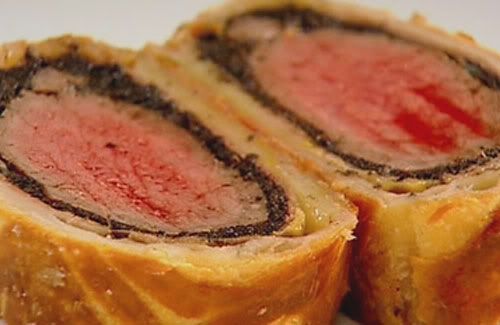
Beef Wellington
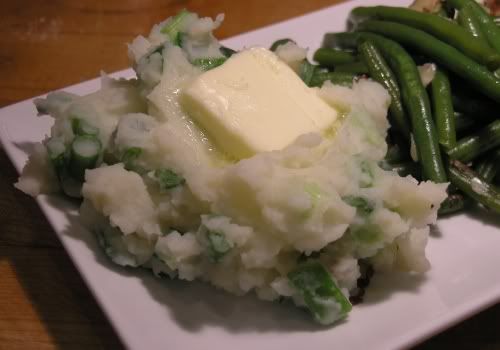
Champ
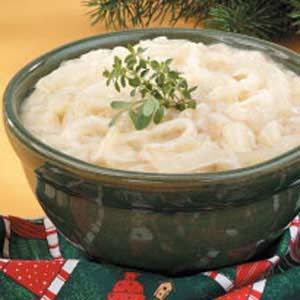
Creamed Onions
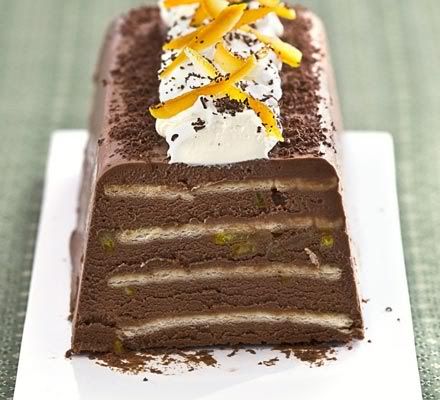
Chocolate Orange Grand Marnier Truffle Cake
Real English Farmhouse Cheddar

Port
Beef Wellington
Champ
Creamed Onions
Chocolate Orange Grand Marnier Truffle Cake
Real English Farmhouse Cheddar
Port
Labels: Food
Friday, September 05, 2008
Fall Is Coming
And with it, the desire to get into the kitchen and make something.
It has been too hot in the kitchen to get creative. But the long months of high heat and humidity are leaving us now. That comfortable coolness of fall is returning
I don't know what I want to make yet. It is too early for real fall things, and certainly too early for Halloween/Thanksgiving/Christmas/New Year/Twelfth Night specialties.
Maybe some cookies, or a pie, or a cake. Or maybe I'll just make a lot of spaghetti sauce and can it for later use.
So, while we in New England are dodging the remnants of a hurricane, I think I'll get creative in the kitchen.
It has been too hot in the kitchen to get creative. But the long months of high heat and humidity are leaving us now. That comfortable coolness of fall is returning
I don't know what I want to make yet. It is too early for real fall things, and certainly too early for Halloween/Thanksgiving/Christmas/New Year/Twelfth Night specialties.
Maybe some cookies, or a pie, or a cake. Or maybe I'll just make a lot of spaghetti sauce and can it for later use.
So, while we in New England are dodging the remnants of a hurricane, I think I'll get creative in the kitchen.
Labels: Food
Friday, May 16, 2008
Appreciating
When a new product seizes my attention, I generally give it a mention. yesterday, I was in the North End, searching out lunch, and made a new discovery. I have always liked the combination of rosemary and sea salt. And I am fond of foccacia.
You know the New York Deli Style Bagel Chips, and Pita Chips? They come in a bag and are quite good as platforms for some cream cheese-based dip. Well, they have a new addition to the line:
New York Deli Style Rosemary and Sea Salt Foccacia Sticks!
I can't find a link for them, or I would post it.
Just by themselves, they are great. Add a little fresh bruschetta to the tops, and we are talking terrific!
Seek these things out. They are well worth it, especially if you are challenged by the meatless ember days requirement.
You know the New York Deli Style Bagel Chips, and Pita Chips? They come in a bag and are quite good as platforms for some cream cheese-based dip. Well, they have a new addition to the line:
New York Deli Style Rosemary and Sea Salt Foccacia Sticks!
I can't find a link for them, or I would post it.
Just by themselves, they are great. Add a little fresh bruschetta to the tops, and we are talking terrific!
Seek these things out. They are well worth it, especially if you are challenged by the meatless ember days requirement.
Labels: Food
Tuesday, October 23, 2007
Foods For the Days of the Dead
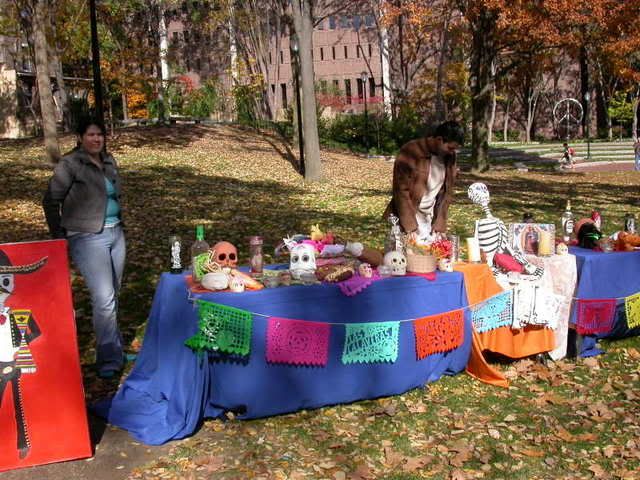
In Hispanic cultures, November 1st and 2nd are the Days of the Dead. They are that in the Catholic calendar, of course, All Saints' Day, and All Souls Day. All Hispanic cultures observe these days as celebrations of the dead, to some extent, though in Mexico and the Philippines, the celebrations are the most important, rising to the level of public holidays.
Wikipedia has a good article on The Days of the Dead, which gives more details than I can.
Last year, I did a photo-essay on Days of the Dead altars. But you will be disappointed in it, since all the images were shuffled around in my Photobucket account during one of the recent reorganizations.
This year, my emphasis is on the foods of the Days of the Dead. In fact, this week I am trying to do recipes for various Hallowmas-related celebrations.
Ubiquitous in the celebrations is the Bread of the Dead, Pan de Muerto, which is placed on home altars set up for the dead, and eaten at picnics by the graves of deceased loved ones.
1 yeast cake
1/4 cup lukewarm water
5 cups flour
1 teaspoon salt
1 cup butter
2 cups sugar
6 eggs
1/3 cup orange blossom water
1/3 cup milk
1/4 cup anisette
Dissolve the yeast in the lukewarm water and let it stand in a warm place.Sift the flour with the salt. Taking about half the flour, add the yeast, mix well, and allow to rise in a greased bowl in a warm place until double in bulk. Cream the butter with the sugar; add the egg yolks and the orange blossom water. Then add the remaining flour, the milk and anisette. Mix well and knead for a few minutes. Then add the egg whites, one at a time, kneading after each addition. Finally add the fermented dough and beat and knead until thoroughly mixed. Allow it to rise in a greased bowl in a warm place until double in bulk. Knead once more and divide into two portions. Remove a bit of the dough from each portion, enough to form two "bones." Shape the dough into round loaves and moisten the tops with water. Place the "bones" in the shape of a cross on each loaf and bake at 375� F. for about fifty minutes or until done. The loaves are usually covered with a light sugar glaze when baked.
The Days of the Dead, as we saw last year, have a certain carnival-like atmosphere to them. The theme is death, and there are skeltons and skulls everywhere. One of the more universal snacks is the sugar skull.

Recipes for the sugar skull are often quite involved, but here is a simple one that even I can follow.
Sugar Skulls
2 cups powdered sugar
1 egg white
1 TBSP. corn syrup
1/2 tsp. vanilla
1/3 cup cornstarch
colored icing
1 fine paintbrush
Sift powdered sugar. Mix the egg white, corn syrup, and vanilla in a very clean bowl, then add the powdered sugar with a wooden spoon. When almost incorporated, start kneading with the tip of your fingers until you can form a small ball. Dust with cornstarch on board. Keep on kneading until smooth, then form into skull shapes. Let dry completely, then paint with colored icing, including the names of the people you are giving them to.


Tamales are also highly favored. They are fairly hearty, and can be left on altars, or eaten out at the graveyard, much as we would eat sandwiches at our picnics.
Here are the basic steps for making a tamale.
Tamales are to fast food what saddle horses are to mass transit. Slow. Slow. Slow.
If you complete the process by scratch, it begins with dried corn and ends with a masa-stuffed corn husk. Soaking, spreading, simmering and steaming are parts of the labor-intensive process of tamalemaking. Follow these steps by chef Gabriel Pompa of La Perla Cafe in Glendale and treat yourself to several dozen of your favorite tamales:
• Bring a large pot of water to a boil. Turn off the heat and add the corn husks so they are completely submerged. Let the husks soak for one to two hours. Use a plate to weight the husks down if they float to the surface of the pot. The husks should be very pliable.
MASA FOR PURISTS:
• Soak dried corn kernels in the caustic lime sold at Mexican food markets. Use 1 ounce of lime for every 10 pounds of corn. After several hours, and after the kernels are plump, drain the water and wash the corn extremely well. The lime will leave a bitter taste on the corn if not washed thoroughly. Allow the soaked corn to drip-dry, then grind it into small pieces in a meat grinder or food processor.
• See recipe for masa from scratch on Page G4 and use 3 pounds of this corn mixture as an ingredient to create the finished masa dough.
MASA TO SAVE TIME:
• To cut out several steps, buy fresh, dry masa flour at Mexican markets. You also can find it in the Hispanic food aisle of most grocery stores. Follow the package instructions to create masa dough, then follow the remaining steps. For even more convenience, you can buy fresh, tamale-ready masa dough at specialty stores.
TAMALE ASSEMBLY:
• Once masa and filling of choice have been prepared (some filling recipes are on Page G4), drain the corn husks and select the largest ones. Use the masa as glue to combine two of the smaller husks. A husk at least 12 inches wide is needed for a 6-inch-tall tamale.
• Place the husks, smooth side up, on a flat surface. Use a tablespoon tilted at a 45-degree angle to spread the masa almost all the way to the sides of the husk and near the top. Leave most of the lower half of the husk uncovered.
• Spoon a tablespoon or two of the cooled meat or vegetable mixture in a narrow band across the masa. Leave at least a 11/2-inch border on the pointy end of the husk, and a three-fourths-inch border along the other sides.
• Begin by tucking one edge of the husk and rolling. Tuck and roll. Repeat tucking and rolling until there are no husks remaining. Fold the empty bottom half of the husk up against the rest of the roll.
• Tie tamales with a string of corn husk, or use the masa to glue the tamale to prevent it from unraveling.
COOKING TAMALES:
• Place the tamale, flap side down, in the steamer basket of a pasta, vegetable or tamale cooker. Fill the bottom of the steamer; the water level should be below the rack. Then stack tamales on top of one another. If the tamales extend over the top of the pot, cover with a wet corn husk and damp rag.
• Steam the tamales for 1 to 11/4 hours or until the masa seems fairly firm inside the husk. Replenish boiling water if necessary.
• The tamales are done when the husk peels away easily.
That is the basic recipe. The filling makes the tamale, though.
Try this Creamed Corn and Cheese Tamale Filling:
1 cup corn kernels (from 1 large or 2 small ears of corn)
1/3 cup finely chopped onion
1 jalapeño chile, stemmed and finely chopped
11/2 cups grated semisoft cheese, such as Monterey Jack, farmer's cheese or queso asadero
2 tablespoons heavy cream
Place all ingredients into a medium bowl and stir to mix. Use right away or store in refrigerator no longer than overnight. Makes enough filling for about 12 tamales.
This Sweetened Bean Tamale Filling also looks good:
1 can (16 ounces) refried pinto beans
1/3 cup raisins
2 tablespoons brown sugar
11/2 teaspoons ground cinnamon
1/2 teaspoon ground nutmeg
1/2 teaspoon ground ginger
1/2 teaspoon ground allspice
In a medium-size bowl, stir together the beans, raisins and brown sugar. Add the cinnamon, nutmeg, ginger and allspice and mix well.
Makes enough filling for about 30 tamales.
Want to try something different with the tamales? How about a Mole Verde Sauce with simple chicken tamales
1 cup chopped white onion
4 cloves garlic, peeled
1/4 cup olive oil
4 pounds tomatillos, peeled
6 leaves epazote (an herb available in Mexican markets)
12 sprigs cilantro
1 tablespoon dried Mexican oregano
1 tablespoon salt
1 cup pumpkin seeds, toasted (see note)
6 cups chicken stock
4 whole jalapeños, stems removed
In a medium stockpot, saute onion and garlic in the olive oil until soft but not browned. Add remaining ingredients and bring to a boil. Reduce heat and simmer until tomatillos are softened, about 5 minutes.
Place sauce in food processor or blender and puree until very smooth. You should not feel the seeds when you taste it. Serve with chicken, pork or seafood.
These Blue Corn Enchiladas are tempting:
12 blue corn tortillas
1/4 cup vegetable oil
3 cups red chile sauce
1/2 cup Monterey Jack cheese, shredded
1/2 cup Cheddar cheese, shredded
1 medium onion, minced
4 eggs, fried
Shredded lettuce, for garnish
Soften each tortilla in oil in a skillet for 3 seconds; drain.
Spoon a thin layer of red chile sauce on each of 4 oven-proof plates. Layer remaining chile sauce, cheeses and onion proportionately on 3 tortillas on each prepared plate. Bake at 300 degrees for 10 minutes, or until cheese melts.
Top each with 1 egg; garnish with shredded lettuce. Serve immediately.
Makes 4 servings
Beverages are very important for the home altars for the visiting dead. One sees bottles of Coke, bottles of beer, and many specially-made drinks. Here are two that I found intriguing.
Agua de Tamarindo (Tamarind Water)
6 tamarind pods (available at Latino food markets)
1/2 cup sugar
8 cups water
Combine ingredients in a large saucepan. Bring to a boil, then turn off heat. Stir to break up the tamarind a little and steep for 10 minutes. Strain the mixture and refrigerate. Makes about 8 servings.
Agua de Jamaica
1 cup jamaica (dried hibiscus flowers, available in Latino food markets)
8 cups water
3/4 cup sugar
Combine all ingredients in a large saucepan. Bring to a boil, then turn off the heat. Let mixture steep for 30 minutes. Strain and refrigerate.
So, if you want to try something different for your Days of the Dead dining, you can very authentically go Mexican.
Labels: Food