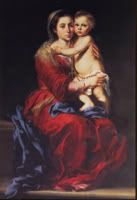
Monday, April 16, 2012
Hock Monday
Normally the return to regular life after the Easter hiatus from work.
Learn more about Hocktide here.
"The spring clad all in gladness
Doth laugh at winter's sadness;
And to the bagpipe's sound
The nymphs tread out their ground.
"Fie then, why sit we musing,
Youth's sweet delight refusing;
Say dainty nymphs, and speak:
Shall we play barley-breake?"
Old Ballad (A.D. 1603).
From Old English Sports, by Peter Hampson Ditchfield
Learn more about Hocktide here.
"The spring clad all in gladness
Doth laugh at winter's sadness;
And to the bagpipe's sound
The nymphs tread out their ground.
"Fie then, why sit we musing,
Youth's sweet delight refusing;
Say dainty nymphs, and speak:
Shall we play barley-breake?"
Old Ballad (A.D. 1603).
From Old English Sports, by Peter Hampson Ditchfield
But Easter sports are almost finished: however, we have not long to wait for another popular anniversary; for the famous Hock-tide sports always took place a fortnight after Easter, and much amusement, and profit also, were derived from the quaint observances of Hock Monday and Tuesday. The meaning of the word and the origin of the custom have been the subjects of much conjecture; but the festival is supposed to be held in remembrance of the [pg 042]victory of our Saxon forefathers over the Danes in the time of Ethelred. The custom was that on Hock Monday the men should go out into the streets and roads with cords, and stop and bind all the women they met, releasing them on payment of a small ransom. On the following day the women bound the men, and the proceeds were devoted to charitable purposes. It is to be noted that the women always extracted the most money, and in the old churchwardens' accounts we find frequent records of this strange method of collecting subscriptions—e.g., St. Lawrence's, Reading, A.D. 1499:—"Item, received of Hoc money gaderyd" (gathered) "of women xxs. Item, received of Hoc money gaderyd of men iiijs." We also find that the women had a supper given to them as a reward for their exertions, for there is the "item for wives' supper at Hock-tide xxiijd."
The observance of Hock-tide seems to have been particularly popular in the ancient town of Reading. At Coventry there was an "old Coventry Play of Hock Tuesday," which was performed with great delight before Queen Elizabeth at Kenilworth: the players divided themselves into two companies to represent the Saxons and the Danes: a great battle ensued, and by the help of the Saxon women the former were victorious, and led the Danes captive. The queen laughed much at the pageant, and gave the performers two bucks and five marks in money.
Labels: Annual Cycles, Hocktide
Thursday, February 02, 2012
Candlemas Day 2012
Candlemas Day
by Robert Herrick
Kindle the Christmas brand, and then
Till sunset let it burn;
Which quench'd then lay it up again
Till Christmas next return.
Part must be kept wherewith to tend
The Christmas log next year;
And where 'tis safely kept, the fiend
Can do no mischief there.
This poem describes the custom of taking down the last of the Christmas holly on Candlemas, and burning it. It should certainly be dry enough by now.
However, an alternate custom was to reserve the last of the holly and use it as kindling for the fire for the Shrove Tuesday pancakes. This year, that would mean keeping the dried-out holly around almost another 3 weeks.
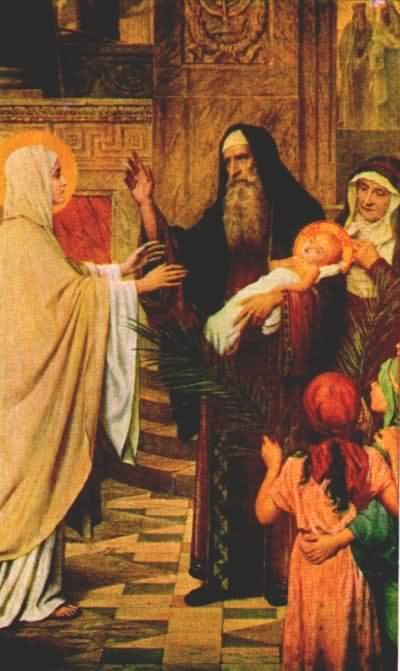
This is the feast of the Purification of the Virgin, which, under Jewish Law comes 40 days after childbirth. And Candlemas is 40 days after Christmas. The Church also (rather oddly, I think) adds the Feast of the Presentation. Odd, because under Jewish Law, the baby Jesus would have been presented and circumcised on the eighth day after his birth, or the Octave of Christmas. So, there were two Temple-related events after the Nativity, the Presentation on January 1st, and the Purification or Churching of Mary, on February 2nd. The Holy Family must have remained in Bethlehem (though they probably moved out of the stable, as the Magi story speaks of a "house") to be close to Jerusalem and the Temple for these two events. It can only be after this that the Flight to Egypt and the Slaughter of the Holy Innocents took place.
How did Candlemas get its name? Today was the day to bring to church for blessing the year's supply of candles, especially candles with a semi-sacramental nature, like the candles placed in the window on Christmas Eve, Christmas Day, New Years, and Epiphany in Irish homes, candles for the Advent wreath, candles for the home sick visit kit, or candles used in home shrines.
One of the European superstitions connected with Candlemas was that a fair, clear Candlemas meant a longer winter, where a cloudy Candlemas would mean the end of winter was at hand. In Europe, the end of February is often quite spring-like, where here in the US (especially here in New England), it tends to be more wintery, as our seasons run about 3 weeks behind the European seasons.
Here is a German saying:
When it storms and snows on Candlemas Day,
Spring is not far away;
if it's bright and clear,
Spring is not yet near.
This gave rise to the legend that if the groundhog sees his shadow on February 2nd (now better known as Groundhog Day) it means 6 more weeks of winter (as opposed to only 4 more weeks if he does not see it).
Check out our friends at Fish Eaters for more on Candlemas customs.
Also, see The Golden Legend on the Purification of Our Blessed Lady.
by Robert Herrick
Kindle the Christmas brand, and then
Till sunset let it burn;
Which quench'd then lay it up again
Till Christmas next return.
Part must be kept wherewith to tend
The Christmas log next year;
And where 'tis safely kept, the fiend
Can do no mischief there.
This poem describes the custom of taking down the last of the Christmas holly on Candlemas, and burning it. It should certainly be dry enough by now.
However, an alternate custom was to reserve the last of the holly and use it as kindling for the fire for the Shrove Tuesday pancakes. This year, that would mean keeping the dried-out holly around almost another 3 weeks.
This is the feast of the Purification of the Virgin, which, under Jewish Law comes 40 days after childbirth. And Candlemas is 40 days after Christmas. The Church also (rather oddly, I think) adds the Feast of the Presentation. Odd, because under Jewish Law, the baby Jesus would have been presented and circumcised on the eighth day after his birth, or the Octave of Christmas. So, there were two Temple-related events after the Nativity, the Presentation on January 1st, and the Purification or Churching of Mary, on February 2nd. The Holy Family must have remained in Bethlehem (though they probably moved out of the stable, as the Magi story speaks of a "house") to be close to Jerusalem and the Temple for these two events. It can only be after this that the Flight to Egypt and the Slaughter of the Holy Innocents took place.
How did Candlemas get its name? Today was the day to bring to church for blessing the year's supply of candles, especially candles with a semi-sacramental nature, like the candles placed in the window on Christmas Eve, Christmas Day, New Years, and Epiphany in Irish homes, candles for the Advent wreath, candles for the home sick visit kit, or candles used in home shrines.
One of the European superstitions connected with Candlemas was that a fair, clear Candlemas meant a longer winter, where a cloudy Candlemas would mean the end of winter was at hand. In Europe, the end of February is often quite spring-like, where here in the US (especially here in New England), it tends to be more wintery, as our seasons run about 3 weeks behind the European seasons.
Here is a German saying:
When it storms and snows on Candlemas Day,
Spring is not far away;
if it's bright and clear,
Spring is not yet near.
This gave rise to the legend that if the groundhog sees his shadow on February 2nd (now better known as Groundhog Day) it means 6 more weeks of winter (as opposed to only 4 more weeks if he does not see it).
Check out our friends at Fish Eaters for more on Candlemas customs.
Also, see The Golden Legend on the Purification of Our Blessed Lady.
Labels: Annual Cycles
Sunday, November 20, 2011
Stir-Up Sunday
This Sunday, the last of the liturgical year, gets its name from the Collect for today's Mass, which begins, "Stir up, O Lord...". It has nothing to do with cooking.
I will point you to Father Zuhlsdorf for an excellent explanation of the Last Sunday After Pentecost.
I would just add that the Gospel for today, with its discussion of the end of time, and the Last Trumpet, plus the repetition in the various prayers of the first line from the De Profundis (the 129/130th Psalm, one of the Penitential Psalms which is featured most prominently in the Office of the Dead and in the Requiem Mass), "Out of the depths, I cry unto Thee, O Lord...", reminds us that November is the month to pray with special vigor and earnestness for the dead. Next week we begin a new liturgical yeaar, and the season of Advent, switch to purple vestmests and altar cloths, and substitute the Alma Redemptor Mater, for the very familiar Salve Regina as the end of the day Marian hymn. But in the time we have before then, even with the distraction of Thanksgiving, we can still focus on praying for the Poor Souls in Purgatory.
However, since this is about the time you want to make up the mincemeat, plum pudding, and Twelfth Cake so that it will be properly aged and mellowed and inebriated by the Christmas holy days, Stir Up Sunday has taken on the identity as the day you stir up and cook these delicacies.
Let us start with the Mincemeat:

Mincemeat pie is, of course, traditionally associated with Christmas.
But in New England, where the celebration of Christmas was relatively restrained for the first 150 or so years of our history, it was adopted as a Thanksgiving food. Thanksgiving tables in Massachusetts from 1740-1870 often boasted a mince pie. Just goes to show you that you can't keep a good mince pie down (or a bad one, but that is a different matter).
Today, when you go out picking apples in September or early October, one of the things you can do with the bushels that come home is to make mincemeat, and thus you can begin making ready for both Thanksgiving and Christmas.
You can either freeze the mincemeat in ziploc bags, or bake into pies, and freeze the pies until needed. I prefer the former method. In either case, it is a good thing to beat the holiday rush by getting your mincemeat ready now. If you double-bag the mincemeat, it should keep in the fridge for many months. At Thanksgiving and Christmas, nothing says "home" like a warm mincemeat pie.
This pie was actually outlawed in New England during the earliest period of Massachusetts history, as it is a symbol of Christmas, the celebration of which was also against the law. The pie has been variously known as Neat's Pie, Shrid Pie, Christmas Pie, Mutton Pie, and of course, Mince Pie (which was more or less common by the end of the 18th century). As a staple of English and Irish cuisine, it dates back to medieval times at least.
Little Jack Horner's Christmas Pie, was, of course, mincemeat. The plumb he pulled out with his thumb was in fact the deed to a plundered parcel of Church property, the deed to which, along with many others, was inserted into a huge Christmas Pie to be delivered, by Horner, to Henry VIII. Somehow, the property found its way into the possession of Horner, rather than Henry.
This would be a good time to try to correct a modern misconception. Raisins were known by various regional words in England and Ireland. In parts of England, they are called "figs." In other parts, they are called "plumbs" or "plums." In no case were either what we know as figs or plums ever included in traditional mincemeat, or plum pudding, or fruitcake.
All those recipes you see for plum pudding that call for plums?
Rip them out of your cookbook. Burn the pages, lest others fall into this heresy.
The same with "Figgy Pudding" recipes with figs. All you want are raisins and currants. Got it? Figgy Pudding does not have figs. Plum Pudding does not have plums. They are, in fact, the same thing, and both have raisins.
I am a firm believer that the better the quality of the ingredients you use, the better the finished product will taste. That is why I use sirloin tips rather than suet or stew beef, and fresh orchard cider from Brooksby Farm in peabody, and apples picked that weekend by hand, and by me.
This recipe will make many pies.
If there is a lot of liquid, drain it off and freeze it separately, as it can be served by itself either hot or cold as plum porridge. I suspect that the extra liquid from making mince pie was how that soup got started. Eat the plum porridge in small amounts, as even I would say it is very, very rich.
10 cups chopped apples, preferably freshly picked
4 cups diced sirloin tip meat fried or broiled (I pan fry)
2 cups of beef stock (your own, or canned)
2 cups of fresh sweet apple cider
8 cups of sugar
1 cup of molasses
3 tablespoons of cinnamon
2 teaspoons of ground cloves
4 lemons, rind and juice
3 tablespoons of salt
3 pounds of seedless raisins
1 pound of currants
1/2 pound of citron
1/4 pound candied or fresh orange rind
1/4 pound candied or fresh lemon rind
1 cup brandy (don't use "cooking brandy")
1 cup Captain Morgan's Spiced Rum
at pie-making time
orange flower water, to taste
French brandy, to taste
Captain Morgan's, to taste
freshly ground nutmeg
cinnamon-sugar to taste
(No, your teeth will not fall out, at least not right away.)
Chop the apples and beef finely. Pan fry the sirloin tips until medium rare, then dice or shred them into tiny bits. Place the apples and beef into a very large pot with all the remaining measured ingredients.
Simmer slowly for up to three hours, stirring every few minutes.
The aroma is incredible, and will make the house smell like the holidays in no time.
After a few hours, take the mincemeat off the heat, and allow it to cool.
Once the mincemeat has cooled, drain the excess liquid for plum porridge, and freeze it in a separate container (that won't leak in your freezer).
Put the mincemeat into gallon Ziplocs, and freeze.
There should be enough mincemeat for 6-8 9-inch mince pies (or lots of small mincemeat pies).
But the mince pie is so rich, you might want to serve it in tart or individual serving-size pie pans.
When it's time for making the pies, thaw the mincemeat in the refrigerator for a day or two.
Make two short crusts for each pie. Line the pie pan with crust. Add the mincemeat. Pour on some orange flower water, Captain Morgan's, and brandy, dot the pie with some small pats of butter, and a grating of fresh nutmeg to taste.
I use fairly liberal doses of all in my mince pies.
Put on the top layer of crust, and seal the edges, leaving ventilation slits in the top crust.
Bake for 10 minutes at 450 degrees (you may want a drip tray under the pie in the oven), and then for 30 minutes at 350 degrees, but watch the crust carefully. Use of one of those shields that protect the edges is recommended.
When the pie is fresh out of the oven, sprinkle the top with a generous portion of cinnamon-sugar.
Once baked, the pies keep in the fridge for a week.
They taste terrific warm or cold. Vanilla ice cream is great on top. Eggnog Ice Cream would not be too much.
You expect to put on some weight during the holidays. Live a little!
Fruit Cake/Christmas Cake/Twelfth Cake

The recipe that follows is a modified version of Martha Washington's recipe for what she called "Great Cake," or her cake for great occasions. Her recipe calls for taking forty eggs, separating them, and beating the whites to a froth with a bundle of sticks. Well, eggs were smaller then. And the bundle of sticks has long given way to the electric mixer. Thank Heavens!
If you want to try it, read the recipe through first, so that you will be sure to have everything you need.
1 pound raisins
11 oz. currants
1 cup candied orange peel
1 cup candied lemon peel
1 cup citron
1 cup of candied red cherries
1 cup of candied green cherries
good brandy (warning: this is not a recipe for those recovering from a drinking problem)
Put all the fruit into a large bowl, and cover it with the brandy. Cover the bowl, and let the fruit soak in the brandy for a couple of days.
41/2 cups of all purpose flour
1 teaspoon mace
1 teaspoon nutmeg
1 tablespoon cinnamon
1 teaspoon ginger
1 teaspoon ground cloves
4 sticks of butter softened
2 1/2 cups sugar
10 eggs, separated
2 teaspoons lemon juice
1/3 cup of cream sherry
the remainder of the bottle of cream sherry (I use Savory & James: inexpensive but tastes nice)
Once the fruit has soaked for at least 36 hours (sometimes, I let it soak for 5-6 days on the counter), sift together the flour and spices, and set it aside.
Work the butter until it is creamy, then add one cup of sugar a little at a time. Beat it until it is smooth.
Beat the egg yolks until they are thick and light. Then add 1 cup of sugar to the yolks. Add the lemon juice to the yolks after the sugar is added. Combine the yolk mixture with the butter-sugar mixture. Add the rest of the sugar.
Add the flour/spices and 1/3 cup sherry both little-by-little and alternating with each other.
Once all the flour/spices and the 1/3 cup of sherry have been added to the egg yolk/butter/sugar mixture, drain the fruit (I've never tried to drink the brandy, but I don't suppose it would do much harm), and add it also.
Now beat the egg whites until they are stiff. Fold the egg whites into the batter.
Grease and flour a 10-inch tube pan (don't forget to grease the tube itself). Pour the batter into the pan. Put a pan of hot water on the bottom rack of the oven, and pre-heat to 350 degrees. Bake at 350 degrees for 20 minutes. Then reduce heat to 325 degrees and bake for another hour and forty minutes. The cake is done when a knife inserted in it comes out clean.
Turn the cake out gently, and let it cool on a rack. Soak lots of cheese cloth in the rest of the sherry. Wrap the cake in the sherry-soaked cheese cloth, then put it in an airtight Rubbermaid (or other airtight plastic cake container) for three weeks.
Each week, check the cheese cloth to see if it is still moist. If it has dried out, soak it in more cream sherry, and re-apply. The longer the cake cures, the better. Just this past summer, I found in the pantry a Christmas cake made two years ago, and happily sliced it up. It was delicious. All the sugar, spice, and booze in the mix makes it almost as everlasting as the Twinkie, except it improves with age, unlike the Hostess Twinkie.
Martha Washington's Plum Pudding

2 1/2 lb raisins
3/4 c brandy
2 ts cinnamon
1/2 ts cloves
1 ts allspice
2 ts mace
1 1/2 ts nutmeg
1 lb beef suet, minced
1/2 c grated orange peel
1/4 c grated lemon peel
1 lb citron
2 c flour
7 eggs, beaten
2 c sugar
Instructions
According to her time-honored recipe, you take three days to prepare this great concoction.
First, the raisins are cooked until soft. Leave the fruit in
its cooking water and add brandy and spices. let mixture steep for 2
days in cool place.
When the day comes of baking, drain off liquid. Add beef suet, grated
orange and lemon peel and citron, combining further with flour, eggs
and sugar. Press into a butter bread-loaf pan, cover tightly, and
steam for 6 hours. You will have the famous pudding.
Ok.
Mincemeat. Check.
Fruitcake. Check.
Plum Pudding. Check.
Eggnog? It's too early to worry about the eggnog. Wait for Christmas week for that.
I will point you to Father Zuhlsdorf for an excellent explanation of the Last Sunday After Pentecost.
I would just add that the Gospel for today, with its discussion of the end of time, and the Last Trumpet, plus the repetition in the various prayers of the first line from the De Profundis (the 129/130th Psalm, one of the Penitential Psalms which is featured most prominently in the Office of the Dead and in the Requiem Mass), "Out of the depths, I cry unto Thee, O Lord...", reminds us that November is the month to pray with special vigor and earnestness for the dead. Next week we begin a new liturgical yeaar, and the season of Advent, switch to purple vestmests and altar cloths, and substitute the Alma Redemptor Mater, for the very familiar Salve Regina as the end of the day Marian hymn. But in the time we have before then, even with the distraction of Thanksgiving, we can still focus on praying for the Poor Souls in Purgatory.
However, since this is about the time you want to make up the mincemeat, plum pudding, and Twelfth Cake so that it will be properly aged and mellowed and inebriated by the Christmas holy days, Stir Up Sunday has taken on the identity as the day you stir up and cook these delicacies.
Let us start with the Mincemeat:

Mincemeat pie is, of course, traditionally associated with Christmas.
But in New England, where the celebration of Christmas was relatively restrained for the first 150 or so years of our history, it was adopted as a Thanksgiving food. Thanksgiving tables in Massachusetts from 1740-1870 often boasted a mince pie. Just goes to show you that you can't keep a good mince pie down (or a bad one, but that is a different matter).
Today, when you go out picking apples in September or early October, one of the things you can do with the bushels that come home is to make mincemeat, and thus you can begin making ready for both Thanksgiving and Christmas.
You can either freeze the mincemeat in ziploc bags, or bake into pies, and freeze the pies until needed. I prefer the former method. In either case, it is a good thing to beat the holiday rush by getting your mincemeat ready now. If you double-bag the mincemeat, it should keep in the fridge for many months. At Thanksgiving and Christmas, nothing says "home" like a warm mincemeat pie.
This pie was actually outlawed in New England during the earliest period of Massachusetts history, as it is a symbol of Christmas, the celebration of which was also against the law. The pie has been variously known as Neat's Pie, Shrid Pie, Christmas Pie, Mutton Pie, and of course, Mince Pie (which was more or less common by the end of the 18th century). As a staple of English and Irish cuisine, it dates back to medieval times at least.
Little Jack Horner's Christmas Pie, was, of course, mincemeat. The plumb he pulled out with his thumb was in fact the deed to a plundered parcel of Church property, the deed to which, along with many others, was inserted into a huge Christmas Pie to be delivered, by Horner, to Henry VIII. Somehow, the property found its way into the possession of Horner, rather than Henry.
This would be a good time to try to correct a modern misconception. Raisins were known by various regional words in England and Ireland. In parts of England, they are called "figs." In other parts, they are called "plumbs" or "plums." In no case were either what we know as figs or plums ever included in traditional mincemeat, or plum pudding, or fruitcake.
All those recipes you see for plum pudding that call for plums?
Rip them out of your cookbook. Burn the pages, lest others fall into this heresy.
The same with "Figgy Pudding" recipes with figs. All you want are raisins and currants. Got it? Figgy Pudding does not have figs. Plum Pudding does not have plums. They are, in fact, the same thing, and both have raisins.
I am a firm believer that the better the quality of the ingredients you use, the better the finished product will taste. That is why I use sirloin tips rather than suet or stew beef, and fresh orchard cider from Brooksby Farm in peabody, and apples picked that weekend by hand, and by me.
This recipe will make many pies.
If there is a lot of liquid, drain it off and freeze it separately, as it can be served by itself either hot or cold as plum porridge. I suspect that the extra liquid from making mince pie was how that soup got started. Eat the plum porridge in small amounts, as even I would say it is very, very rich.
10 cups chopped apples, preferably freshly picked
4 cups diced sirloin tip meat fried or broiled (I pan fry)
2 cups of beef stock (your own, or canned)
2 cups of fresh sweet apple cider
8 cups of sugar
1 cup of molasses
3 tablespoons of cinnamon
2 teaspoons of ground cloves
4 lemons, rind and juice
3 tablespoons of salt
3 pounds of seedless raisins
1 pound of currants
1/2 pound of citron
1/4 pound candied or fresh orange rind
1/4 pound candied or fresh lemon rind
1 cup brandy (don't use "cooking brandy")
1 cup Captain Morgan's Spiced Rum
at pie-making time
orange flower water, to taste
French brandy, to taste
Captain Morgan's, to taste
freshly ground nutmeg
cinnamon-sugar to taste
(No, your teeth will not fall out, at least not right away.)
Chop the apples and beef finely. Pan fry the sirloin tips until medium rare, then dice or shred them into tiny bits. Place the apples and beef into a very large pot with all the remaining measured ingredients.
Simmer slowly for up to three hours, stirring every few minutes.
The aroma is incredible, and will make the house smell like the holidays in no time.
After a few hours, take the mincemeat off the heat, and allow it to cool.
Once the mincemeat has cooled, drain the excess liquid for plum porridge, and freeze it in a separate container (that won't leak in your freezer).
Put the mincemeat into gallon Ziplocs, and freeze.
There should be enough mincemeat for 6-8 9-inch mince pies (or lots of small mincemeat pies).
But the mince pie is so rich, you might want to serve it in tart or individual serving-size pie pans.
When it's time for making the pies, thaw the mincemeat in the refrigerator for a day or two.
Make two short crusts for each pie. Line the pie pan with crust. Add the mincemeat. Pour on some orange flower water, Captain Morgan's, and brandy, dot the pie with some small pats of butter, and a grating of fresh nutmeg to taste.
I use fairly liberal doses of all in my mince pies.
Put on the top layer of crust, and seal the edges, leaving ventilation slits in the top crust.
Bake for 10 minutes at 450 degrees (you may want a drip tray under the pie in the oven), and then for 30 minutes at 350 degrees, but watch the crust carefully. Use of one of those shields that protect the edges is recommended.
When the pie is fresh out of the oven, sprinkle the top with a generous portion of cinnamon-sugar.
Once baked, the pies keep in the fridge for a week.
They taste terrific warm or cold. Vanilla ice cream is great on top. Eggnog Ice Cream would not be too much.
You expect to put on some weight during the holidays. Live a little!
Fruit Cake/Christmas Cake/Twelfth Cake

The recipe that follows is a modified version of Martha Washington's recipe for what she called "Great Cake," or her cake for great occasions. Her recipe calls for taking forty eggs, separating them, and beating the whites to a froth with a bundle of sticks. Well, eggs were smaller then. And the bundle of sticks has long given way to the electric mixer. Thank Heavens!
If you want to try it, read the recipe through first, so that you will be sure to have everything you need.
1 pound raisins
11 oz. currants
1 cup candied orange peel
1 cup candied lemon peel
1 cup citron
1 cup of candied red cherries
1 cup of candied green cherries
good brandy (warning: this is not a recipe for those recovering from a drinking problem)
Put all the fruit into a large bowl, and cover it with the brandy. Cover the bowl, and let the fruit soak in the brandy for a couple of days.
41/2 cups of all purpose flour
1 teaspoon mace
1 teaspoon nutmeg
1 tablespoon cinnamon
1 teaspoon ginger
1 teaspoon ground cloves
4 sticks of butter softened
2 1/2 cups sugar
10 eggs, separated
2 teaspoons lemon juice
1/3 cup of cream sherry
the remainder of the bottle of cream sherry (I use Savory & James: inexpensive but tastes nice)
Once the fruit has soaked for at least 36 hours (sometimes, I let it soak for 5-6 days on the counter), sift together the flour and spices, and set it aside.
Work the butter until it is creamy, then add one cup of sugar a little at a time. Beat it until it is smooth.
Beat the egg yolks until they are thick and light. Then add 1 cup of sugar to the yolks. Add the lemon juice to the yolks after the sugar is added. Combine the yolk mixture with the butter-sugar mixture. Add the rest of the sugar.
Add the flour/spices and 1/3 cup sherry both little-by-little and alternating with each other.
Once all the flour/spices and the 1/3 cup of sherry have been added to the egg yolk/butter/sugar mixture, drain the fruit (I've never tried to drink the brandy, but I don't suppose it would do much harm), and add it also.
Now beat the egg whites until they are stiff. Fold the egg whites into the batter.
Grease and flour a 10-inch tube pan (don't forget to grease the tube itself). Pour the batter into the pan. Put a pan of hot water on the bottom rack of the oven, and pre-heat to 350 degrees. Bake at 350 degrees for 20 minutes. Then reduce heat to 325 degrees and bake for another hour and forty minutes. The cake is done when a knife inserted in it comes out clean.
Turn the cake out gently, and let it cool on a rack. Soak lots of cheese cloth in the rest of the sherry. Wrap the cake in the sherry-soaked cheese cloth, then put it in an airtight Rubbermaid (or other airtight plastic cake container) for three weeks.
Each week, check the cheese cloth to see if it is still moist. If it has dried out, soak it in more cream sherry, and re-apply. The longer the cake cures, the better. Just this past summer, I found in the pantry a Christmas cake made two years ago, and happily sliced it up. It was delicious. All the sugar, spice, and booze in the mix makes it almost as everlasting as the Twinkie, except it improves with age, unlike the Hostess Twinkie.
Martha Washington's Plum Pudding

2 1/2 lb raisins
3/4 c brandy
2 ts cinnamon
1/2 ts cloves
1 ts allspice
2 ts mace
1 1/2 ts nutmeg
1 lb beef suet, minced
1/2 c grated orange peel
1/4 c grated lemon peel
1 lb citron
2 c flour
7 eggs, beaten
2 c sugar
Instructions
According to her time-honored recipe, you take three days to prepare this great concoction.
First, the raisins are cooked until soft. Leave the fruit in
its cooking water and add brandy and spices. let mixture steep for 2
days in cool place.
When the day comes of baking, drain off liquid. Add beef suet, grated
orange and lemon peel and citron, combining further with flour, eggs
and sugar. Press into a butter bread-loaf pan, cover tightly, and
steam for 6 hours. You will have the famous pudding.
Ok.
Mincemeat. Check.
Fruitcake. Check.
Plum Pudding. Check.
Eggnog? It's too early to worry about the eggnog. Wait for Christmas week for that.
Labels: Annual Cycles, Food
Friday, November 11, 2011
Veterans' Day 2011
My tribute to those who have served.

Thank you for your sacrifices!
Thank you for your sacrifices!
Labels: American Patriotism Is Not A Sin, Annual Cycles
Martinmas 2011

Today the Church celebrates Saint Martin of Tours, one of the most important saints in western Christendom.
Martin was born in Pannonia around 325, and entered the Roman army's elite cavalry at an early age. Encountering a beggar while was stationed at Amiens, he divided his cloak with him. According to legend, the beggar revealed himself to be Christ himself.
Shortly after age 20, he was baptized and left the army, becoming an exorcist under the direction of Saint Hilary of Poitiers. He lived as a hermit on the island of Gallinaria, and returned to Gaul where he founded a monastery at Liguge, the first important monastery in the West. His monastery followed the Rule of Saint Basil.
In 371, he was forcibly carried off to become bishop of Tours. He had hidden from the delegation from Tours, but his hiding place, it is said, was revealed by a goose, hence the custom of eating goose on Martinmas.
He ruled the see of Tours for 26 years. In that time, he made numerous conversions in Berry, Touraine, Anjou, Beauce, Dauphiny, Paris, Luxembourg, Trier, and Sennonais. Wherever he went, he cast down idols, built churches, and left priests and monks to carry out his work.
In 397, worn out, he lay dying at Candes. His followers begged him to live. He struggled to say, "If God finds that I can still be of use to His people, I do not at all refuse to work and to struggle longer." He died with his face turned to Heaven.
He became almost immediately, the most popular saint in Chistendom. In France alone, 4,000 churches are dedicated to him, and over 500 villages are named for him.
Martinmas in Europe corresponds to the traditional time for slaughtering animals not intended to be kept alive through the winter. It also signals the time that the new vintage of wine is ready for drinking. Fresh beef and Beaujolais Noveau have traditionally meant feasting in Europe. So Martinmas has traditionally been a jolly time, a last opportunity to enjoy God's bounty before the fast of Advent starts.
Here is what Fisheaters has on Martinmas and its customs.
Labels: Annual Cycles, Our Saintly Brethern
Saturday, November 05, 2011
Guy Fawkes' Night
This is a dark anniversary for English and Irish Catholics. On this day, Guy Fawkes, in response to the bitter persecution of Catholics under the English monarchy, tried to blow up the King, the Lords spiritual and temporal, and the House of Commons, on the occasion of the King's speech before the joint Houses of Parliament. If he had succeeded, Catholics in Britain would have fared even worse.
But his failure made this day one of the secular holidays of protestant Britain, and a vile, anti-Catholic one it is. Bonfires are still held, with dummies of Guy Fawkes burned in them. In Colonial Boston, this holiday took the form of Pope's Night. I could describe it at length, but I prefer to turn you over to this brand new page exploring Guy Fawkes Night/Pope's Night, which I found out about via the Boston 1775 blog (which I don't write, but wish I had the idea!).
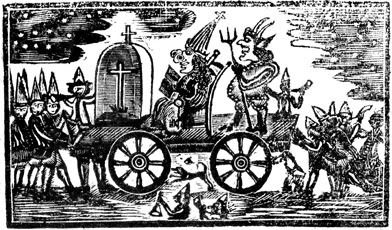
But his failure made this day one of the secular holidays of protestant Britain, and a vile, anti-Catholic one it is. Bonfires are still held, with dummies of Guy Fawkes burned in them. In Colonial Boston, this holiday took the form of Pope's Night. I could describe it at length, but I prefer to turn you over to this brand new page exploring Guy Fawkes Night/Pope's Night, which I found out about via the Boston 1775 blog (which I don't write, but wish I had the idea!).
Labels: Annual Cycles
Tuesday, October 25, 2011
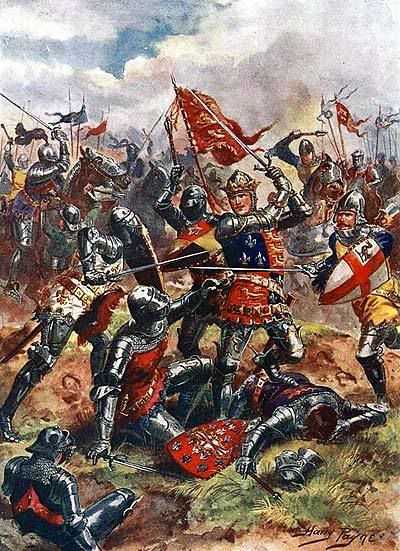
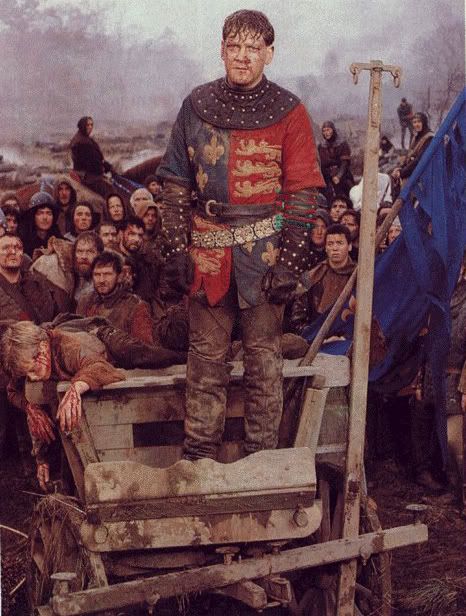
Upon Saint Crispin's Day!
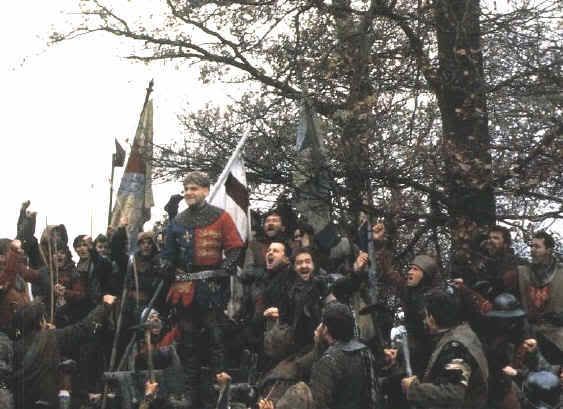
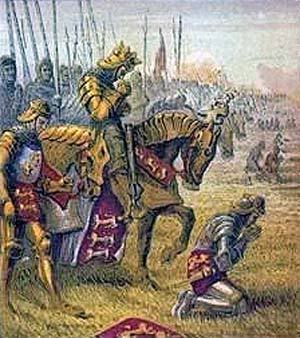
The Battle of Agincourt was fought upon this day, an anniversary those of us whose childhoods were formed around anniversaries of deeds of heroics are inclined to remember.

WESTMORELAND.
O that we now had here
But one ten thousand of those men in England
That do no work to-day!
KING.
What's he that wishes so?
My cousin Westmoreland? No, my fair cousin;
If we are mark'd to die, we are enow
To do our country loss; and if to live,
The fewer men, the greater share of honour.
God's will! I pray thee, wish not one man more.
By Jove, I am not covetous for gold,
Nor care I who doth feed upon my cost;
It yearns me not if men my garments wear;
Such outward things dwell not in my desires.
But if it be a sin to covet honour,
I am the most offending soul alive.
No, faith, my coz, wish not a man from England.
God's peace! I would not lose so great an honour
As one man more methinks would share from me
For the best hope I have. O, do not wish one more!
Rather proclaim it, Westmoreland, through my host,
That he which hath no stomach to this fight,
Let him depart; his passport shall be made,
And crowns for convoy put into his purse;
We would not die in that man's company
That fears his fellowship to die with us.
This day is call'd the feast of Crispian.
He that outlives this day, and comes safe home,
Will stand a tip-toe when this day is nam'd,
And rouse him at the name of Crispian.
He that shall live this day, and see old age,
Will yearly on the vigil feast his neighbours,
And say 'To-morrow is Saint Crispian.'
Then will he strip his sleeve and show his scars,
And say 'These wounds I had on Crispian's day.'
Old men forget; yet all shall be forgot,
But he'll remember, with advantages,
What feats he did that day. Then shall our names,
Familiar in his mouth as household words-
Harry the King, Bedford and Exeter,
Warwick and Talbot, Salisbury and Gloucester-
Be in their flowing cups freshly rememb'red.
This story shall the good man teach his son;
And Crispin Crispian shall ne'er go by,
From this day to the ending of the world,
But we in it shall be remembered-
We few, we happy few, we band of brothers;
For he to-day that sheds his blood with me
Shall be my brother; be he ne'er so vile,
This day shall gentle his condition;
And gentlemen in England now-a-bed
Shall think themselves accurs'd they were not here,
And hold their manhoods cheap whiles any speaks
That fought with us upon Saint Crispin's day.
Maddy Prior and June Tabor, Agincourt Carol
WESTMORELAND.
O that we now had here
But one ten thousand of those men in England
That do no work to-day!
KING.
What's he that wishes so?
My cousin Westmoreland? No, my fair cousin;
If we are mark'd to die, we are enow
To do our country loss; and if to live,
The fewer men, the greater share of honour.
God's will! I pray thee, wish not one man more.
By Jove, I am not covetous for gold,
Nor care I who doth feed upon my cost;
It yearns me not if men my garments wear;
Such outward things dwell not in my desires.
But if it be a sin to covet honour,
I am the most offending soul alive.
No, faith, my coz, wish not a man from England.
God's peace! I would not lose so great an honour
As one man more methinks would share from me
For the best hope I have. O, do not wish one more!
Rather proclaim it, Westmoreland, through my host,
That he which hath no stomach to this fight,
Let him depart; his passport shall be made,
And crowns for convoy put into his purse;
We would not die in that man's company
That fears his fellowship to die with us.
This day is call'd the feast of Crispian.
He that outlives this day, and comes safe home,
Will stand a tip-toe when this day is nam'd,
And rouse him at the name of Crispian.
He that shall live this day, and see old age,
Will yearly on the vigil feast his neighbours,
And say 'To-morrow is Saint Crispian.'
Then will he strip his sleeve and show his scars,
And say 'These wounds I had on Crispian's day.'
Old men forget; yet all shall be forgot,
But he'll remember, with advantages,
What feats he did that day. Then shall our names,
Familiar in his mouth as household words-
Harry the King, Bedford and Exeter,
Warwick and Talbot, Salisbury and Gloucester-
Be in their flowing cups freshly rememb'red.
This story shall the good man teach his son;
And Crispin Crispian shall ne'er go by,
From this day to the ending of the world,
But we in it shall be remembered-
We few, we happy few, we band of brothers;
For he to-day that sheds his blood with me
Shall be my brother; be he ne'er so vile,
This day shall gentle his condition;
And gentlemen in England now-a-bed
Shall think themselves accurs'd they were not here,
And hold their manhoods cheap whiles any speaks
That fought with us upon Saint Crispin's day.
Maddy Prior and June Tabor, Agincourt Carol
Labels: Annual Cycles
Monday, August 01, 2011
Saint Peter Ad Vincula And Lammas
Today is the feast of Saint Peter Ad Vincula. In Europe, it was celebrated as the first fruits of the harvest. "Lammas" probably comes from "Loaf Mass", and a ritual blessing of loaves of bread made from the first grain harvested was part of the Lammas rite. Harvest queens would be crowned in villages, and harvest suppers would be held.
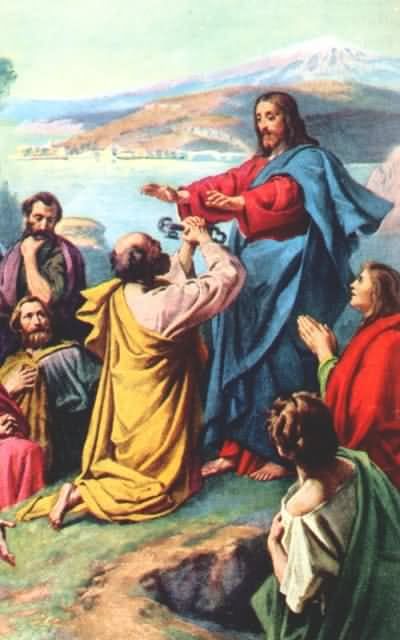
The Feast of Saint Peter Ad Vincula is the Feast of Peter's Chains. Saint Peter, having been arrested, was held in custody, but miraculously was permitted to escape. Two links said to be from the chain that he was confined in are venerated at the church of Saint Peter Ad Vincula at Rome.
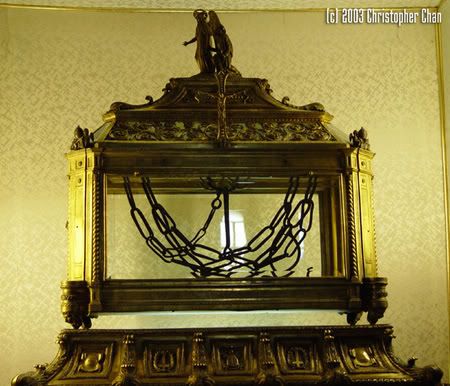
The Feast of Saint Peter's Chains was superimposed over the pre-Christian start of the harvest festivals (but with less success than with Christmas, Easter, and All Saints' Day). Though Lammas has lost much of its significance in the last hundred years, it has more cultural resonance than Saint Peter's Chains.
In Western Europe, the harvest is about 3 weeks earlier, on average, than in New England. We think of harvest time as September and October. But even in our own suburban gardens, aren't the first tomatoes ready about now? Raspberries and blackberries are a few days away. Sweet corn is about ready here. Apples will start ripening in a few weeks. Six weeks to fresh sweet cider!
While we are in agriculture mode, a rather rare thing for me, take a look at Mary Alexander's gardening tips.
Just because we are no longer an agricultural society does not mean that we need to lose touch with the traditional seasonal tempo of life.
This was also the beginning of the Autumn fair season. One still hears an Irish folk song called "The Oulde Lammas Faire."
At the Ould Lammas Fair in Ballycastle long ago
I met a pretty colleen who set me heart a-glow
She was smiling at her daddy buying lambs from Paddy Roe
At the Ould Lammas Fair in Ballycastle-O!
Sure I seen her home that night
When the moon was shining bright
From the ould Lammas Fair in Ballycastle-O!
Chorus
At the ould Lammas Fair boys were you ever there
Were you ever at the Fair In Ballycastle-O?
Did you treat your Mary Ann
To some Dulse and Yellow Man
At the ould Lammas Fair in Ballycastle-O!
In Flander's fields afar while resting from the War
We drank Bon Sante to the Flemish lassies O!
But the scene that haunts my memory is kissing Mary Ann
Her pouting lips all sticky from eating Yellow Man
As we passed the silver Margy and we strolled along the strand
From the ould Lammas Fair in Ballycastle-O!
Repeat Chorus
There's a neat little cabin on the slopes of fair Knocklayde
It's lit by love and sunshine where the heather honey's made
With the bees ever humming and the children's joyous call
Resounds across the valley as the shadows fall
Sure I take my fiddle down and my Mary smiling there
Brings back a happy mem'ry of the Lammas Fair
Repeat Chorus
For your edification in things edible and Irish, Dulse is a dried seaweed eaten as a vegetable, and Yellowman is a kind of toffee.
Think about it--there are 7 or 8 weeks to the Topsfield Fair and other fairs start before that. King Richard's Medieval Faire starts Labor Day weekend now. Many towns on the North Shore have their August festivals, probably the equivalent of the medieval fair near Lammas. Salem has its Heritage Days in August, a week-long festival of street fair, parade, and fireworks, along with ice cream "Scooper Bowls and Chowderfests. Beverly has Homecoming Week, and Newburyport has Yankee Homecoming this month.
Many towns in medieval and early modern Europe held large fairs on or near Lammas that brought people from far and near to the closest thing Europe then had to a mall. In medieval Europe, those fairs took on a much greater commercial significance than their descendants do today. The fairs were mobile, spending a few days in a given location (like a modern carnival).
The largest Lammas Fair that continues to this day is the Ould Lammas Fair in Ballycastle, Co. Antrim, Northern Ireland.
Lammas is the only resting point we have until the Feast of the Assumption in two weeks. It is our chance to assess how the summer is going, whether it will be an early autumn, or whether the heat will persist past Labor Day.
You don't need to be Haydn Pearson (The Countryman essayist in The New York Times 50 years ago) to notice that Autumn is on the way. Some sickly trees will start to change by the end of the month. In fact, one year I was shocked to see trees near the Prudential Center in Boston starting to turn yellow in mid July! Despite signs of the approach of fall, it may still be hot now and then, especially in early August. The "Dog Days," which began July 25th or so, may hold sway until the middle of the month. But the cooler days will start to be noticed more, especially after the fifteenth of August. By mid-month the growing shortness of the days will be evident.
With regard to the "Dog Days," a reader one year very helpfully sent this in for our edification (thank you very much!):
2) These Transitus days give us an extra bonus for feasting days of saints we love. St. Swithin's Feast is July 2, but "St. Swithin's Day" is July 15, his Transitus; and it is on the latter date that the weather depends. In France the weather saint is St. Medard (June 8), and the farmers know that "Quand it pleut a la saint-Medard, it pleut pour quarante jours plus tard."
3) In the USA, July 3 marks the beginning of Dog Days, and if it rains on this day, you'll have plenty of rain for the forty-day period of Dog Days. Plus the usual phenomena of dogs getting irritable and snakes biting more frequently, with especially powerful venom. My grandmother used to keep a dish filled with water in the yard for the dogs during Dog Days.
Autumn-themed decor started showing up in stores a few weeks ago. There were back-to-school displays (stacks of binders) in Walmart in June, a few days after school ended! And one weekend at the end of July, I saw in a TJ Maxx/HomeGoods store a startling array of fall, Halloween, and Thanksgiving decorative items. What, no Christmas decorations yet? Well, yes. Lemaxx Christmas Village displays are popping up already in AC Moore and Michaels.
Unfortunately, I and my fellow ragweed allergy sufferers will start to be miserable in about 10 days, and will stay that way until the first hard frost in October. It has not bothered me as much in Salem or in Boston. Not much ragweed nearby to trouble me. But when I am in the suburbs, or in more rural areas, gosh do my sinuses act up!
May the Lord bless this harvest and provide ample food for all His people. As a practical matter, your local food pantry does not want you to bake a loaf of bread for them. But today, as we celebrate the harvest, it would be great to write a $10.00check to them, so they can buy bread for ten families for the week.
Bread For Lammas
Since this is the day to celebrate first fruits of the wheat harvest, why not share a few recipes for bread? After all, grains are the staff of life, and are basic to our culture, indeed to all human survival. And the Bible is full of references to bread and its liturgical significance.
Our Lord decided upon bread as the form His Body would take for us.
The liturgical readings at Mass at this time of year focus on grain, wheat, bread, and the harvest.
And I must admit a terrific fondess for breads. Indeed, you might say that my body has never met a carbohydrate it did not take a serious liking to, and invite to stick around for life in a pleasant spot around my middle.
Vanilla Spice Bread
Ingredients
3/4 cup water
1/2 cup milk
1 1/2 teaspoons vanilla extract
1/4 cup dark brown sugar
2 tablespoons white sugar
1/8 teaspoon ground cardamom
1/4 teaspoon ground coriander
2 tablespoons vegetable oil
1 1/4 teaspoons salt
3 cups high-gluten bread flour
1 1/2 teaspoons active dry yeast
Directions
1.Place water, milk, vanilla extract, brown sugar, white sugar, cardamom, coriander, vegetable oil, and salt into the pan of a bread machine in that order. Pour the flour onto the other ingredients, and sprinkle the flour with yeast. Set the bread machine to the Dough cycle; turn on the machine.
2.Preheat oven to 350 degrees F (175 degrees C). Grease a 9x5-inch bread pan.
3.When the Dough cycle is completed, remove the dough from the machine, punch down if necessary, form into a loaf, and place into the prepared bread pan with the seam side down. Cover and let rise until doubled, 20 to 30 minutes.
4.Bake in the preheated oven until the loaf is golden brown, 35 to 45 minutes. Let cool in the pan for 5 minutes before removing to finish cooling on a rack.
Garlic Yeast Bread
Ingredients
2/3 cup water (70 to 80 degrees F)
2 teaspoons butter or margarine, softened
1 garlic clove, minced
2 cups bread flour
1 tablespoon sugar
1 teaspoon salt
1/4 teaspoon dried rosemary, crushed
1/8 teaspoon dried thyme
1/8 teaspoon dried basil
1 3/4 teaspoons active dry yeast
In bread machine pan, place all ingredients in order suggested by manufacturer. Select basic bread setting. Choose crust color and loaf size if available. Bake according to bread machine directions (check dough after 5 minutes of mixing; add 1 to 2 tablespoons of water or flour if needed). Great for a roast beef sandwich.
Anise Almond Loaf
Ingredients
3/4 cup water (70 to 80 degrees F)
1 egg
1/4 cup butter or margarine, softened
1/4 cup sugar
1/2 teaspoon salt
3 cups bread flour
1 teaspoon anise seed
2 teaspoons active dry yeast
1/2 cup chopped almonds
Directions
1.In bread machine pan, place first eight ingredients in order suggested by manufacturer. Select basic bread setting. Choose light crust color and loaf size if available. Bake according to bread machine directions (check dough after 5 minutes of mixing; add 1 to 2 tablespoons of water or flour if needed). Just before the final kneading (your machine may audibly signal this), add almonds.
The Feast of Saint Peter Ad Vincula is the Feast of Peter's Chains. Saint Peter, having been arrested, was held in custody, but miraculously was permitted to escape. Two links said to be from the chain that he was confined in are venerated at the church of Saint Peter Ad Vincula at Rome.
The Feast of Saint Peter's Chains was superimposed over the pre-Christian start of the harvest festivals (but with less success than with Christmas, Easter, and All Saints' Day). Though Lammas has lost much of its significance in the last hundred years, it has more cultural resonance than Saint Peter's Chains.
In Western Europe, the harvest is about 3 weeks earlier, on average, than in New England. We think of harvest time as September and October. But even in our own suburban gardens, aren't the first tomatoes ready about now? Raspberries and blackberries are a few days away. Sweet corn is about ready here. Apples will start ripening in a few weeks. Six weeks to fresh sweet cider!
While we are in agriculture mode, a rather rare thing for me, take a look at Mary Alexander's gardening tips.
Just because we are no longer an agricultural society does not mean that we need to lose touch with the traditional seasonal tempo of life.
This was also the beginning of the Autumn fair season. One still hears an Irish folk song called "The Oulde Lammas Faire."
At the Ould Lammas Fair in Ballycastle long ago
I met a pretty colleen who set me heart a-glow
She was smiling at her daddy buying lambs from Paddy Roe
At the Ould Lammas Fair in Ballycastle-O!
Sure I seen her home that night
When the moon was shining bright
From the ould Lammas Fair in Ballycastle-O!
Chorus
At the ould Lammas Fair boys were you ever there
Were you ever at the Fair In Ballycastle-O?
Did you treat your Mary Ann
To some Dulse and Yellow Man
At the ould Lammas Fair in Ballycastle-O!
In Flander's fields afar while resting from the War
We drank Bon Sante to the Flemish lassies O!
But the scene that haunts my memory is kissing Mary Ann
Her pouting lips all sticky from eating Yellow Man
As we passed the silver Margy and we strolled along the strand
From the ould Lammas Fair in Ballycastle-O!
Repeat Chorus
There's a neat little cabin on the slopes of fair Knocklayde
It's lit by love and sunshine where the heather honey's made
With the bees ever humming and the children's joyous call
Resounds across the valley as the shadows fall
Sure I take my fiddle down and my Mary smiling there
Brings back a happy mem'ry of the Lammas Fair
Repeat Chorus
For your edification in things edible and Irish, Dulse is a dried seaweed eaten as a vegetable, and Yellowman is a kind of toffee.
Think about it--there are 7 or 8 weeks to the Topsfield Fair and other fairs start before that. King Richard's Medieval Faire starts Labor Day weekend now. Many towns on the North Shore have their August festivals, probably the equivalent of the medieval fair near Lammas. Salem has its Heritage Days in August, a week-long festival of street fair, parade, and fireworks, along with ice cream "Scooper Bowls and Chowderfests. Beverly has Homecoming Week, and Newburyport has Yankee Homecoming this month.
Many towns in medieval and early modern Europe held large fairs on or near Lammas that brought people from far and near to the closest thing Europe then had to a mall. In medieval Europe, those fairs took on a much greater commercial significance than their descendants do today. The fairs were mobile, spending a few days in a given location (like a modern carnival).
The largest Lammas Fair that continues to this day is the Ould Lammas Fair in Ballycastle, Co. Antrim, Northern Ireland.
Lammas is the only resting point we have until the Feast of the Assumption in two weeks. It is our chance to assess how the summer is going, whether it will be an early autumn, or whether the heat will persist past Labor Day.
You don't need to be Haydn Pearson (The Countryman essayist in The New York Times 50 years ago) to notice that Autumn is on the way. Some sickly trees will start to change by the end of the month. In fact, one year I was shocked to see trees near the Prudential Center in Boston starting to turn yellow in mid July! Despite signs of the approach of fall, it may still be hot now and then, especially in early August. The "Dog Days," which began July 25th or so, may hold sway until the middle of the month. But the cooler days will start to be noticed more, especially after the fifteenth of August. By mid-month the growing shortness of the days will be evident.
With regard to the "Dog Days," a reader one year very helpfully sent this in for our edification (thank you very much!):
2) These Transitus days give us an extra bonus for feasting days of saints we love. St. Swithin's Feast is July 2, but "St. Swithin's Day" is July 15, his Transitus; and it is on the latter date that the weather depends. In France the weather saint is St. Medard (June 8), and the farmers know that "Quand it pleut a la saint-Medard, it pleut pour quarante jours plus tard."
3) In the USA, July 3 marks the beginning of Dog Days, and if it rains on this day, you'll have plenty of rain for the forty-day period of Dog Days. Plus the usual phenomena of dogs getting irritable and snakes biting more frequently, with especially powerful venom. My grandmother used to keep a dish filled with water in the yard for the dogs during Dog Days.
Autumn-themed decor started showing up in stores a few weeks ago. There were back-to-school displays (stacks of binders) in Walmart in June, a few days after school ended! And one weekend at the end of July, I saw in a TJ Maxx/HomeGoods store a startling array of fall, Halloween, and Thanksgiving decorative items. What, no Christmas decorations yet? Well, yes. Lemaxx Christmas Village displays are popping up already in AC Moore and Michaels.
Unfortunately, I and my fellow ragweed allergy sufferers will start to be miserable in about 10 days, and will stay that way until the first hard frost in October. It has not bothered me as much in Salem or in Boston. Not much ragweed nearby to trouble me. But when I am in the suburbs, or in more rural areas, gosh do my sinuses act up!
May the Lord bless this harvest and provide ample food for all His people. As a practical matter, your local food pantry does not want you to bake a loaf of bread for them. But today, as we celebrate the harvest, it would be great to write a $10.00check to them, so they can buy bread for ten families for the week.
Bread For Lammas
Since this is the day to celebrate first fruits of the wheat harvest, why not share a few recipes for bread? After all, grains are the staff of life, and are basic to our culture, indeed to all human survival. And the Bible is full of references to bread and its liturgical significance.
Our Lord decided upon bread as the form His Body would take for us.
The liturgical readings at Mass at this time of year focus on grain, wheat, bread, and the harvest.
And I must admit a terrific fondess for breads. Indeed, you might say that my body has never met a carbohydrate it did not take a serious liking to, and invite to stick around for life in a pleasant spot around my middle.
Vanilla Spice Bread
Ingredients
3/4 cup water
1/2 cup milk
1 1/2 teaspoons vanilla extract
1/4 cup dark brown sugar
2 tablespoons white sugar
1/8 teaspoon ground cardamom
1/4 teaspoon ground coriander
2 tablespoons vegetable oil
1 1/4 teaspoons salt
3 cups high-gluten bread flour
1 1/2 teaspoons active dry yeast
Directions
1.Place water, milk, vanilla extract, brown sugar, white sugar, cardamom, coriander, vegetable oil, and salt into the pan of a bread machine in that order. Pour the flour onto the other ingredients, and sprinkle the flour with yeast. Set the bread machine to the Dough cycle; turn on the machine.
2.Preheat oven to 350 degrees F (175 degrees C). Grease a 9x5-inch bread pan.
3.When the Dough cycle is completed, remove the dough from the machine, punch down if necessary, form into a loaf, and place into the prepared bread pan with the seam side down. Cover and let rise until doubled, 20 to 30 minutes.
4.Bake in the preheated oven until the loaf is golden brown, 35 to 45 minutes. Let cool in the pan for 5 minutes before removing to finish cooling on a rack.
Garlic Yeast Bread
Ingredients
2/3 cup water (70 to 80 degrees F)
2 teaspoons butter or margarine, softened
1 garlic clove, minced
2 cups bread flour
1 tablespoon sugar
1 teaspoon salt
1/4 teaspoon dried rosemary, crushed
1/8 teaspoon dried thyme
1/8 teaspoon dried basil
1 3/4 teaspoons active dry yeast
In bread machine pan, place all ingredients in order suggested by manufacturer. Select basic bread setting. Choose crust color and loaf size if available. Bake according to bread machine directions (check dough after 5 minutes of mixing; add 1 to 2 tablespoons of water or flour if needed). Great for a roast beef sandwich.
Anise Almond Loaf
Ingredients
3/4 cup water (70 to 80 degrees F)
1 egg
1/4 cup butter or margarine, softened
1/4 cup sugar
1/2 teaspoon salt
3 cups bread flour
1 teaspoon anise seed
2 teaspoons active dry yeast
1/2 cup chopped almonds
Directions
1.In bread machine pan, place first eight ingredients in order suggested by manufacturer. Select basic bread setting. Choose light crust color and loaf size if available. Bake according to bread machine directions (check dough after 5 minutes of mixing; add 1 to 2 tablespoons of water or flour if needed). Just before the final kneading (your machine may audibly signal this), add almonds.
Labels: Annual Cycles
Thursday, November 11, 2010
Martinmas 2010
Today the Church celebrates Saint Martin of Tours, one of the most important saints in western Christendom.
Martin was born in Pannonia around 325, and entered the Roman army's elite cavalry at an early age. Encountering a beggar while was stationed at Amiens, he divided his cloak with him. According to legend, the beggar revealed himself to be Christ himself.
Shortly after age 20, he was baptized and left the army, becoming an exorcist under the direction of Saint Hilary of Poitiers. He lived as a hermit on the island of Gallinaria, and returned to Gaul where he founded a monastery at Liguge, the first important monastery in the West. His monastery followed the Rule of Saint Basil.
In 371, he was forcibly carried off to become bishop of Tours. He had hidden from the delegation from Tours, but his hiding place, it is said, was revealed by a goose, hence the custom of eating goose on Martinmas.
He ruled the see of Tours for 26 years. In that time, he made numerous conversions in Berry, Touraine, Anjou, Beauce, Dauphiny, Paris, Luxembourg, Trier, and Sennonais. Wherever he went, he cast down idols, built churches, and left priests and monks to carry out his work.
In 397, worn out, he lay dying at Candes. His followers begged him to live. He struggled to say, "If God finds that I can still be of use to His people, I do not at all refuse to work and to struggle longer." He died with his face turned to Heaven.
He became almost immediately, the most popular saint in Chistendom. In France alone, 4,000 churches are dedicated to him, and over 500 villages are named for him.
Martinmas in Europe corresponds to the traditional time for slaughtering animals not intended to be kept alive through the winter. It also signals the time that the new vintage of wine is ready for drinking. Fresh beef and Beaujolais Noveau have traditionally meant feasting in Europe. So Martinmas has traditionally been a jolly time, a last opportunity to enjoy God's bounty before the fast of Advent starts.
Here is what Fisheaters has on Martinmas and its customs.
Labels: Annual Cycles
Veterans' Day 2010
Rememberence Day 2010
Today is also a day to mark the services of the British soldier, to whom I wrote a tribute, too.
How Tommy Atkins got his name.
How Tommy Atkins got his name.
Labels: Annual Cycles
Armistice Day 2010
This is the 92nd anniversary of the end of World War I
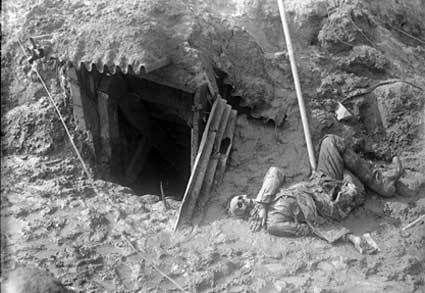
At eleven minutes after the eleventh hour of the eleventh day of the eleventh month of 1918, World War I ended.
It was a war entered into by most of Europe with jubilation 4 years before. The astonishing slaughter of the trenches in pointless battles at Verdun, Ypres, the Somme, the Argonne, the Marne, and Gallipoli turned the jubilation into bleak despair as Europe's generals could think of nothing better than to have an entire generation slaughtered and maimed, marched into machine-gun fire and left to hang on the barbed wire of no-man's land, while their governments ginned up what popular enthusiasm they could by proclaiming it a war to end all wars.
World War I ended Europe's dominance of the world.
It's outcome abruptly ended the rule of the Romanovs, Habsburgs, and Hohenzollerns.
It brought the menace of communism to reality in Russia.
It made the rise of Nazism in Germany possible.
It butchered innocence and optimism along with millions of young men.
The airplane, the tank, and the submarine for the first time became significant instruments of war.
Europe no longer had the self-confidence, or the money, to maintain colonial empires after the war, so most of mankind was swiftly cut adrift into the modern world without proper guidance in how to cope in it.
It brought the US and Russia to the fore of world power.
But the battle of attrition of that war wasn't properly concluded. The peace that was imposed was so mild, yet seemingly so harsh, that Germany was both motivated to, and able to attack again in 30 years, bringing on even greater human catastrophe, and dimming Europe's star, perhaps forever.
The day that ended that nightmare of a war has been commemorated solemnly ever since.
When I was a child there were still many World War I veterans alive. But, as Tommy Makem and Liam Clancy sang, "The old men still answer the call/But year after year, the numbers get fewer/Someday no one will march there at all." Today the youngest veteran of World War I is in his late 90s and very few people have contact with anyone who fought that grievous, bloody, pitiless war. They are almost all gone now, except for a handful for particularly hardy men across the globe. Sadly, World War I has become a forgotten war.
Today, World War II veterans are disappearing at a rate similar to the mortality of World War I veterans when I was young.
The subsequent history of mankind has made a mock of the claim that "The Great War" would end all wars.
On a personal note, my grandfather and 2 of his brothers enlisted in the 1st Battalion, Connaught Rangers (formerly the 88th Regiment of Foot) in 1915. My grandfather was a gas casualty at Ypres, but survived the war. He died in 1936, 28 years before I was born.
The Green Fields Of France, by Davey Arthur and the Fureys
Ronnie Drew and the Dubliners, singing And the Band Played Waltzing Matilda
At eleven minutes after the eleventh hour of the eleventh day of the eleventh month of 1918, World War I ended.
It was a war entered into by most of Europe with jubilation 4 years before. The astonishing slaughter of the trenches in pointless battles at Verdun, Ypres, the Somme, the Argonne, the Marne, and Gallipoli turned the jubilation into bleak despair as Europe's generals could think of nothing better than to have an entire generation slaughtered and maimed, marched into machine-gun fire and left to hang on the barbed wire of no-man's land, while their governments ginned up what popular enthusiasm they could by proclaiming it a war to end all wars.
World War I ended Europe's dominance of the world.
It's outcome abruptly ended the rule of the Romanovs, Habsburgs, and Hohenzollerns.
It brought the menace of communism to reality in Russia.
It made the rise of Nazism in Germany possible.
It butchered innocence and optimism along with millions of young men.
The airplane, the tank, and the submarine for the first time became significant instruments of war.
Europe no longer had the self-confidence, or the money, to maintain colonial empires after the war, so most of mankind was swiftly cut adrift into the modern world without proper guidance in how to cope in it.
It brought the US and Russia to the fore of world power.
But the battle of attrition of that war wasn't properly concluded. The peace that was imposed was so mild, yet seemingly so harsh, that Germany was both motivated to, and able to attack again in 30 years, bringing on even greater human catastrophe, and dimming Europe's star, perhaps forever.
The day that ended that nightmare of a war has been commemorated solemnly ever since.
When I was a child there were still many World War I veterans alive. But, as Tommy Makem and Liam Clancy sang, "The old men still answer the call/But year after year, the numbers get fewer/Someday no one will march there at all." Today the youngest veteran of World War I is in his late 90s and very few people have contact with anyone who fought that grievous, bloody, pitiless war. They are almost all gone now, except for a handful for particularly hardy men across the globe. Sadly, World War I has become a forgotten war.
Today, World War II veterans are disappearing at a rate similar to the mortality of World War I veterans when I was young.
The subsequent history of mankind has made a mock of the claim that "The Great War" would end all wars.
On a personal note, my grandfather and 2 of his brothers enlisted in the 1st Battalion, Connaught Rangers (formerly the 88th Regiment of Foot) in 1915. My grandfather was a gas casualty at Ypres, but survived the war. He died in 1936, 28 years before I was born.
The Green Fields Of France, by Davey Arthur and the Fureys
Ronnie Drew and the Dubliners, singing And the Band Played Waltzing Matilda
Labels: Annual Cycles
Monday, October 25, 2010
Upon Saint Crispin's Day!
The Battle of Agincourt was fought upon this day, an anniversary those of us whose childhoods were formed around anniversaries of deeds of heroics are inclined to remember.
WESTMORELAND.
O that we now had here
But one ten thousand of those men in England
That do no work to-day!
KING.
What's he that wishes so?
My cousin Westmoreland? No, my fair cousin;
If we are mark'd to die, we are enow
To do our country loss; and if to live,
The fewer men, the greater share of honour.
God's will! I pray thee, wish not one man more.
By Jove, I am not covetous for gold,
Nor care I who doth feed upon my cost;
It yearns me not if men my garments wear;
Such outward things dwell not in my desires.
But if it be a sin to covet honour,
I am the most offending soul alive.
No, faith, my coz, wish not a man from England.
God's peace! I would not lose so great an honour
As one man more methinks would share from me
For the best hope I have. O, do not wish one more!
Rather proclaim it, Westmoreland, through my host,
That he which hath no stomach to this fight,
Let him depart; his passport shall be made,
And crowns for convoy put into his purse;
We would not die in that man's company
That fears his fellowship to die with us.
This day is call'd the feast of Crispian.
He that outlives this day, and comes safe home,
Will stand a tip-toe when this day is nam'd,
And rouse him at the name of Crispian.
He that shall live this day, and see old age,
Will yearly on the vigil feast his neighbours,
And say 'To-morrow is Saint Crispian.'
Then will he strip his sleeve and show his scars,
And say 'These wounds I had on Crispian's day.'
Old men forget; yet all shall be forgot,
But he'll remember, with advantages,
What feats he did that day. Then shall our names,
Familiar in his mouth as household words-
Harry the King, Bedford and Exeter,
Warwick and Talbot, Salisbury and Gloucester-
Be in their flowing cups freshly rememb'red.
This story shall the good man teach his son;
And Crispin Crispian shall ne'er go by,
From this day to the ending of the world,
But we in it shall be remembered-
We few, we happy few, we band of brothers;
For he to-day that sheds his blood with me
Shall be my brother; be he ne'er so vile,
This day shall gentle his condition;
And gentlemen in England now-a-bed
Shall think themselves accurs'd they were not here,
And hold their manhoods cheap whiles any speaks
That fought with us upon Saint Crispin's day.
Maddy Prior and June Tabor, Agincourt Carol
WESTMORELAND.
O that we now had here
But one ten thousand of those men in England
That do no work to-day!
KING.
What's he that wishes so?
My cousin Westmoreland? No, my fair cousin;
If we are mark'd to die, we are enow
To do our country loss; and if to live,
The fewer men, the greater share of honour.
God's will! I pray thee, wish not one man more.
By Jove, I am not covetous for gold,
Nor care I who doth feed upon my cost;
It yearns me not if men my garments wear;
Such outward things dwell not in my desires.
But if it be a sin to covet honour,
I am the most offending soul alive.
No, faith, my coz, wish not a man from England.
God's peace! I would not lose so great an honour
As one man more methinks would share from me
For the best hope I have. O, do not wish one more!
Rather proclaim it, Westmoreland, through my host,
That he which hath no stomach to this fight,
Let him depart; his passport shall be made,
And crowns for convoy put into his purse;
We would not die in that man's company
That fears his fellowship to die with us.
This day is call'd the feast of Crispian.
He that outlives this day, and comes safe home,
Will stand a tip-toe when this day is nam'd,
And rouse him at the name of Crispian.
He that shall live this day, and see old age,
Will yearly on the vigil feast his neighbours,
And say 'To-morrow is Saint Crispian.'
Then will he strip his sleeve and show his scars,
And say 'These wounds I had on Crispian's day.'
Old men forget; yet all shall be forgot,
But he'll remember, with advantages,
What feats he did that day. Then shall our names,
Familiar in his mouth as household words-
Harry the King, Bedford and Exeter,
Warwick and Talbot, Salisbury and Gloucester-
Be in their flowing cups freshly rememb'red.
This story shall the good man teach his son;
And Crispin Crispian shall ne'er go by,
From this day to the ending of the world,
But we in it shall be remembered-
We few, we happy few, we band of brothers;
For he to-day that sheds his blood with me
Shall be my brother; be he ne'er so vile,
This day shall gentle his condition;
And gentlemen in England now-a-bed
Shall think themselves accurs'd they were not here,
And hold their manhoods cheap whiles any speaks
That fought with us upon Saint Crispin's day.
Maddy Prior and June Tabor, Agincourt Carol
Labels: Annual Cycles
Sunday, August 01, 2010
Lammas And Saint Peter Ad Vincula
Today is the feast of Saint Peter Ad Vincula. In Europe, it was celebrated as the first fruits of the harvest. "Lammas" probably comes from "Loaf Mass", and a ritual blessing of loaves of bread made from the first grain harvested was part of the Lammas rite. Harvest queens would be crowned in villages, and harvest suppers would be held.
The Feast of Saint Peter Ad Vincula is the Feast of Peter's Chains. Saint Peter, having been arrested, was held in custody, but miraculously was permitted to escape. Two links said to be from the chain that he was confined in are venerated at the church of Saint Peter Ad Vincula at Rome.
The Feast of Saint Peter's Chains was superimposed over the pre-Christian start of the harvest festivals (but with less success than with Christmas, Easter, and All Saints' Day). Though Lammas has lost much of its significance in the last hundred years, it has more cultural resonance than Saint Peter's Chains.
In Western Europe, the harvest is about 3 weeks earlier, on average, than in New England. We think of harvest time as September and October. But even in our own suburban gardens, aren't the first tomatoes ready about now? Raspberries and blackberries are a few days away. Sweet corn is about ready here. Apples will start ripening in a few weeks. Six weeks to fresh sweet cider!
While we are in agriculture mode, a rather rare thing for me, take a look at Mary Alexander's gardening tips.
Just because we are no longer an agricultural society does not mean that we need to lose touch with the traditional seasonal tempo of life.
This was also the beginning of the Autumn fair season. One still hears an Irish folk song called "The Oulde Lammas Faire."
At the Ould Lammas Fair in Ballycastle long ago
I met a pretty colleen who set me heart a-glow
She was smiling at her daddy buying lambs from Paddy Roe
At the Ould Lammas Fair in Ballycastle-O!
Sure I seen her home that night
When the moon was shining bright
From the ould Lammas Fair in Ballycastle-O!
Chorus
At the ould Lammas Fair boys were you ever there
Were you ever at the Fair In Ballycastle-O?
Did you treat your Mary Ann
To some Dulse and Yellow Man
At the ould Lammas Fair in Ballycastle-O!
In Flander's fields afar while resting from the War
We drank Bon Sante to the Flemish lassies O!
But the scene that haunts my memory is kissing Mary Ann
Her pouting lips all sticky from eating Yellow Man
As we passed the silver Margy and we strolled along the strand
From the ould Lammas Fair in Ballycastle-O!
Repeat Chorus
There's a neat little cabin on the slopes of fair Knocklayde
It's lit by love and sunshine where the heather honey's made
With the bees ever humming and the children's joyous call
Resounds across the valley as the shadows fall
Sure I take my fiddle down and my Mary smiling there
Brings back a happy mem'ry of the Lammas Fair
Repeat Chorus
For your edification in things edible and Irish, Dulse is a dried seaweed eaten as a vegetable, and Yellowman is a kind of toffee.
Think about it--there are 7 or 8 weeks to the Topsfield Fair and other fairs start before that. King Richard's Medieval Faire starts Labor Day weekend now. Many towns on the North Shore have their August festivals, probably the equivalent of the medieval fair near Lammas. Salem has its Heritage Days in August, a week-long festival of street fair, parade, and fireworks, along with ice cream "Scooper Bowls and Chowderfests. Beverly has Homecoming Week, and Newburyport has Yankee Homecoming this month.
Many towns in medieval and early modern Europe held large fairs on or near Lammas that brought people from far and near to the closest thing Europe then had to a mall. In medieval Europe, those fairs took on a much greater commercial significance than their descendants do today. The fairs were mobile, spending a few days in a given location (like a modern carnival).
The largest Lammas Fair that continues to this day is the Ould Lammas Fair in Ballycastle, Co. Antrim, Northern Ireland.
Lammas is the only resting point we have until the Feast of the Assumption in two weeks. It is our chance to assess how the summer is going, whether it will be an early autumn, or whether the heat will persist past Labor Day.
You don't need to be Haydn Pearson (The Countryman essayist in The New York Times 50 years ago) to notice that Autumn is on the way. Some sickly trees will start to change by the end of the month. In fact, one year I was shocked to see trees near the Prudential Center in Boston starting to turn yellow in mid July! Despite signs of the approach of fall, it may still be hot now and then, especially in early August. The "Dog Days," which began July 25th or so, may hold sway until the middle of the month. But the cooler days will start to be noticed more, especially after the fifteenth of August. By mid-month the growing shortness of the days will be evident.
With regard to the "Dog Days," a reader one year very helpfully sent this in for our edification (thank you very much!):
2) These Transitus days give us an extra bonus for feasting days of saints we love. St. Swithin's Feast is July 2, but "St. Swithin's Day" is July 15, his Transitus; and it is on the latter date that the weather depends. In France the weather saint is St. Medard (June 8), and the farmers know that "Quand it pleut a la saint-Medard, it pleut pour quarante jours plus tard."
3) In the USA, July 3 marks the beginning of Dog Days, and if it rains on this day, you'll have plenty of rain for the forty-day period of Dog Days. Plus the usual phenomena of dogs getting irritable and snakes biting more frequently, with especially powerful venom. My grandmother used to keep a dish filled with water in the yard for the dogs during Dog Days.
Autumn-themed decor started showing up in stores a few weeks ago. There were back-to-school displays (stacks of binders) in Walmart in June, a few days after school ended! And one weekend at the end of July, I saw in a TJ Maxx/HomeGoods store a startling array of fall, Halloween, and Thanksgiving decorative items. What, no Christmas decorations yet? Well, yes. Lemaxx Christmas Village displays are popping up already in AC Moore and Michaels.
Unfortunately, I and my fellow ragweed allergy sufferers will start to be miserable in about 10 days, and will stay that way until the first hard frost in October. It has not bothered me as much in Salem or in Boston. Not much ragweed nearby to trouble me. But when I am in the suburbs, or in more rural areas, gosh do my sinuses act up!
May the Lord bless this harvest and provide ample food for all His people. As a practical matter, your local food pantry does not want you to bake a loaf of bread for them. But today, as we celebrate the harvest, it would be great to write a $10.00check to them, so they can buy bread for ten families for the week.
Bread For Lammas
Since this is the day to celebrate first fruits of the wheat harvest, why not share a few recipes for bread? After all, grains are the staff of life, and are basic to our culture, indeed to all human survival. And the Bible is full of references to bread and its liturgical significance.
Our Lord decided upon bread as the form His Body would take for us.
The liturgical readings at Mass at this time of year focus on grain, wheat, bread, and the harvest.
And I must admit a terrific fondess for breads. Indeed, you might say that my body has never met a carbohydrate it did not take a serious liking to, and invite to stick around for life in a pleasant spot around my middle.
Vanilla Spice Bread
Ingredients
3/4 cup water
1/2 cup milk
1 1/2 teaspoons vanilla extract
1/4 cup dark brown sugar
2 tablespoons white sugar
1/8 teaspoon ground cardamom
1/4 teaspoon ground coriander
2 tablespoons vegetable oil
1 1/4 teaspoons salt
3 cups high-gluten bread flour
1 1/2 teaspoons active dry yeast
Directions
1.Place water, milk, vanilla extract, brown sugar, white sugar, cardamom, coriander, vegetable oil, and salt into the pan of a bread machine in that order. Pour the flour onto the other ingredients, and sprinkle the flour with yeast. Set the bread machine to the Dough cycle; turn on the machine.
2.Preheat oven to 350 degrees F (175 degrees C). Grease a 9x5-inch bread pan.
3.When the Dough cycle is completed, remove the dough from the machine, punch down if necessary, form into a loaf, and place into the prepared bread pan with the seam side down. Cover and let rise until doubled, 20 to 30 minutes.
4.Bake in the preheated oven until the loaf is golden brown, 35 to 45 minutes. Let cool in the pan for 5 minutes before removing to finish cooling on a rack.
Garlic Yeast Bread
Ingredients
2/3 cup water (70 to 80 degrees F)
2 teaspoons butter or margarine, softened
1 garlic clove, minced
2 cups bread flour
1 tablespoon sugar
1 teaspoon salt
1/4 teaspoon dried rosemary, crushed
1/8 teaspoon dried thyme
1/8 teaspoon dried basil
1 3/4 teaspoons active dry yeast
In bread machine pan, place all ingredients in order suggested by manufacturer. Select basic bread setting. Choose crust color and loaf size if available. Bake according to bread machine directions (check dough after 5 minutes of mixing; add 1 to 2 tablespoons of water or flour if needed). Great for a roast beef sandwich.
Anise Almond Loaf
Ingredients
3/4 cup water (70 to 80 degrees F)
1 egg
1/4 cup butter or margarine, softened
1/4 cup sugar
1/2 teaspoon salt
3 cups bread flour
1 teaspoon anise seed
2 teaspoons active dry yeast
1/2 cup chopped almonds
Directions
1.In bread machine pan, place first eight ingredients in order suggested by manufacturer. Select basic bread setting. Choose light crust color and loaf size if available. Bake according to bread machine directions (check dough after 5 minutes of mixing; add 1 to 2 tablespoons of water or flour if needed). Just before the final kneading (your machine may audibly signal this), add almonds.
The Feast of Saint Peter Ad Vincula is the Feast of Peter's Chains. Saint Peter, having been arrested, was held in custody, but miraculously was permitted to escape. Two links said to be from the chain that he was confined in are venerated at the church of Saint Peter Ad Vincula at Rome.
The Feast of Saint Peter's Chains was superimposed over the pre-Christian start of the harvest festivals (but with less success than with Christmas, Easter, and All Saints' Day). Though Lammas has lost much of its significance in the last hundred years, it has more cultural resonance than Saint Peter's Chains.
In Western Europe, the harvest is about 3 weeks earlier, on average, than in New England. We think of harvest time as September and October. But even in our own suburban gardens, aren't the first tomatoes ready about now? Raspberries and blackberries are a few days away. Sweet corn is about ready here. Apples will start ripening in a few weeks. Six weeks to fresh sweet cider!
While we are in agriculture mode, a rather rare thing for me, take a look at Mary Alexander's gardening tips.
Just because we are no longer an agricultural society does not mean that we need to lose touch with the traditional seasonal tempo of life.
This was also the beginning of the Autumn fair season. One still hears an Irish folk song called "The Oulde Lammas Faire."
At the Ould Lammas Fair in Ballycastle long ago
I met a pretty colleen who set me heart a-glow
She was smiling at her daddy buying lambs from Paddy Roe
At the Ould Lammas Fair in Ballycastle-O!
Sure I seen her home that night
When the moon was shining bright
From the ould Lammas Fair in Ballycastle-O!
Chorus
At the ould Lammas Fair boys were you ever there
Were you ever at the Fair In Ballycastle-O?
Did you treat your Mary Ann
To some Dulse and Yellow Man
At the ould Lammas Fair in Ballycastle-O!
In Flander's fields afar while resting from the War
We drank Bon Sante to the Flemish lassies O!
But the scene that haunts my memory is kissing Mary Ann
Her pouting lips all sticky from eating Yellow Man
As we passed the silver Margy and we strolled along the strand
From the ould Lammas Fair in Ballycastle-O!
Repeat Chorus
There's a neat little cabin on the slopes of fair Knocklayde
It's lit by love and sunshine where the heather honey's made
With the bees ever humming and the children's joyous call
Resounds across the valley as the shadows fall
Sure I take my fiddle down and my Mary smiling there
Brings back a happy mem'ry of the Lammas Fair
Repeat Chorus
For your edification in things edible and Irish, Dulse is a dried seaweed eaten as a vegetable, and Yellowman is a kind of toffee.
Think about it--there are 7 or 8 weeks to the Topsfield Fair and other fairs start before that. King Richard's Medieval Faire starts Labor Day weekend now. Many towns on the North Shore have their August festivals, probably the equivalent of the medieval fair near Lammas. Salem has its Heritage Days in August, a week-long festival of street fair, parade, and fireworks, along with ice cream "Scooper Bowls and Chowderfests. Beverly has Homecoming Week, and Newburyport has Yankee Homecoming this month.
Many towns in medieval and early modern Europe held large fairs on or near Lammas that brought people from far and near to the closest thing Europe then had to a mall. In medieval Europe, those fairs took on a much greater commercial significance than their descendants do today. The fairs were mobile, spending a few days in a given location (like a modern carnival).
The largest Lammas Fair that continues to this day is the Ould Lammas Fair in Ballycastle, Co. Antrim, Northern Ireland.
Lammas is the only resting point we have until the Feast of the Assumption in two weeks. It is our chance to assess how the summer is going, whether it will be an early autumn, or whether the heat will persist past Labor Day.
You don't need to be Haydn Pearson (The Countryman essayist in The New York Times 50 years ago) to notice that Autumn is on the way. Some sickly trees will start to change by the end of the month. In fact, one year I was shocked to see trees near the Prudential Center in Boston starting to turn yellow in mid July! Despite signs of the approach of fall, it may still be hot now and then, especially in early August. The "Dog Days," which began July 25th or so, may hold sway until the middle of the month. But the cooler days will start to be noticed more, especially after the fifteenth of August. By mid-month the growing shortness of the days will be evident.
With regard to the "Dog Days," a reader one year very helpfully sent this in for our edification (thank you very much!):
2) These Transitus days give us an extra bonus for feasting days of saints we love. St. Swithin's Feast is July 2, but "St. Swithin's Day" is July 15, his Transitus; and it is on the latter date that the weather depends. In France the weather saint is St. Medard (June 8), and the farmers know that "Quand it pleut a la saint-Medard, it pleut pour quarante jours plus tard."
3) In the USA, July 3 marks the beginning of Dog Days, and if it rains on this day, you'll have plenty of rain for the forty-day period of Dog Days. Plus the usual phenomena of dogs getting irritable and snakes biting more frequently, with especially powerful venom. My grandmother used to keep a dish filled with water in the yard for the dogs during Dog Days.
Autumn-themed decor started showing up in stores a few weeks ago. There were back-to-school displays (stacks of binders) in Walmart in June, a few days after school ended! And one weekend at the end of July, I saw in a TJ Maxx/HomeGoods store a startling array of fall, Halloween, and Thanksgiving decorative items. What, no Christmas decorations yet? Well, yes. Lemaxx Christmas Village displays are popping up already in AC Moore and Michaels.
Unfortunately, I and my fellow ragweed allergy sufferers will start to be miserable in about 10 days, and will stay that way until the first hard frost in October. It has not bothered me as much in Salem or in Boston. Not much ragweed nearby to trouble me. But when I am in the suburbs, or in more rural areas, gosh do my sinuses act up!
May the Lord bless this harvest and provide ample food for all His people. As a practical matter, your local food pantry does not want you to bake a loaf of bread for them. But today, as we celebrate the harvest, it would be great to write a $10.00check to them, so they can buy bread for ten families for the week.
Bread For Lammas
Since this is the day to celebrate first fruits of the wheat harvest, why not share a few recipes for bread? After all, grains are the staff of life, and are basic to our culture, indeed to all human survival. And the Bible is full of references to bread and its liturgical significance.
Our Lord decided upon bread as the form His Body would take for us.
The liturgical readings at Mass at this time of year focus on grain, wheat, bread, and the harvest.
And I must admit a terrific fondess for breads. Indeed, you might say that my body has never met a carbohydrate it did not take a serious liking to, and invite to stick around for life in a pleasant spot around my middle.
Vanilla Spice Bread
Ingredients
3/4 cup water
1/2 cup milk
1 1/2 teaspoons vanilla extract
1/4 cup dark brown sugar
2 tablespoons white sugar
1/8 teaspoon ground cardamom
1/4 teaspoon ground coriander
2 tablespoons vegetable oil
1 1/4 teaspoons salt
3 cups high-gluten bread flour
1 1/2 teaspoons active dry yeast
Directions
1.Place water, milk, vanilla extract, brown sugar, white sugar, cardamom, coriander, vegetable oil, and salt into the pan of a bread machine in that order. Pour the flour onto the other ingredients, and sprinkle the flour with yeast. Set the bread machine to the Dough cycle; turn on the machine.
2.Preheat oven to 350 degrees F (175 degrees C). Grease a 9x5-inch bread pan.
3.When the Dough cycle is completed, remove the dough from the machine, punch down if necessary, form into a loaf, and place into the prepared bread pan with the seam side down. Cover and let rise until doubled, 20 to 30 minutes.
4.Bake in the preheated oven until the loaf is golden brown, 35 to 45 minutes. Let cool in the pan for 5 minutes before removing to finish cooling on a rack.
Garlic Yeast Bread
Ingredients
2/3 cup water (70 to 80 degrees F)
2 teaspoons butter or margarine, softened
1 garlic clove, minced
2 cups bread flour
1 tablespoon sugar
1 teaspoon salt
1/4 teaspoon dried rosemary, crushed
1/8 teaspoon dried thyme
1/8 teaspoon dried basil
1 3/4 teaspoons active dry yeast
In bread machine pan, place all ingredients in order suggested by manufacturer. Select basic bread setting. Choose crust color and loaf size if available. Bake according to bread machine directions (check dough after 5 minutes of mixing; add 1 to 2 tablespoons of water or flour if needed). Great for a roast beef sandwich.
Anise Almond Loaf
Ingredients
3/4 cup water (70 to 80 degrees F)
1 egg
1/4 cup butter or margarine, softened
1/4 cup sugar
1/2 teaspoon salt
3 cups bread flour
1 teaspoon anise seed
2 teaspoons active dry yeast
1/2 cup chopped almonds
Directions
1.In bread machine pan, place first eight ingredients in order suggested by manufacturer. Select basic bread setting. Choose light crust color and loaf size if available. Bake according to bread machine directions (check dough after 5 minutes of mixing; add 1 to 2 tablespoons of water or flour if needed). Just before the final kneading (your machine may audibly signal this), add almonds.
Labels: Annual Cycles, Food
Monday, May 10, 2010
Rogationtide
Monday, Tuesday, and Wednesday of this week are Rogationtide.
Check out what Holy Trinity's website has to say about the Rogation Days.
There used to be a partial indulgence for reciting the Litany of the Saints (link to Recta Ratio: The Yahoo Group) even privately during Rogationtide, since Rogation Processions are few and far between these days.

Rogation Procession at Papa Stronsay. However, the monks are virtually the only Catholic human inhabitants of the island, so what is missing is a Catholic lay community following the procession.
Here is the commentary of Father Francis X. Weiser, SJ on Rogationtide from his classic work, Handbook Of Christian Feasts and Customs. Father Weiser was at one time pastor of Holy Trinity church, now Boston's indult parish.
CHAPTER 4: ROGATION DAYS
ORIGIN AND HISTORY
LITANIES--The Jews in the Old Testament had a form of public prayer in which one or more persons would pronounce invocations of God which all those present answered by repeating (after every invocation) a certain prayer call, lik e "His mercy endures forever" (Psalm 135) or "Praise and exalt Him above all forever" (Daniel 3, 57-87).
In the New Testament the Church retained this practice. The early Christians called such common, public, and alternating prayers "litany," from the Greek "litaneia" (lite), meaning "a humble and fervent appeal."[1] What they prayed for is indicated in a short summary by Saint Paul in his first letter to Timothy (2, 1-2).
The common and typical structure of the litany in the Latin Church developed gradually, from the third century on, from short invocations as they were used in early Church services. It consisted of four main types, which were recited ei ther separately or joined together. First, invocations of the Divine Persons and of Christ, with the response "Miserere nobis" (Have mercy on us). Second, invocations of Mary, the Apostles, and groups of saints, response: "Ora pro nobis" (Pray for us). Th ird, prayers to God for protection from evils of body and soul, response: "Libera nos, Domine" (Deliver us, O Lord). Finally, prayers for needed favors, response: "Te rogamus, audi nos" (We beseech Thee, hear us).[2]
Many invocations of individual saints and special petitions were added everywhere in later centuries, and popular devotion increased their numbers to such an extent that Pope Clement VIII, in 1601, determined the official text of the li tany (called "Litany of All Saints") and prohibited the public use of any other litanies unless expressly approved by Rome.[3]
The invocation Kyrie eleison came from the Orient to Rome in the fifth century. It soon acquired such popularity that it joined (and even supplanted) the older form of litany in the Mass of the Catechumens.[4] Up to this day the Kyrie e leison and Christe eleison in the Mass remain as relics of the responses that the people gave to petitions recited by the deacon (before the readings) and by the celebrant (after the Gospel). Outside of the Holy Sacrifice, the Kyrie eleison was also added to the other types of litany prayers; it may still be found at the beginning and end of every litany. The Greek Rite still uses a number of actual litanies (Ektenai) in its liturgy (the Holy Sacrifice).[5]
Many and varied are the occasions on which litanies were in use among early Christians. Besides being a part of the Mass liturgy, a litany was recited before solemn baptism (as it is today in the liturgy of the Easter vigil) and in the prayers for the dying (where it is also still prescribed). Even more frequent, however, was the use of litanies during processions, because the short invocations and exclamatory answers provided a convenient form of common prayer for a multitude in motion .[6] This connection between litany and procession soon brought about the custom of calling both by the same term. From the sixth century on, "litania" was used with the meaning of "procession." The first Council of Orleans (511) incorporated this usage i nto the official terminology of the Church.[7]
Since the ancient Roman Church had many and divers kinds of processions, the litanies must have been a most familiar feature of ecclesiastical life. Litanies (processions) were held on Station days, every day in Lent, on many feasts, on Ember Days and vigils, and on special occasions (calamities and dangers of a usual or unusual kind) when God's mercy and protection was implored with particular fervor.[8] These latter occasions had already been observed in pagan Rome with processions to the shrines of gods at certain times of the year. Their natural features (dates, routes, motives) were part of the traditional community life. These features the Church retained in certain cases, filling them with the significance and spiritual power of Christian worship.
THE MAJOR LITANIES--The pagan Romans had two kinds of religious parades: the "amburbalia" (around the city) and "ambarvalia" (around the fields).[9] The most important one of the rural processions every year (on April 25) walked along the Via Claudia to a place four miles outside the city. Its purpose was to obtain protection against frost and blight for the field fruits, especially grains. The Roman god responsible for this harvest was a bisexual divinity invoked either as male or female (Robigus, Robigo). He (or she) had the power to send blight upon the grains; and the procession was made to avert his "evil eye" from the fruits of human toil.[10] At the fifth milestone, beyond the Milvian Bridge, was a grove which served as a shrine of Robigus. There the parade stopped, and the "Flamen" (pagan priest) sacrificed a sheep and a rust-colored dog, offering the entrails of these animals to the god. After the "service," young and old celebrated a kind of picnic with games, races, an d amusements (some of which were not overly decent). In honor of the god the whole celebration was called "Robigalia."[11]
Christianity had no quarrel with the motive of such a procession (prayer for protection of the harvest) or with its traditional date and route. Thus, when the empire turned Christian in the fourth century and the pagan celebrations died a natural death, the Church took over this traditional observance, as a Christian rite, to pray for God's protection and blessing upon the fields. The pope with his clergy and a great crowd of people marched in solemn procession along the same route. The y chanted the litany and repeated every invocation. After crossing the Milvian Bridge they did not, however, proceed to the place where the shrine of Robigus had been, but turned back and wended their way along the Tiber to the church of St. Peter at the Vatican. There the pope offered the Holy Sacrifice, and the multitude attended.[12]
When and how, after the pagan observance had stopped, the Church started this annual procession is not known. The first definite information is given in a sermon of Pope Gregory the Great (604), who called it a "Litania Major" (Greater Litany); and he speaks of the "return of this annual solemnity," which proves that it already was a traditional feature in his day.[13]
The name "litania major" was originally given to a number of solemn processions in Rome (such as those on April 25 and Ember Fridays).[14] Only later was it applied exclusively to the procession of April 25, and this term has remained i n the liturgy ever since. There is no connection between the Major Litany and the Feast of Saint Mark the Evangelist, which is celebrated on the same day. The litany is of much earlier date, for the Feast of Saint Mark was not introduced until the ninth c entury.[15]
Shortly after the beginning of the Middle Ages, the Major Litany was adopted by other parts of the ancient empire, but not everywhere on the same date. It was only during the ninth and tenth centuries that the Roman date and ritual beca me those usually accepted. For the Frankish empire the observance in the Roman manner was prescribed by the Council of Aachen, in 836.[16] Today the liturgical books use the plural form in all cases, both for the prayers and the processions.[17]
THE MINOR LITANIES--In 470, during a time of unusual calamities (storms, floods, earthquakes), Bishop Mamertus of Vienne in Gaul originated an annual observance of penitential exercises for the three days before the Feast of the Ascension. With the cooperation of the civil authorities he decreed that the faithful abstain from servile work and that this triduum be held as a time of penance, with prayer and fasting. He also prescribed penitential processions (litanies) for each one of the three days. Thus the name "litanies" was given to the whole celebration.[18]
Very soon the other bishops of Gaul adopted the new observance. At the beginning of the sixth century it started spreading into neighboring countries. In 511 the Council of Orleans prescribed it for the Frankish (Merovingian) part of Fr ance.[19] The Diocese of Milan accepted the litanies, but held them in the week before Pentecost.[20] In Spain they were observed in the sixth century during the week after Pentecost.[21] The Council of Mainz (813) introduced them to the German part of th e Frankish empire.[22]
Meanwhile, Rome had declined for centuries to adopt this custom because its liturgical character did not agree with the ancient practice of the Roman Church which excluded penitential rites on all days between Easter and Pentecost. Char lemagne and the Frankish bishops, however, urged Pope Leo III (816) to incorporate these litanies into the Roman liturgy.[23] The pope finally consented to a compromise: the observance of the fast was rescinded, but the penitential procession was approved . As Mass text, the formula of the Major Litany from the Roman liturgical books was taken. This approval was originally made only as an exception, for the litanies were not intended by Leo III as an established annual rite.[24] In return for the concessio n, the Frankish Church decreed, at the Council of Aachen (836), that these "minor litanies" should be held according to the Roman decision (without fast).[25]
During the subsequent centuries, however, the custom of holding these litanies became definitely established, even at Rome, as an annual feature of the liturgical year; it has remained so ever since in the whole Latin Church, and is now celebrated everywhere on the three days before the Feast of the Ascension. A memorable exception has been made recently: Pope Pius XII granted to some Catholic missions in the Pacific Islands the permission to celebrate both the major and minor litanies in October or November.[26]
NAMES--The litanies held on each one of the three days before the Feast of the Ascension are called "minor" because, in the Roman liturgy, they are of younger date than the Major Litany on April 25. In the early centuries they we re also called "Gallican Litanies," because of their origin in Gaul.[27] The Major Litany was named "Roman" or "Gregorian" (after Gregory the Great, who first mentioned it). The popular term "Rogation Days" originated in the High Middle Ages. Another popu lar name, mostly used in central Europe, is "Cross Days" (from the crucifix that is carried in front of the procession).[28]
LITURGY
LATIN RITE--The Rogation Days are unique through their penitential nature (purple vestments, no Gloria) within the jubilant Easter season. Even the Major Litany, which in ancient times was a festive observance of joyful petition and confidence, became assimilated after the beginning of the tenth century, acquiring this note of mourning and penance.[29]
In the chanting of the litanies each invocation is repeated twice, first by the cantors, then by the people (choir). Some scholars explain this custom as a relic of the "Litania Septiformis" (Procession in Seven Columns) from the time o f Pope Gregory the Great, who initiated this particular type of litany.[30] Another feature of the ancient Major Litany was the antiphons, which the cantors sang at the start of the procession. They unfortunately were discontinued centuries ago, so they a re no longer found in our liturgical books.[31]
The litany used to lead directly into the Mass (as it still does on the vigil of Easter). The Rogation Mass, therefore, had neither Introit nor Kyrie of its own, but the priest concluded the litany by singing a Collect which also served as oration (prayer) of the Mass. The ten Collects used now in the litany are of later date, when the procession was severed from the Mass and held as a separate and isolated rite.[32]
There is no obligation now to conduct a procession. However, the rubrics of the Divine Office prescribe that on Rogation Days all those who are obliged to say the breviary must recite the Litanies of All Saints (with the psalm and praye rs following it) whenever they have missed them before Mass.[33]
The Rogations must be commemorated in other Masses on Rogation Days (for instance, in the Mass of Saint Mark the Evangelist). If April 25 should happen to be Easter Sunday, the litanies are transferred to Tuesday in Easter week; apart f rom this exception, they are always to be held on their liturgical dates even if some other great feast should fall on one of their days.[34]
ORIENTAL RITES--Most of the Oriental Churches keep a triduum of fast and penitential prayer, comparable to the Rogations, shortly before the beginning of Lent. In the Greek Rite it is called the "Fast of Adam" in honor of the fir st law of abstinence which God gave to Adam and Eve in Paradise (Genesis 2, 17), and in preparation for the coming strict fast of Lent. About the same time of the year, the Syrians, Chaldeans, and Copts celebrate a three days' penitential season of prayer and fasting which they call the "Fast of Indiction" (because God indicts man, and punishes him through natural calamities) or "Fast of the Ninevites" (because the people of Nineveh averted God's punishment through prayer and fasting; see Jonas 3, 5-10). The Armenians term it "Aratshavor-atz," which means "precursor" (a fast coming before Lent).[35]
FOLKLORE
RELIGIOUS OBSERVANCE--In the rural sections of Catholic countries the Rogations are still held in their full and original significance with many features of external solemnity. The church bells ring while the procession slowly we nds its way through the town and out into the open. Religious banners are carried, the litanies are chanted by choir and people, and the priest sprinkles the fields, gardens, and orchards with holy water. After returning to the church, a sermon is preache d and the High Mass of the Rogations is celebrated. Later in the day some time is spent by many farmers with private little prayer processions around their own homestead. Reciting traditional prayers, the whole family asks for God's blessing upon house, b arns, stables, and fields.[36]
In some places the Rogations are held in a way that is strongly reminiscent of the "Litania Septiformis" of ancient times. The inhabitants of villages surrounding some city or town will proceed from their own churches in separate proces sions and converge toward the big church of the city for the sermon and High Mass. Afterward a market or fair is ready to serve their temporal needs and interests.
The purpose and liturgy of the Rogations has for many centuries, up to our time, inspired a great number of semi-liturgical imitations and repetitions of its rite in the manifold smaller processions which are held all through the summer months in countless places of Europe. These prayer processions are customary whenever the harvest is in danger from frost, floods, hail, drought, or the like.[37] Other such processions are steady features of religious observance, and their main purpose is to pray for the right kind of weather--a most important item on the prayer list of agricultural populations.[38] In many sections of Europe a "weather procession" is held around the church on every Sunday. Usually the priest sings the prologue of Saint John's Gospel (1, 1-14), which from the High Middle Ages has been considered as conferring a powerful blessing against all harmful trends of nature.[39]
PRE-CHRISTIAN ELEMENTS--The pre-Christian lore of averting harm from fields and homes by the magic power of "walking around" them ("circumambulatio," "ambitus" in Latin and "umbigang" in old Germanic) still survives in many super stitious customs among the rural populations of Europe.[40] At the seasons of the year when the demons roam (before the winter solstice, on Walpurgis Night, around the middle of June, at Halloween), girls or young men must circle the fields and orchards, sometimes during the night and in a rhythmic dance step. Before Christmas the farmer goes around his buildings with incense and holy water. He must be careful to complete the round walk; otherwise "the blessing would not take hold." Here also belongs the superstition held in many places that visitors should leave the home by the same door through which they came (to "close the circle") in order to avoid misfortune and harm.[41]
ENDNOTES
1. F. Cabrol, "Litanies," DACL, 9.2 (1930), 1540 ff.
2. Schuster, II, 359.
3. CIC, 1259, 2.
4. Jgn MS, I, 412ff.
5. Nilles, I, LXHI (Ektenes).
6. J. A. Jungmann, "Beitrage zur Geschichte der Gebetsliturgie," VII, ZKTh, 73 (1951), 347ff.
7. Can. 27; Mansi, 8, 355.
8. Kellner, 189 ff.
9. PW, I, 1796 (Ambarvalia), 1816 (Amburbium).
10. M. T. Varro, "Antiquitates, De Rust.," I, 1, 6.
11. PW, IA.1, 949 ff.
12. TE, I, 660.
13. Letter without address; PL, 27, 1327.
14. H. Grisar, "Das Romische Sacramentar," ZKTh, 9 (1885), 585 ff.
15. Kellner, 300.
16. Cap. II, Can. 10; Mansi, 14, 678.
17. H. Leclercq, "Procession de Saint Marc," DACL, 10.2 (1932), 1740 ff.
18. Gregory of Tours, "Historia Francorum" 2, 34; PL, 71, 231 ff.; Sidon. Apoll., Epist. 1; PL, 58, 563.
19. Can. 27; Mansi, 8, 355.
20. Kellner, 193.
21. "Concil. Gerund.," Can. 2; Mansi, 8, 549.
22. Can. 33; Mansi, 14, 72.
23. LE, 164.
24. Schuster, II, 371.
25. See note 16.
26. W. van Bekkum, "The Liturgical Revival in the Service of the Missions," AP, 108.
27. F. Cabrol, "Rogations," DACL, 14.2 (1948), 2459 ff.
28. OiT, 110.
29. Schuster, II, 356.
30. DACL, 10.2 (1932), 1740 (Litania Septiformis).
31. Schuster, II, 358 (text of these ancient antiphons).
32. Schuster, II, 366.
33. BR, April 25 (S. Marci Evangelistae), rubric at the end.
34. MR, April 25 (S. Marci Evangelistae), rubric before Mass text.
35. Nilles, II, 6-11, 51, 646, 697.
36. OiT, 104ff. ("Die drei Bittage vor Christi Himmelfahrt").
37. B. Scholz, "The Sacramentals in Agriculture," OF, 5 (1931), 323 ff.
38. Franz, II, 71.
39. Jgn MS, II, 543.
40. Franz, II, 7, 68.
41. Koren, 129 ff.
Check out what Holy Trinity's website has to say about the Rogation Days.
There used to be a partial indulgence for reciting the Litany of the Saints (link to Recta Ratio: The Yahoo Group) even privately during Rogationtide, since Rogation Processions are few and far between these days.

Rogation Procession at Papa Stronsay. However, the monks are virtually the only Catholic human inhabitants of the island, so what is missing is a Catholic lay community following the procession.
Here is the commentary of Father Francis X. Weiser, SJ on Rogationtide from his classic work, Handbook Of Christian Feasts and Customs. Father Weiser was at one time pastor of Holy Trinity church, now Boston's indult parish.
CHAPTER 4: ROGATION DAYS
ORIGIN AND HISTORY
LITANIES--The Jews in the Old Testament had a form of public prayer in which one or more persons would pronounce invocations of God which all those present answered by repeating (after every invocation) a certain prayer call, lik e "His mercy endures forever" (Psalm 135) or "Praise and exalt Him above all forever" (Daniel 3, 57-87).
In the New Testament the Church retained this practice. The early Christians called such common, public, and alternating prayers "litany," from the Greek "litaneia" (lite), meaning "a humble and fervent appeal."[1] What they prayed for is indicated in a short summary by Saint Paul in his first letter to Timothy (2, 1-2).
The common and typical structure of the litany in the Latin Church developed gradually, from the third century on, from short invocations as they were used in early Church services. It consisted of four main types, which were recited ei ther separately or joined together. First, invocations of the Divine Persons and of Christ, with the response "Miserere nobis" (Have mercy on us). Second, invocations of Mary, the Apostles, and groups of saints, response: "Ora pro nobis" (Pray for us). Th ird, prayers to God for protection from evils of body and soul, response: "Libera nos, Domine" (Deliver us, O Lord). Finally, prayers for needed favors, response: "Te rogamus, audi nos" (We beseech Thee, hear us).[2]
Many invocations of individual saints and special petitions were added everywhere in later centuries, and popular devotion increased their numbers to such an extent that Pope Clement VIII, in 1601, determined the official text of the li tany (called "Litany of All Saints") and prohibited the public use of any other litanies unless expressly approved by Rome.[3]
The invocation Kyrie eleison came from the Orient to Rome in the fifth century. It soon acquired such popularity that it joined (and even supplanted) the older form of litany in the Mass of the Catechumens.[4] Up to this day the Kyrie e leison and Christe eleison in the Mass remain as relics of the responses that the people gave to petitions recited by the deacon (before the readings) and by the celebrant (after the Gospel). Outside of the Holy Sacrifice, the Kyrie eleison was also added to the other types of litany prayers; it may still be found at the beginning and end of every litany. The Greek Rite still uses a number of actual litanies (Ektenai) in its liturgy (the Holy Sacrifice).[5]
Many and varied are the occasions on which litanies were in use among early Christians. Besides being a part of the Mass liturgy, a litany was recited before solemn baptism (as it is today in the liturgy of the Easter vigil) and in the prayers for the dying (where it is also still prescribed). Even more frequent, however, was the use of litanies during processions, because the short invocations and exclamatory answers provided a convenient form of common prayer for a multitude in motion .[6] This connection between litany and procession soon brought about the custom of calling both by the same term. From the sixth century on, "litania" was used with the meaning of "procession." The first Council of Orleans (511) incorporated this usage i nto the official terminology of the Church.[7]
Since the ancient Roman Church had many and divers kinds of processions, the litanies must have been a most familiar feature of ecclesiastical life. Litanies (processions) were held on Station days, every day in Lent, on many feasts, on Ember Days and vigils, and on special occasions (calamities and dangers of a usual or unusual kind) when God's mercy and protection was implored with particular fervor.[8] These latter occasions had already been observed in pagan Rome with processions to the shrines of gods at certain times of the year. Their natural features (dates, routes, motives) were part of the traditional community life. These features the Church retained in certain cases, filling them with the significance and spiritual power of Christian worship.
THE MAJOR LITANIES--The pagan Romans had two kinds of religious parades: the "amburbalia" (around the city) and "ambarvalia" (around the fields).[9] The most important one of the rural processions every year (on April 25) walked along the Via Claudia to a place four miles outside the city. Its purpose was to obtain protection against frost and blight for the field fruits, especially grains. The Roman god responsible for this harvest was a bisexual divinity invoked either as male or female (Robigus, Robigo). He (or she) had the power to send blight upon the grains; and the procession was made to avert his "evil eye" from the fruits of human toil.[10] At the fifth milestone, beyond the Milvian Bridge, was a grove which served as a shrine of Robigus. There the parade stopped, and the "Flamen" (pagan priest) sacrificed a sheep and a rust-colored dog, offering the entrails of these animals to the god. After the "service," young and old celebrated a kind of picnic with games, races, an d amusements (some of which were not overly decent). In honor of the god the whole celebration was called "Robigalia."[11]
Christianity had no quarrel with the motive of such a procession (prayer for protection of the harvest) or with its traditional date and route. Thus, when the empire turned Christian in the fourth century and the pagan celebrations died a natural death, the Church took over this traditional observance, as a Christian rite, to pray for God's protection and blessing upon the fields. The pope with his clergy and a great crowd of people marched in solemn procession along the same route. The y chanted the litany and repeated every invocation. After crossing the Milvian Bridge they did not, however, proceed to the place where the shrine of Robigus had been, but turned back and wended their way along the Tiber to the church of St. Peter at the Vatican. There the pope offered the Holy Sacrifice, and the multitude attended.[12]
When and how, after the pagan observance had stopped, the Church started this annual procession is not known. The first definite information is given in a sermon of Pope Gregory the Great (604), who called it a "Litania Major" (Greater Litany); and he speaks of the "return of this annual solemnity," which proves that it already was a traditional feature in his day.[13]
The name "litania major" was originally given to a number of solemn processions in Rome (such as those on April 25 and Ember Fridays).[14] Only later was it applied exclusively to the procession of April 25, and this term has remained i n the liturgy ever since. There is no connection between the Major Litany and the Feast of Saint Mark the Evangelist, which is celebrated on the same day. The litany is of much earlier date, for the Feast of Saint Mark was not introduced until the ninth c entury.[15]
Shortly after the beginning of the Middle Ages, the Major Litany was adopted by other parts of the ancient empire, but not everywhere on the same date. It was only during the ninth and tenth centuries that the Roman date and ritual beca me those usually accepted. For the Frankish empire the observance in the Roman manner was prescribed by the Council of Aachen, in 836.[16] Today the liturgical books use the plural form in all cases, both for the prayers and the processions.[17]
THE MINOR LITANIES--In 470, during a time of unusual calamities (storms, floods, earthquakes), Bishop Mamertus of Vienne in Gaul originated an annual observance of penitential exercises for the three days before the Feast of the Ascension. With the cooperation of the civil authorities he decreed that the faithful abstain from servile work and that this triduum be held as a time of penance, with prayer and fasting. He also prescribed penitential processions (litanies) for each one of the three days. Thus the name "litanies" was given to the whole celebration.[18]
Very soon the other bishops of Gaul adopted the new observance. At the beginning of the sixth century it started spreading into neighboring countries. In 511 the Council of Orleans prescribed it for the Frankish (Merovingian) part of Fr ance.[19] The Diocese of Milan accepted the litanies, but held them in the week before Pentecost.[20] In Spain they were observed in the sixth century during the week after Pentecost.[21] The Council of Mainz (813) introduced them to the German part of th e Frankish empire.[22]
Meanwhile, Rome had declined for centuries to adopt this custom because its liturgical character did not agree with the ancient practice of the Roman Church which excluded penitential rites on all days between Easter and Pentecost. Char lemagne and the Frankish bishops, however, urged Pope Leo III (816) to incorporate these litanies into the Roman liturgy.[23] The pope finally consented to a compromise: the observance of the fast was rescinded, but the penitential procession was approved . As Mass text, the formula of the Major Litany from the Roman liturgical books was taken. This approval was originally made only as an exception, for the litanies were not intended by Leo III as an established annual rite.[24] In return for the concessio n, the Frankish Church decreed, at the Council of Aachen (836), that these "minor litanies" should be held according to the Roman decision (without fast).[25]
During the subsequent centuries, however, the custom of holding these litanies became definitely established, even at Rome, as an annual feature of the liturgical year; it has remained so ever since in the whole Latin Church, and is now celebrated everywhere on the three days before the Feast of the Ascension. A memorable exception has been made recently: Pope Pius XII granted to some Catholic missions in the Pacific Islands the permission to celebrate both the major and minor litanies in October or November.[26]
NAMES--The litanies held on each one of the three days before the Feast of the Ascension are called "minor" because, in the Roman liturgy, they are of younger date than the Major Litany on April 25. In the early centuries they we re also called "Gallican Litanies," because of their origin in Gaul.[27] The Major Litany was named "Roman" or "Gregorian" (after Gregory the Great, who first mentioned it). The popular term "Rogation Days" originated in the High Middle Ages. Another popu lar name, mostly used in central Europe, is "Cross Days" (from the crucifix that is carried in front of the procession).[28]
LITURGY
LATIN RITE--The Rogation Days are unique through their penitential nature (purple vestments, no Gloria) within the jubilant Easter season. Even the Major Litany, which in ancient times was a festive observance of joyful petition and confidence, became assimilated after the beginning of the tenth century, acquiring this note of mourning and penance.[29]
In the chanting of the litanies each invocation is repeated twice, first by the cantors, then by the people (choir). Some scholars explain this custom as a relic of the "Litania Septiformis" (Procession in Seven Columns) from the time o f Pope Gregory the Great, who initiated this particular type of litany.[30] Another feature of the ancient Major Litany was the antiphons, which the cantors sang at the start of the procession. They unfortunately were discontinued centuries ago, so they a re no longer found in our liturgical books.[31]
The litany used to lead directly into the Mass (as it still does on the vigil of Easter). The Rogation Mass, therefore, had neither Introit nor Kyrie of its own, but the priest concluded the litany by singing a Collect which also served as oration (prayer) of the Mass. The ten Collects used now in the litany are of later date, when the procession was severed from the Mass and held as a separate and isolated rite.[32]
There is no obligation now to conduct a procession. However, the rubrics of the Divine Office prescribe that on Rogation Days all those who are obliged to say the breviary must recite the Litanies of All Saints (with the psalm and praye rs following it) whenever they have missed them before Mass.[33]
The Rogations must be commemorated in other Masses on Rogation Days (for instance, in the Mass of Saint Mark the Evangelist). If April 25 should happen to be Easter Sunday, the litanies are transferred to Tuesday in Easter week; apart f rom this exception, they are always to be held on their liturgical dates even if some other great feast should fall on one of their days.[34]
ORIENTAL RITES--Most of the Oriental Churches keep a triduum of fast and penitential prayer, comparable to the Rogations, shortly before the beginning of Lent. In the Greek Rite it is called the "Fast of Adam" in honor of the fir st law of abstinence which God gave to Adam and Eve in Paradise (Genesis 2, 17), and in preparation for the coming strict fast of Lent. About the same time of the year, the Syrians, Chaldeans, and Copts celebrate a three days' penitential season of prayer and fasting which they call the "Fast of Indiction" (because God indicts man, and punishes him through natural calamities) or "Fast of the Ninevites" (because the people of Nineveh averted God's punishment through prayer and fasting; see Jonas 3, 5-10). The Armenians term it "Aratshavor-atz," which means "precursor" (a fast coming before Lent).[35]
FOLKLORE
RELIGIOUS OBSERVANCE--In the rural sections of Catholic countries the Rogations are still held in their full and original significance with many features of external solemnity. The church bells ring while the procession slowly we nds its way through the town and out into the open. Religious banners are carried, the litanies are chanted by choir and people, and the priest sprinkles the fields, gardens, and orchards with holy water. After returning to the church, a sermon is preache d and the High Mass of the Rogations is celebrated. Later in the day some time is spent by many farmers with private little prayer processions around their own homestead. Reciting traditional prayers, the whole family asks for God's blessing upon house, b arns, stables, and fields.[36]
In some places the Rogations are held in a way that is strongly reminiscent of the "Litania Septiformis" of ancient times. The inhabitants of villages surrounding some city or town will proceed from their own churches in separate proces sions and converge toward the big church of the city for the sermon and High Mass. Afterward a market or fair is ready to serve their temporal needs and interests.
The purpose and liturgy of the Rogations has for many centuries, up to our time, inspired a great number of semi-liturgical imitations and repetitions of its rite in the manifold smaller processions which are held all through the summer months in countless places of Europe. These prayer processions are customary whenever the harvest is in danger from frost, floods, hail, drought, or the like.[37] Other such processions are steady features of religious observance, and their main purpose is to pray for the right kind of weather--a most important item on the prayer list of agricultural populations.[38] In many sections of Europe a "weather procession" is held around the church on every Sunday. Usually the priest sings the prologue of Saint John's Gospel (1, 1-14), which from the High Middle Ages has been considered as conferring a powerful blessing against all harmful trends of nature.[39]
PRE-CHRISTIAN ELEMENTS--The pre-Christian lore of averting harm from fields and homes by the magic power of "walking around" them ("circumambulatio," "ambitus" in Latin and "umbigang" in old Germanic) still survives in many super stitious customs among the rural populations of Europe.[40] At the seasons of the year when the demons roam (before the winter solstice, on Walpurgis Night, around the middle of June, at Halloween), girls or young men must circle the fields and orchards, sometimes during the night and in a rhythmic dance step. Before Christmas the farmer goes around his buildings with incense and holy water. He must be careful to complete the round walk; otherwise "the blessing would not take hold." Here also belongs the superstition held in many places that visitors should leave the home by the same door through which they came (to "close the circle") in order to avoid misfortune and harm.[41]
ENDNOTES
1. F. Cabrol, "Litanies," DACL, 9.2 (1930), 1540 ff.
2. Schuster, II, 359.
3. CIC, 1259, 2.
4. Jgn MS, I, 412ff.
5. Nilles, I, LXHI (Ektenes).
6. J. A. Jungmann, "Beitrage zur Geschichte der Gebetsliturgie," VII, ZKTh, 73 (1951), 347ff.
7. Can. 27; Mansi, 8, 355.
8. Kellner, 189 ff.
9. PW, I, 1796 (Ambarvalia), 1816 (Amburbium).
10. M. T. Varro, "Antiquitates, De Rust.," I, 1, 6.
11. PW, IA.1, 949 ff.
12. TE, I, 660.
13. Letter without address; PL, 27, 1327.
14. H. Grisar, "Das Romische Sacramentar," ZKTh, 9 (1885), 585 ff.
15. Kellner, 300.
16. Cap. II, Can. 10; Mansi, 14, 678.
17. H. Leclercq, "Procession de Saint Marc," DACL, 10.2 (1932), 1740 ff.
18. Gregory of Tours, "Historia Francorum" 2, 34; PL, 71, 231 ff.; Sidon. Apoll., Epist. 1; PL, 58, 563.
19. Can. 27; Mansi, 8, 355.
20. Kellner, 193.
21. "Concil. Gerund.," Can. 2; Mansi, 8, 549.
22. Can. 33; Mansi, 14, 72.
23. LE, 164.
24. Schuster, II, 371.
25. See note 16.
26. W. van Bekkum, "The Liturgical Revival in the Service of the Missions," AP, 108.
27. F. Cabrol, "Rogations," DACL, 14.2 (1948), 2459 ff.
28. OiT, 110.
29. Schuster, II, 356.
30. DACL, 10.2 (1932), 1740 (Litania Septiformis).
31. Schuster, II, 358 (text of these ancient antiphons).
32. Schuster, II, 366.
33. BR, April 25 (S. Marci Evangelistae), rubric at the end.
34. MR, April 25 (S. Marci Evangelistae), rubric before Mass text.
35. Nilles, II, 6-11, 51, 646, 697.
36. OiT, 104ff. ("Die drei Bittage vor Christi Himmelfahrt").
37. B. Scholz, "The Sacramentals in Agriculture," OF, 5 (1931), 323 ff.
38. Franz, II, 71.
39. Jgn MS, II, 543.
40. Franz, II, 7, 68.
41. Koren, 129 ff.
Labels: Annual Cycles
Sunday, May 09, 2010
Happy Mothers' Day
A happy Mothers' Day to all the moms out there!
Labels: Annual Cycles
Tuesday, February 02, 2010
He Saw His Shadow
Don't even daydream about breaking out the polo shirts and Bermuda shorts yet.
Snow in the forecast for tomorrow morning here in Boston.
I'm already bone-tired of being outside and feeling, even on the best days, that I am in the vegetable crisper of the fridge.
Sigh.
Snow in the forecast for tomorrow morning here in Boston.
I'm already bone-tired of being outside and feeling, even on the best days, that I am in the vegetable crisper of the fridge.
Sigh.
Labels: Annual Cycles
Monday, December 21, 2009
Today We Have the Least Sunlight
It is the Winter solstice, the shortest day of the year (sunlight-wise). Cheer up. We may only have 9.1 hours of sunlight today, but from here on in, we get a little tiny bit more daylight every day.
Labels: Annual Cycles
Saturday, November 21, 2009
Thanksgiving Is Coming
With Advent and Christmas behind it. Recta Ratio The Yahoo Group is loaded with recipes for the holidays (my files are actually a little cookbook with over 500 recipes and menus). There are also many useful prayers for Advent prparation in the Catholic Prayers files.
So request membership today, and I'll approve you as soon as I can.
So request membership today, and I'll approve you as soon as I can.
Labels: Annual Cycles
Wednesday, November 11, 2009
Armistice Day 2009
This is the 91st anniversary of the end of World War I
At eleven minutes after the eleventh hour of the eleventh day of the eleventh month of 1918, World War I ended.
It was a war entered into by most of Europe with jubilation 4 years before. The astonishing slaughter of the trenches in pointless battles at Verdun, Ypres, the Somme, the Argonne, the Marne, and Gallipoli turned the jubilation into bleak despair as Europe's generals could think of nothing better than to have an entire generation slaughtered and maimed, marched into machine-gun fire and left to hang on the barbed wire of no-man's land, while their governments ginned up what popular enthusiasm they could by proclaiming it a war to end all wars.
World War I ended Europe's dominance of the world.
It's outcome abruptly ended the rule of the Romanovs, Habsburgs, and Hohenzollerns.
It brought the menace of communism to reality in Russia.
It made the rise of Nazism in Germany possible.
It butchered innocence and optimism along with millions of young men.
The airplane, the tank, and the submarine for the first time became significant instruments of war.
Europe no longer had the self-confidence, or the money, to maintain colonial empires after the war, so most of mankind was swiftly cut adrift into the modern world without proper guidance in how to cope in it.
It brought the US and Russia to the fore of world power.
But the battle of attrition of that war wasn't properly concluded. The peace that was imposed was so mild, yet seemingly so harsh, that Germany was both motivated to, and able to attack again in 30 years, bringing on even greater human catastrophe, and dimming Europe's star, perhaps forever.
The day that ended that nightmare of a war has been commemorated solemnly ever since.
When I was a child there were still many World War I veterans alive. But, as Tommy Makem and Liam Clancy sang, "The old men still answer the call/But year after year, the numbers get fewer/Someday no one will march there at all." Today the youngest veteran of World War I is in his late 90s and very few people have contact with anyone who fought that grievous, bloody, pitiless war. They are almost all gone now, except for a handful for particularly hardy men across the globe. Sadly, World War I has become a forgotten war.
Today, World War II veterans are disappearing at a rate similar to the mortality of World War I veterans when I was young.
The subsequent history of mankind has made a mock of the claim that "The Great War" would end all wars.
On a personal note, my grandfather and 2 of his brothers enlisted in the 1st Battalion, Connaught Rangers (formerly the 88th Regiment of Foot) in 1915. My grandfather was a gas casualty at Ypres, but survived the war. He died in 1936, 28 years before I was born.
The Green Fields Of France, by Davey Arthur and the Fureys
Ronnie Drew and the Dubliners, singing And the Band Played Waltzing Matilda
At eleven minutes after the eleventh hour of the eleventh day of the eleventh month of 1918, World War I ended.
It was a war entered into by most of Europe with jubilation 4 years before. The astonishing slaughter of the trenches in pointless battles at Verdun, Ypres, the Somme, the Argonne, the Marne, and Gallipoli turned the jubilation into bleak despair as Europe's generals could think of nothing better than to have an entire generation slaughtered and maimed, marched into machine-gun fire and left to hang on the barbed wire of no-man's land, while their governments ginned up what popular enthusiasm they could by proclaiming it a war to end all wars.
World War I ended Europe's dominance of the world.
It's outcome abruptly ended the rule of the Romanovs, Habsburgs, and Hohenzollerns.
It brought the menace of communism to reality in Russia.
It made the rise of Nazism in Germany possible.
It butchered innocence and optimism along with millions of young men.
The airplane, the tank, and the submarine for the first time became significant instruments of war.
Europe no longer had the self-confidence, or the money, to maintain colonial empires after the war, so most of mankind was swiftly cut adrift into the modern world without proper guidance in how to cope in it.
It brought the US and Russia to the fore of world power.
But the battle of attrition of that war wasn't properly concluded. The peace that was imposed was so mild, yet seemingly so harsh, that Germany was both motivated to, and able to attack again in 30 years, bringing on even greater human catastrophe, and dimming Europe's star, perhaps forever.
The day that ended that nightmare of a war has been commemorated solemnly ever since.
When I was a child there were still many World War I veterans alive. But, as Tommy Makem and Liam Clancy sang, "The old men still answer the call/But year after year, the numbers get fewer/Someday no one will march there at all." Today the youngest veteran of World War I is in his late 90s and very few people have contact with anyone who fought that grievous, bloody, pitiless war. They are almost all gone now, except for a handful for particularly hardy men across the globe. Sadly, World War I has become a forgotten war.
Today, World War II veterans are disappearing at a rate similar to the mortality of World War I veterans when I was young.
The subsequent history of mankind has made a mock of the claim that "The Great War" would end all wars.
On a personal note, my grandfather and 2 of his brothers enlisted in the 1st Battalion, Connaught Rangers (formerly the 88th Regiment of Foot) in 1915. My grandfather was a gas casualty at Ypres, but survived the war. He died in 1936, 28 years before I was born.
The Green Fields Of France, by Davey Arthur and the Fureys
Ronnie Drew and the Dubliners, singing And the Band Played Waltzing Matilda
Labels: Annual Cycles